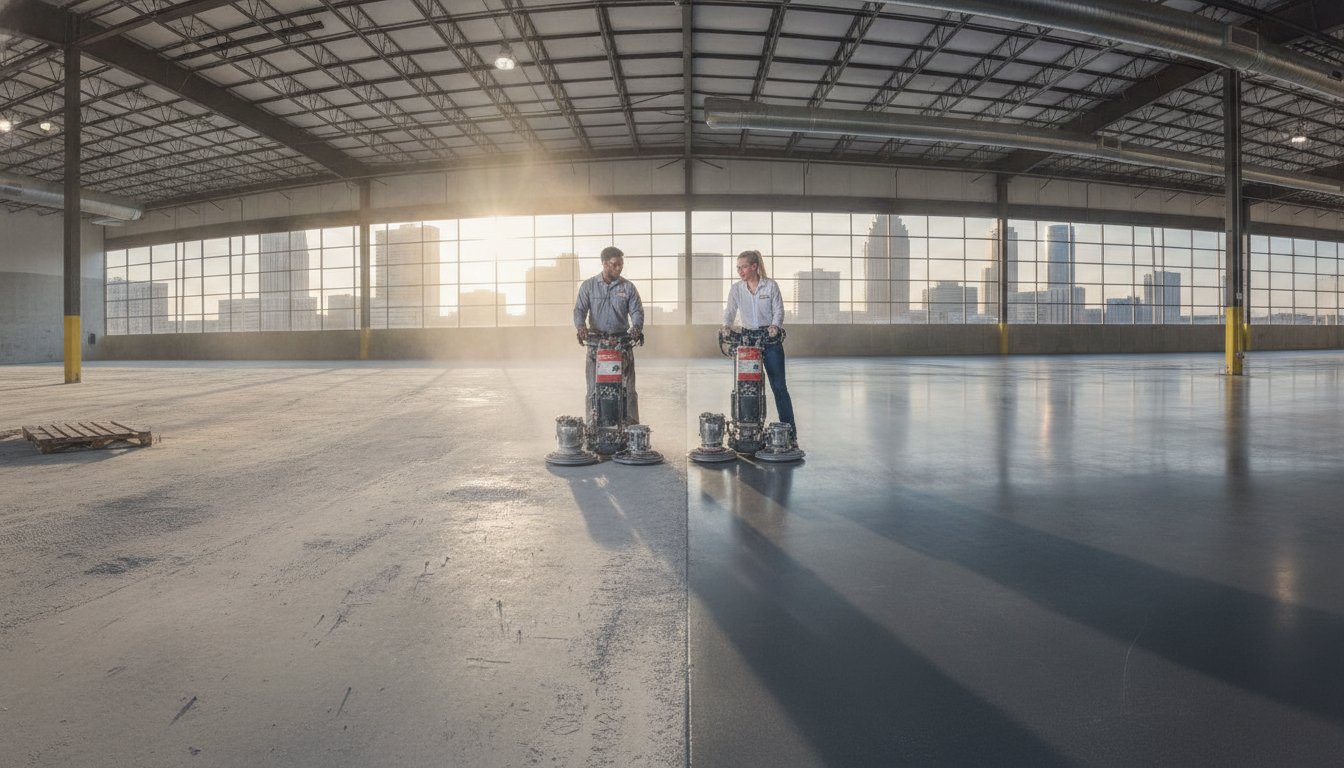
Why do so many industrial floor coatings fail within the first twenty-four months of service? It isn't usually the traffic. It's the chemistry. You understand that a facility floor is a high-stakes investment where mediocrity leads to costly downtime. You've likely seen the disastrous results when residential-grade techniques are applied to heavy-duty environments. Professional concrete staining services, like those offered by Cross Timbers Concrete, require more than a mop and a bucket; they demand industrial-grade mechanical preparation and a deep understanding of slab moisture dynamics.
We're here to eliminate the uncertainty. This checklist empowers you to master the technical requirements and selection criteria for high-performance finishes that meet the rigorous 2026 OSHA silica exposure and heat illness standards. We'll examine the critical shift toward low-sheen, high-performance sealers and the specific moisture mitigation protocols required for Atlanta facilities. From addressing tightened VOC regulations to vetting contractors with the right heavy-duty equipment, you'll gain the clarity needed to ensure a durable, elite result. No fluff. Just a strategic roadmap for a worry-free investment.
Key Takeaways
- Understand the fundamental difference between industrial-grade chemical penetration and residential "painting" to ensure your floor withstands heavy traffic.
- Discover why professional concrete staining services depend entirely on mechanical surface preparation, from diamond grinding to expert floor glue removal.
- Compare the durability and aesthetic profiles of reactive acid stains versus water-based systems to match your specific facility requirements.
- Learn the critical selection criteria for vetting contractors, focusing on their specialized equipment and documented industrial project scale.
- Master the 2026 technical standards for moisture control and VOC compliance to protect your high-performance flooring investment.
What Defines Professional Concrete Staining Services in Commercial Environments?
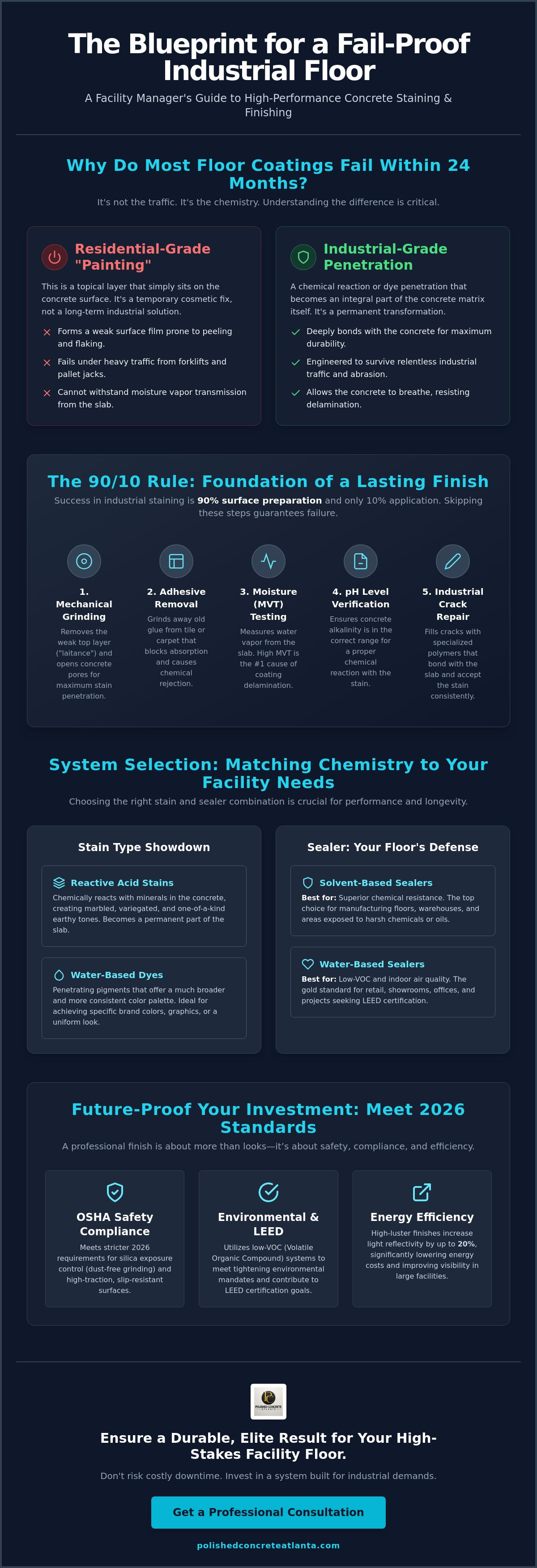
Professional concrete staining is not a topical application. It's a fundamental transformation of the slab. Unlike residential staining that often focuses on aesthetic features for a home patio, industrial-grade decorative concrete techniques focus on deep chemical bonding. This process involves acid-based reactions or high-solids dye penetration that becomes part of the concrete matrix itself. It doesn't flake. It doesn't peel. It survives the relentless pressure of pallet jacks and heavy forklift traffic. We define a professional finish by its ability to integrate with the concrete rather than simply sitting on top of it.
When you hire professional concrete staining services, you aren't just buying a color. You're investing in a system designed for warehouses, high-end retail showrooms, and modern office spaces where foot traffic and machinery are constants. High-luster finishes do more than reflect a brand's prestige. They increase light reflectivity by up to 20%, which significantly lowers energy costs and improves visibility in large-scale facilities. This is where utility meets elite craftsmanship. We move beyond the "painted" look of DIY kits to provide a surface that handles the grit of industrial life.
For facilities that feature a mix of surfaces, such as carpeted offices adjacent to stained concrete corridors, maintaining a uniform standard of hygiene is critical. Professional services like Commercial Carpet Cleaners Stockport offer the specialized care needed for those textile areas, ensuring your entire facility remains in top condition.
The 2026 Standard for Industrial Durability
Adopting professional concrete staining services also means staying ahead of the 2026 OSHA priorities regarding silica exposure and workplace safety. Facility managers in 2026 face stricter requirements for slip resistance and documented safety protocols. Corporate Atlanta has shifted decisively toward low-VOC, eco-friendly systems to meet tightening environmental mandates and LEED certification goals. These high-performance stains often integrate seamlessly with polished concrete floors Atlanta, creating a premium aesthetic that doesn't compromise on structural integrity. We don't settle for "good enough" when your facility's safety and compliance are on the line.
Aesthetic Versatility vs. Utility
Can you achieve a marbled, high-end look in a heavy-duty industrial zone? Yes. But it requires a precise balance of chemistry and mechanics. High-traffic zones demand specific sealer selections based on the chemical exposure of the environment. Solvent-based sealers offer superior chemical resistance for manufacturing floors, while water-based options are the gold standard for indoor air quality in retail spaces. UV stability is another non-negotiable factor. If your facility includes expansive glass facades or exterior loading docks, the pigment must be engineered to resist fading under intense sunlight. We ensure the finish remains as vibrant on day 1,000 as it was on day one.
The Industrial Surface Preparation Checklist: The Foundation of Staining
Don't let a clean appearance fool you. A slab that looks ready for color is often hiding chemical barriers that will cause your investment to peel within months. Success in professional concrete staining services is 90% preparation and 10% application. If the concrete pores aren't open, the stain simply sits on the surface. That is a recipe for failure. We treat every slab as a unique technical challenge that requires a documented mechanical reset before a single drop of pigment touches the floor.
Our industrial preparation protocol follows a rigorous five-point standard to ensure total system integration:
- Mechanical Concrete Grinding: We use planetary grinders to remove "laitance," the weak, milky layer of cement dust that settles on the surface during the pour.
- Professional Floor Glue Removal: Legacy adhesives from old tile or carpet are ground away entirely to prevent chemical rejection.
- Moisture Vapor Transmission (MVT) Testing: We measure the volume of water vapor escaping the slab, as excess moisture is the leading cause of delamination.
- pH Level Verification: We ensure the concrete's alkalinity is within the precise range required for acid or water-based reactions.
- Industrial Crack Repair: Any divots or structural cracks are filled with specialized polymers that accept stain consistently with the rest of the slab.
Why Floor Glue Removal and Grinding are Non-Negotiable
If you skip mechanical grinding, you risk "ghosting." This phenomenon occurs when the patterns of old floor tiles or carpet adhesive telegraph through the new stain. It looks amateur. It looks cheap. Utilizing professional concrete grinding and polishing equipment ensures a uniform canvas. Unlike DIY chemical etching, which is inconsistent and environmentally hazardous, diamond grinding physically opens the concrete's capillaries for maximum penetration. If your facility has legacy flooring issues, our experts can provide a comprehensive site evaluation to determine the correct grit sequence for your project.
Moisture Mitigation: Avoiding the Sweating Slab
Georgia's humid climate presents a specific threat known as Sweating Slab Syndrome. When warm, moist air hits a cool concrete floor, condensation forms; if the slab also has high internal vapor pressure, the stain will eventually bubble and lift. Moisture mitigation is the strategic control of vapor pressure to ensure coating adhesion. By following a comprehensive guide to concrete staining, we identify these risks during the testing phase. We don't guess. We measure. This technical discipline is what separates a professional industrial service from a residential contractor.
Comparing Acid Stains vs. Water-Based Systems for High-Traffic Use
Choosing between acid and water-based systems is not a matter of preference. It's a strategic decision based on the chemical composition of your slab and the specific demands of your facility. When you evaluate professional concrete staining services, you must decide whether you need a reactive chemical bond or a high-precision pigment distribution. Both systems offer distinct advantages, but they are not interchangeable. We prioritize a no-nonsense assessment of your environment to ensure the chosen system survives the relentless pace of an industrial setting.
Acid stains work by reacting chemically with the metallic salts and minerals already present in the concrete. This creates a permanent, translucent color that becomes part of the floor's structure. In contrast, water-based stains are non-reactive. They utilize high-quality pigments that penetrate the opened pores of the concrete to deliver a more uniform and predictable appearance. While both systems require a high-performance sealer to withstand forklift fluids and industrial spills, the reactive nature of acid stains often provides a slight edge in raw chemical resistance. The choice between them dictates the long-term value of concrete staining for your specific project.
When to Choose Acid-Stained Concrete
Acid-stained concrete is the gold standard for high-traffic corridors and industrial lobbies. It produces a "mottled" or variegated aesthetic that expertly hides the inevitable wear and tear of a working facility. Because the bond is chemical and permanent, these stains don't chip, peel, or fade like topical paints. They are ideal for heavy-duty retail environments where you need a floor that looks high-end but behaves like a workhorse. It's a definitive solution for those who value durability over uniform color matching.
The Case for Modern Water-Based Dyes
Precision branding requires the control that only water-based dyes can offer. If your facility must match specific corporate color schemes, water-based systems provide the most predictable results. These systems are also highly VOC-compliant. This makes them the preferred choice for professional concrete staining services performed in occupied office buildings or healthcare facilities where air quality is a non-negotiable priority. By layering these dyes, we can achieve a sophisticated, high-end commercial finish that maintains consistent pigment distribution across thousands of square feet. Maintenance remains straightforward; professional resealing every 2 to 3 years ensures these floors retain their vibrancy and resistance to industrial traffic.
Vetting Staining Contractors: A 5-Point Selection Standard
Hiring the wrong team is the fastest way to blow a facility budget. You need a partner who understands that industrial floors are a project management challenge, not a weekend hobby. When evaluating professional concrete staining services, look past the quote. Look at the infrastructure. A contractor's ability to deliver a durable finish is directly tied to their investment in heavy-duty machinery and technical expertise. No excuses. Results matter.
Follow this 5-point standard to filter out mediocrity before the first grinder touches your floor:
- Equipment Inventory: Insist on planetary grinders. Hand-held sanders are for residential corners, not 20,000 square foot warehouses. Proper downward pressure is required to achieve a consistent Surface Profile (CSP).
- Industrial Portfolio: Demand to see local Atlanta projects exceeding 10,000 square feet. Scale changes the chemistry and the timeline. If they've only done garages, they aren't ready for your facility.
- Preparation Philosophy: As established, prep is everything. If the contractor doesn't mention moisture vapor transmission or pH testing as a standard part of their bid, they're guessing with your money.
- Insurance and Bonding: Verify they carry high-limit commercial liability insurance. Industrial environments have unique risks that standard residential policies don't cover.
- Technical Consultation: A true expert offers a vision-to-execution logic. They should explain why a specific stain or sealer was chosen for your specific slab conditions.
Avoiding the "Paint Contractor" Trap
Many general painters claim to offer staining. They don't. They treat concrete like drywall, applying topical products that lead to immediate delamination under forklift traffic. Specialized industrial flooring contractors in Atlanta use diamond-tipped tooling and industrial vacuum systems to manage silica dust. Ask about their dust-containment protocols. If they aren't using HEPA-filtered extractors, they're putting your facility's air quality and OSHA compliance at risk. Professionalism is found in the details of the cleanup, not just the application.
Evaluating the Final Sealer Selection
The stain provides the color, but the sealer provides the armor. Your choice of topcoat determines if your floor survives or fails. Acrylics are acceptable for low-traffic decorative areas, but industrial zones require high-solids epoxies or polyurethanes. These coatings prevent the "concrete floor failing after coating" nightmare by creating a sacrificial layer that resists chemicals and abrasion. We match the sealer to your specific utility needs, ensuring the finish remains intact under the harshest conditions. Ready to secure your facility's future? Consult with our industrial flooring experts today for a definitive assessment of your slab.
Why Polished Concrete Atlanta is the Strategic Choice for Staining
Execution is the only metric that matters. You've seen the technical requirements for a successful floor, from moisture vapor testing to the nuances of reactive acid chemistry. Now, you need a partner who translates those requirements into a high-performance reality. We don't deal in vague promises or aesthetic fluff. Our approach to professional concrete staining services is rooted in a no-nonsense pragmatism that prioritizes the structural integrity and long-term durability of your facility's surfaces. We deliver floors that work as hard as you do.
As a bold innovator in the industry, we utilize the latest planetary diamond grinding technology to ensure every slab is prepared to an exacting standard. We don't cut corners with hand-held tools or inferior chemicals. Our total project management model handles every variable, including professional floor glue removal and advanced moisture mitigation, to eliminate the risk of coating failure. This disciplined focus on the foundation is why our finishes remain vibrant and intact long after the competition's topical solutions have begun to peel. We are committed to the integrity of the final product.
Atlanta’s Authority in Concrete Finishing
Our history in the Atlanta metro area is built on a foundation of elite craftsmanship and transparency. We have mastered the complexities of commercial concrete floor staining for massive warehouses, high-traffic retail centers, and modern corporate headquarters. Our team understands the local climate challenges, specifically the humidity levels that can compromise slab adhesion if not managed by experts. Our commitment to your facility is a definitive blend of elite skill and blue-collar work ethic. We show up, we solve the technical hurdles, and we deliver an uncompromising finish.
Ready for a Floor That Lasts?
Strategic facility planning requires more than just a quote; it requires a collaborative alliance. We transition from high-level brand promises to the concrete reality of a floor that withstands heavy traffic and industrial spills. Whether you're managing a single 10,000 square foot space or a multi-site industrial portfolio, our process is designed to provide peace of mind through rigorous standards and proven techniques. Don't settle for a contractor who lacks the heavy-duty equipment or the technical depth to secure your investment. It's time for a floor that reflects the excellence of your brand. Contact Polished Concrete Atlanta today to schedule your professional consultation and secure a durable, high-performance finish for your facility.
Secure Your Facility’s Future with Industrial-Grade Precision
Your floor is more than a surface; it's the foundation of your operational efficiency. We've established that high-performance results are the product of rigorous mechanical grinding and precise moisture mitigation. Chemical bonding, not topical application, is the only way to survive the relentless demands of a modern industrial environment. Founded in 2004, Polished Concrete Atlanta brings over two decades of local experience to every project. We are specialists in heavy-duty floor preparation and high-performance industrial coatings who understand the stakes of your investment. Don't settle for contractors who lack the equipment or the technical discipline to handle large-scale facility requirements. It's time to eliminate the uncertainty. Secure a floor that reflects the integrity of your brand and the excellence of your management. Request a Professional Staining Consultation today to ensure your facility benefits from the elite standard of professional concrete staining services. Let's build a surface that lasts for decades, not just seasons.
Frequently Asked Questions
Is stained concrete durable enough for a warehouse with forklifts?
Yes. When installed correctly, stained concrete becomes part of the slab's structure rather than a layer on top. We recommend acid-based systems for heavy industrial use because the chemical bond resists the abrasive pressure of forklift tires. It won't chip or delaminate under high-stress conditions. This makes it a definitive choice for facilities that prioritize raw durability over topical aesthetics.
How long does the professional concrete staining process take?
A typical industrial project ranging from 5,000 to 10,000 square feet generally requires three to five business days. This timeline accounts for essential mechanical grinding, moisture testing, and the curing time for high-performance sealers. Large-scale facility managers should plan for this window to ensure the chemical reactions and topcoats set properly. We prioritize a methodical pace to ensure total system integrity.
What is the difference between concrete staining and concrete painting?
Staining is a penetration process; painting is a topical application. Professional concrete staining services utilize reactive acids or dyes that sink into the concrete pores. Paint merely sits on the surface. Consequently, paint inevitably peels under traffic, while stain remains integrated with the slab for long-term durability. We don't settle for the temporary fix of a painted surface.
Can you stain old concrete that previously had tile or carpet?
Absolutely. The success of the project hinges on professional floor glue removal and diamond grinding to reach fresh concrete. We mechanically remove every trace of legacy adhesives to prevent "ghosting" patterns. Once the pores are opened and the surface is neutralized, old slabs accept stain as effectively as new ones. It's a total restoration of the existing asset.
Does stained concrete make the floor slippery in commercial spaces?
The stain itself does not change the floor's slip resistance; the sealer does. We mitigate slip hazards by incorporating high-performance anti-skid additives into the final topcoat. This ensures your facility meets 2026 safety standards while maintaining a high-luster aesthetic. Safety and style are not mutually exclusive. We provide the traction your team needs to operate without uncertainty.
How often do stained concrete floors need to be resealed in a high-traffic facility?
High-traffic industrial floors typically require professional resealing every two to three years. This maintenance schedule protects the underlying color from abrasion and chemical spills. Regular resealing is a strategic investment that extends the floor's lifespan and maintains the original high-performance finish without the need for a full restoration. It's the most cost-effective way to preserve your investment.
What causes stained concrete to peel or fade prematurely?
Failure is almost always caused by poor surface preparation or ignored moisture vapor transmission. If the concrete wasn't ground to open the pores, the stain can't bond. Additionally, using non-UV-stable pigments in areas with high sunlight exposure can lead to fading. We eliminate these risks through rigorous testing and industrial-grade prep. We don't guess; we measure to ensure permanent results.
Can I choose custom colors for my commercial concrete staining project?
Yes. While acid stains offer a limited palette of earthy tones, modern water-based dyes provide a massive spectrum of predictable colors. We can layer these dyes to match corporate branding or create sophisticated, marbled aesthetics. This versatility allows facility managers to combine industrial-grade utility with a precise architectural vision. You get the exact look your brand demands without compromising performance.


