
Your facility floor isn't just a surface; it's a high-performance engine that either accelerates your production or grinds it to a halt. In the high-stakes environment of Georgia manufacturing, a deteriorating slab is a liability you can't afford. You've likely dealt with the relentless cycle of concrete dusting, humidity-driven slab issues, and the expensive downtime that follows floor failure. It's a common frustration among facility managers who feel trapped by rising maintenance costs. Professional industrial concrete polishing Atlanta offers a definitive end to that cycle. We don't just polish; we engineer surfaces to outlast the competition. Results matter.
We understand that you need a floor that stands up to heavy forklift traffic and chemical exposure without flinching. This article demonstrates how meticulous surface preparation and expert diamond grinding transform your warehouse into a low-maintenance, OSHA-compliant asset. You'll discover the strategic advantages of polished concrete for 2026 facilities, from enhanced lighting efficiency to the elimination of sweating slab syndrome. We're moving beyond aesthetics to focus on tangible results. It's time to stop managing floor failures and start investing in long-term durability. We'll break down the engineering and the economics that make it possible.
Key Takeaways
- Understand how the multi-step mechanical refinement of industrial concrete polishing Atlanta creates a high-performance surface that significantly reduces wear on forklift tires and machinery.
- Analyze the lifecycle cost differences between polished concrete and epoxy coatings to select the most durable flooring specification for your specific production environment.
- Recognize why heavy-duty coarse grinding is a non-negotiable requirement for leveling slabs and ensuring the structural integrity of an industrial floor.
- Implement rigorous surface preparation standards, including professional glue removal and moisture mitigation, to eliminate the root causes of 90% of floor failures.
- Master the science of Sweating Slab Syndrome remediation to maintain a safe, OSHA-compliant facility that withstands Georgia's humidity challenges.
The Strategic Advantage of Industrial Concrete Polishing in Atlanta
Industrial flooring in a high-velocity logistics hub like Atlanta isn't a cosmetic choice. It's a structural decision. For facilities along the I-85 and I-75 corridors, the floor is the foundation of the entire supply chain. Unlike standard commercial finishes, industrial concrete polishing Atlanta involves a rigorous technical process where the slab is mechanically ground, honed and polished using industrial-grade diamonds. This isn't just a shine. It's a surface transformation that hardens the concrete at a molecular level. By closing the pores of the slab, we eliminate the friction that destroys forklift tires and creates costly maintenance cycles. High-performance floors don't happen by accident. They're engineered.
Operational Efficiency and Long-Term ROI
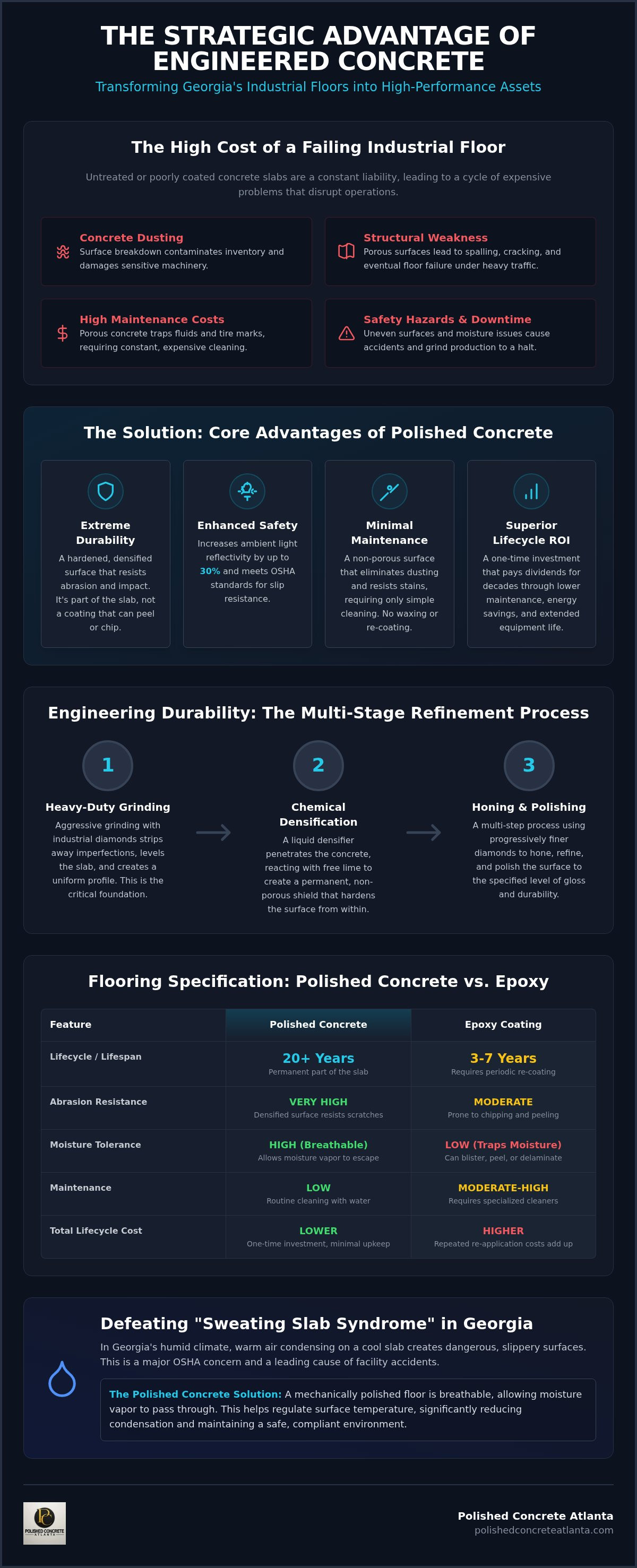
Efficiency is measured in uptime. Untreated concrete slabs suffer from "dusting," a process where the surface breaks down into fine particulates that clog machinery and contaminate inventory. Polished concrete stops this degradation cold. The ROI is immediate. You'll see a drastic reduction in cleaning overhead because the surface no longer traps oil, grease, or tire marks. A densified floor protects the underlying structural slab from the impact of heavy loads. It effectively extends the lifespan of your facility. It's a one-time investment that pays dividends for decades. We don't believe in temporary fixes. We believe in permanent solutions.
Meeting 2026 Safety and Compliance Standards
Safety isn't optional. It's a mandate. As we look toward 2026, OSHA slip-resistance standards remain a critical focus for industrial operators. A professionally polished floor actually increases the coefficient of friction compared to many topical coatings, especially when dry. Visibility is another factor. High-luster finishes reflect existing overhead lighting. This often increases brightness by up to 30% without adding a single bulb. This improves worker safety and reduces energy costs. To achieve maximum durability, we utilize specialized treatments like the Ashford Formula to densify the concrete. This ensures the floor remains non-porous and easy to mark with permanent safety striping. Reliable results are the only standard we accept.
Engineering Durability: The Industrial Grinding and Polishing Process
Mediocre floors fail under pressure. High-performance industrial concrete polishing Atlanta demands a no-nonsense approach to mechanical refinement that starts with the raw slab. We don't hide defects; we eliminate them. This process is a multi-stage engineering feat designed to transform a porous, dusty slab into a dense, high-performance asset. It begins with aggressive Stage 1 coarse grinding. We use heavy-duty planetary grinders to strip away surface imperfections, old adhesives, and high spots. This phase is critical for establishing a level profile before any refinement begins.
Concrete Leveling and Grinding Standards
Precision starts with the right equipment. Our planetary grinders provide a uniform surface profile that topical coatings simply cannot match. During the grinding phase, we meticulously repair joints and address surface spalls to ensure a seamless transition across the floor. In modern logistics, achieving a high "Flat Floor" (FF) rating is mandatory for high-speed forklift operation. We don't settle for "close enough." We ensure the surface is level to prevent the vibrations and impact damage that lead to premature equipment failure. Every bump in the floor is a hidden cost. We solve that problem at the source.
Densification and Chemical Resistance
Stage 2 moves into densification. This is the chemical hardening of the concrete matrix. We apply liquid densifiers that penetrate the surface to react with free lime, creating a permanent, non-porous shield. This process is vital for protecting floors against industrial chemicals, hydraulic fluids, and oils. For a deeper technical breakdown of these bonds, see The Engineering of Adhesion: A Definitive Guide to Concrete Surface Preparation. A densified floor is a hardened asset that resists the staining and degradation common in heavy manufacturing environments.
Stage 3 involves progressive polishing. We transition through increasingly fine diamond grits to achieve the exact luster and grit level your facility requires. This isn't just about the look; it's about closing the surface to prevent liquid penetration. Rigorous Concrete moisture testing and mitigation ensures the slab remains stable and resistant to delamination. If your facility requires a total structural reset, our Industrial Floor Services deliver the reliability and performance you expect. We build floors that work as hard as you do.
Polished Concrete vs. Epoxy: Selecting the Right Industrial Spec
Facility managers in the Atlanta metro area shouldn't settle for a one-size-fits-all flooring strategy. Choosing between high-performance coatings and mechanical refinement is a calculation of environment and intent. While epoxy provides a protective barrier, industrial concrete polishing Atlanta transforms the slab itself into a durable asset. The decision framework is simple. Use epoxy for areas requiring secondary chemical containment, heavy sanitation, or extreme moisture protection. For high-velocity warehouse aisles and logistics centers, polished concrete is the undisputed leader in longevity. It's a choice between a topical layer that can peel and a structural refinement that cannot.
The total cost of ownership (TCO) tells the real story. Over a ten-year period, the maintenance and replacement cycle of epoxy coatings often costs more than double that of a polished surface. Polished concrete eliminates the need for expensive stripping and recoating every three to five years. It relies on the strength of the concrete matrix rather than the bond of an adhesive. This makes it a superior investment for facilities that prioritize uptime and long-term fiscal responsibility. We don't just provide a floor; we provide a financial strategy.
Performance in High-Traffic Environments
Polished concrete excels in high-traffic zones because it offers superior resistance to impact and abrasion. Forklift tires generate significant heat and friction. In a coated environment, this constant stress leads to delamination and "hot tire pick-up." A industrial concrete polishing Atlanta spec eliminates this failure point. Maintenance is reduced to simple routine cleaning with an auto-scrubber. For a technical breakdown on when a coating remains the superior choice for chemical resistance, see The Definitive Guide to Industrial Floor Coatings Atlanta. We build floors that withstand the daily grind of heavy machinery.
Aesthetic and Functional Staining
Functionality doesn't exclude aesthetics. We use industrial-grade reactive stains to integrate safety zoning and branding directly into the concrete. This isn't paint that wears off under foot traffic. It's a permanent chemical bond that remains vibrant for the life of the floor. You can designate pedestrian walkways, hazardous zones, and loading bays without the constant need for repainting. Check out Stained Concrete Floors Atlanta: The 2026 Professional Guide for a breakdown of high-performance commercial aesthetics. If you're ready to upgrade your facility with a floor that works as hard as you do, our Industrial Floors set the standard for 2026 facilities.
The Foundation of Success: Surface Preparation and Moisture Mitigation
A high-performance floor is only as good as the slab beneath it. Shortcuts are fatal. In the world of industrial concrete polishing Atlanta, we know that 90% of facility floor failures start with poor preparation. We don't settle for surface-level fixes. We engineer the foundation. The "Atlanta Factor" is a real operational threat. Georgia's relentless humidity doesn't just make people uncomfortable. It destroys floors. If you don't account for slab moisture, your investment is on a countdown to failure.
Moisture mitigation isn't an optional add-on; it's a structural necessity. When moisture vapor emissions aren't controlled, they lead to the delamination of coatings and the degradation of the concrete matrix itself. We use advanced testing to determine the precise moisture profile of your slab before a single diamond blade touches the surface. This proactive approach eliminates uncertainty. You get a floor that remains bonded and stable for the long haul. We prioritize reliability over speed every time.
Remediating Sweating Slab Syndrome
When warm, humid air enters a facility and hits a cool concrete slab, it reaches the dew point. The result is Sweating Slab Syndrome. This creates a dangerous film of moisture that compromises safety and invites liability. We provide technical solutions for moisture vapor emission control that go beyond simple ventilation. Professional sealing and moisture mitigation prevent this condensation from forming. It's about maintaining an OSHA-compliant environment regardless of the weather outside. Peace of mind comes from a dry, stable floor. Results matter.
Floor Preparation as an Engineering Standard
Adhesion requires an open concrete profile. We utilize mechanical profiling through heavy-duty grinding rather than outdated chemical etching. This ensures a consistent surface that's ready for densification or coating. A critical part of this process is professional floor glue removal. Old adhesives and mastic are contaminants that block chemical bonds and ruin the final finish. We strip the slab back to its original state to ensure total integrity. For facility managers, choosing the right partner is the first step. Read our Industrial Flooring Contractors in Atlanta: A Strategic Guide to understand how we manage these complex engineering standards. We don't just finish floors. We secure your investment.
Future-Proofing Your Industrial Foundation
Your facility floor is a strategic asset that dictates your operational speed and safety standards. We've established that high-performance industrial concrete polishing Atlanta is not merely a surface treatment; it is a structural engineering requirement for modern logistics. By prioritizing mechanical refinement over topical coatings, you eliminate the hidden costs of delamination and dusting. You also ensure your facility meets 2026 compliance standards through superior slip resistance and enhanced reflective lighting.
Success starts with the slab. We emphasize rigorous moisture mitigation and professional surface preparation to prevent the failures that plague 90% of industrial projects. Since 2004, we've served as a dedicated partner for the region's largest warehouses and factories. Our expertise in Ashford Formula installation and Sweating Slab Syndrome remediation ensures your environment remains safe and productive regardless of Georgia's humidity. Don't settle for mediocrity in your foundation. It's time to invest in a surface that withstands the daily grind of heavy industry.
Secure Your Facility’s Future with a Professional Quote from Polished Concrete Atlanta. Let's build a floor that truly supports your growth.
Frequently Asked Questions
Is polished concrete durable enough for heavy forklift traffic in a warehouse?
Polished concrete is specifically engineered to withstand the relentless stress of heavy forklift traffic. The mechanical grinding process, combined with chemical densifiers like the Ashford Formula, significantly increases the surface's compressive strength. Unlike topical coatings that delaminate under the heat and friction of industrial tires, a polished surface becomes part of the slab itself. This eliminates the risk of hot tire pick-up and reduces long-term maintenance costs for high-velocity Atlanta warehouses.
How long does the industrial concrete polishing process take for an Atlanta facility?
Timeline requirements depend entirely on the slab's current condition and the total square footage. A standard 10,000-square-foot industrial project typically requires five to seven days for a full multi-stage mechanical refinement. Factors such as the level of floor glue removal needed and the complexity of moisture mitigation can extend this duration. We prioritize a meticulous, phased approach to ensure zero operational uncertainty. Every project schedule is built around your facility's specific production demands.
What is Sweating Slab Syndrome and how do you fix it?
Sweating Slab Syndrome occurs when warm, humid Atlanta air contacts a cool concrete slab, causing moisture to condense on the surface. This creates a significant slip-and-fall hazard that compromises worker safety. We remediate this issue through a combination of professional floor moisture mitigation and technical sealing. By controlling moisture vapor emissions and utilizing specialized densifiers, we stabilize the slab's temperature and permeability. This ensures a dry, OSHA-compliant environment regardless of Georgia's seasonal humidity spikes.
Does industrial polished concrete require a sealer or wax?
Industrial polished concrete never requires traditional wax or topical floor finishes. The process relies on mechanical refinement and penetrating densifiers to achieve its luster and durability. Adding wax would only create a maintenance burden and trap moisture within the slab. We use high-performance treatments that bond at a molecular level, creating a non-porous surface that resists oil and chemical penetration. This no-nonsense approach ensures a low-maintenance floor that remains durable for years without stripping or recoating.
How much does industrial concrete polishing cost per square foot in Atlanta?
Investment levels for industrial concrete polishing Atlanta are determined by the slab's initial state, the desired grit level, and the total area. While pricing varies across the Southeast, industrial projects typically benefit from economies of scale. Factors like intensive floor glue removal or the need for deep grinding to achieve a Flat Floor rating will influence the final budget. We provide detailed consultations to outline the total cost of ownership, focusing on long-term ROI rather than just the initial installation.
Can you polish an old, damaged industrial concrete floor?
We specialize in transforming aging, degraded slabs into high-performance assets. Most old industrial floors are prime candidates for polishing once we address structural defects and surface contaminants. The process involves aggressive initial grinding to remove old coatings and leveling to repair spalled joints. We use industrial-grade resins to fill cracks and stabilize the concrete matrix before the final polishing stages. This restoration process effectively resets the lifespan of your facility floor without the need for a costly new concrete pour.


