

What if removing the glue is only half the job? On a commercial floor, adhesive residue can interfere with the finish you’re planning, while removal that ignores the concrete underneath can leave preparation unfinished. A professional floor glue removal service Buckhead GA project starts by assessing both the residue and the slab, with the next finish in mind.
If you’re unsure what adhesive is on the floor, what condition the slab is in, or how much preparation the project requires, start by documenting what you can see. Note where residue remains, whether it covers the whole floor or isolated areas, and what finish you’re considering. The goal isn’t simply to clear the surface. It’s to prepare the existing concrete for its intended finish. This guide explains what shapes the removal plan and how to prepare for a commercial flooring project in Buckhead and the wider Atlanta area.
Polished Concrete Atlanta provides commercial floor glue removal and preparation for finishes such as polished concrete, epoxy flooring, and sealed concrete. Because each finish has different preparation considerations, identifying the intended result early helps define a practical project scope. The priority is a clear path from adhesive removal to the floor’s next use.
Key Takeaways
- A floor glue removal service Buckhead GA project should be planned around the concrete’s next finish, not treated as cleanup alone.
- Adhesive coverage and the slab’s visible condition help shape the removal and preparation scope.
- Polished concrete, sealed concrete, and epoxy flooring each have different surface-preparation considerations.
- Record the floor’s condition, intended finish, and facility-use needs to make project planning more specific.
- Use the comparison below to identify which preparation questions matter most for your commercial floor.
Floor Glue Removal in Buckhead, GA: Start with the Slab and the Next Finish
For Buckhead commercial owners and facility managers renovating or repurposing a space, adhesive removal is one step in preparing an existing concrete floor for its next use. A floor glue removal service Buckhead GA project should account for what’s on the slab and what will go on it next. Removing residue is not the same as completing surface preparation. The planned finish defines the preparation goal.
A clean-looking slab is not automatically ready for a finish. Adhesive may remain in patches or affect the surface in ways that aren’t obvious at a glance. Readiness depends on the concrete’s condition and the requirements of the intended treatment.
What floor glue removal can and cannot solve
Adhesive residue can complicate a concrete finish if it interferes with the surface condition that finish requires. The term Adhesive remover describes products used to break down or remove adhesive, but a commercial floor project also has to account for the concrete beneath it. The removal plan should be based on the slab and the finish, not just on making the floor look clean.
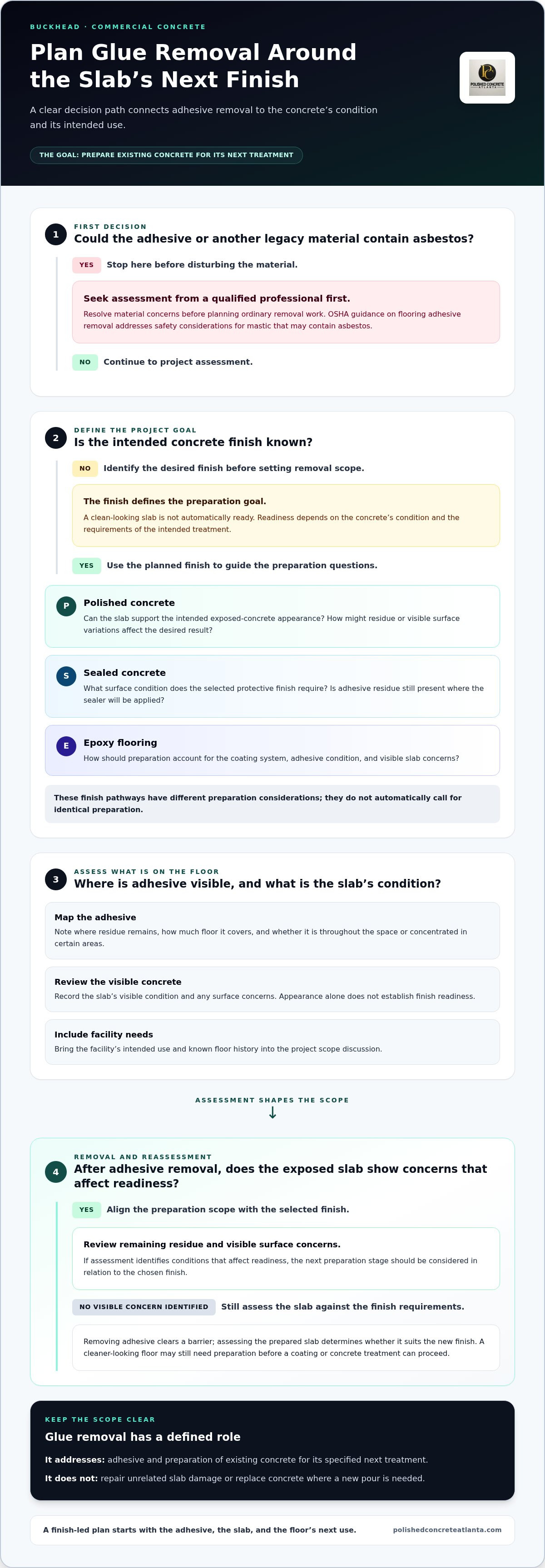
Glue removal addresses adhesive and helps prepare existing concrete for its specified next treatment. It doesn’t repair unrelated slab damage or replace concrete where a new pour is needed. Keeping that distinction clear helps define the project scope from the start.
Identify the finish before defining removal scope
Polished concrete, sealed concrete, and epoxy flooring are different finish pathways, so they don’t automatically call for identical preparation. The desired appearance and performance help establish the surface condition the project needs to achieve. Identify the intended finish early, then assess the adhesive and slab against that goal.
For more detail on why surface condition matters, see the concrete surface preparation guide. Connecting glue removal to the next finish helps commercial teams define a useful scope, plan the renovation, and avoid treating residue removal as the whole preparation process.
How Professional Floor Glue Removal Protects Concrete and Finish Readiness
A well-defined process begins by reviewing the floor and identifying the intended finish. Adhesive is then removed according to the project conditions, and the exposed concrete is assessed for the next preparation stage. This sequence connects the work to the finish instead of treating every slab and adhesive as the same job.
Assessment: adhesive, slab, and project conditions
Assessment starts with the adhesive: where it remains, how much of the floor it covers, and whether residue is visible throughout the space or concentrated in certain areas. The concrete’s visible condition and the facility’s intended use also matter. For example, an epoxy flooring system has a different preparation objective from polished concrete. These details shape the scope; they don’t support a blanket promise that removal will leave every slab damage-free.
If the adhesive or other legacy material is suspected to contain asbestos, stop disturbance and seek assessment from a qualified professional before proceeding. OSHA’s guidance on flooring adhesive removal addresses safety considerations for mastic that may contain asbestos. Resolve material concerns before planning ordinary removal work.
Removal and surface-preparation stages
Once the floor conditions and finish goal are understood, adhesive removal is planned around the specific project. No single approach should be assumed for every adhesive or slab. After removal, the exposed concrete is reviewed for remaining residue and visible surface concerns. If the assessment identifies conditions that affect readiness, the preparation scope can be aligned with the selected finish.
Removing adhesive clears a barrier; assessing the prepared slab determines whether it suits the new finish. A floor can look cleaner while still needing more preparation before a coating or concrete treatment can proceed. Finish requirements guide the final assessment, not appearance alone.
For a floor glue removal service Buckhead GA project, bring the planned finish, known floor history, visible adhesive conditions, and facility-use requirements into the scope discussion. Polished Concrete Atlanta provides commercial floor glue removal and surface preparation. A Buckhead floor glue removal project discussion connects the removal scope to the concrete’s next use.
Choosing Floor Glue Removal for a Buckhead Commercial Project
The next finish determines what the removal and preparation plan needs to accomplish. A floor glue removal service Buckhead GA project should be scoped around the slab’s current condition and the outcome you want, not a one-size-fits-all definition of “clean.”
Match removal scope to the next concrete finish
| Planned finish | Preparation questions to consider |
|---|---|
| Polished concrete | Can the slab support the intended exposed-concrete appearance? How might residue or visible surface variations affect the desired result? |
| Sealed concrete | What surface condition does the selected protective finish require? Is adhesive residue still present where the sealer will be applied? |
| Epoxy flooring | How should preparation account for the coating system, adhesive condition, and visible slab concerns? |
Each finish has its own objective, so the preparation scope should be tailored rather than treated as interchangeable. For background on concrete preparation for resilient flooring, ASTM F710 standard for concrete preparation is a useful reference; the selected finish’s requirements should guide the project. If coatings are the intended finish, explore this industrial floor coatings guide.
Prepare a useful Buckhead project brief
A clear brief connects the facility’s needs to a practical scope. Gather these details when planning the project:
- Location and area: Note the Buckhead property location and approximate floor area.
- Existing floor: Identify the current covering, if known, and describe where adhesive is visible or concentrated.
- Project objective: Specify the planned finish, such as polished concrete, sealed concrete, or epoxy flooring.
- Site conditions: Share clear floor photographs and note access, operating hours, and areas that need to remain in use.
These details frame the project around the actual slab and facility constraints. Polished Concrete Atlanta provides concrete floor preparation for commercial projects in Buckhead and Atlanta.
Book a Buckhead Floor Glue Removal Service: Your Next Steps
A clear project discussion starts with the floor’s present condition and intended next use. For a floor glue removal service Buckhead GA project, describe what you know about the property, adhesive, and finish goal. You don’t need to diagnose the slab yourself. Useful details help shape a project-specific scope without assumptions about price or timing.
What to include when describing the floor
- Property and use: Provide the Buckhead location, commercial use of the space, and approximate floor area.
- Current floor: Describe the existing covering and visible adhesive, if known. If materials are uncertain, don’t disturb them to investigate.
- Renovation objective: Identify the planned next finish, such as polished concrete, sealed concrete, or epoxy flooring.
- Site conditions: Note access requirements, operating hours, and areas that need to remain in use. Clear photographs can show visible residue and floor conditions.
Specifics matter. A facility preparing for epoxy flooring may have different preparation considerations from one pursuing an exposed polished-concrete look. The existing slab and site operating needs also influence the work scope.
Move from inquiry to a defined project scope
With those details, the removal and surface-preparation needs can be discussed in relation to the intended finish. Include access and operational constraints in the project brief, especially if work areas must be coordinated around facility use. The scope should reflect the floor’s condition, planned finish, and project requirements. No generic assumption replaces an assessment of the actual site.
If polished concrete is under consideration, review the Atlanta polished concrete guide as you define your renovation objective.
For your project discussion, include the floor details and finish goals so the scope can be built around the commercial space.
Set Your Commercial Floor Up for Its Next Finish
Successful glue removal is about more than clearing visible residue. The adhesive and slab condition help shape the work, while the planned finish sets the preparation target. Polished concrete, sealed concrete, and epoxy flooring each have distinct considerations, so a project-specific scope matters.
For a floor glue removal service Buckhead GA project, share the property’s use, approximate floor area, known floor conditions, and intended finish. These details create a clearer starting point for discussing adhesive removal and concrete preparation together.
Polished Concrete Atlanta provides floor glue removal, concrete surface preparation, and commercial and industrial concrete flooring solutions for businesses in Buckhead and across Atlanta. A suitable preparation plan starts with understanding the floor and the finish it needs to support.
Discuss your Buckhead floor glue removal project with Polished Concrete Atlanta and take the next step toward a concrete surface prepared for its intended finish.
Frequently Asked Questions
Can floor glue be removed from a concrete slab?
Yes, professional floor glue removal can address adhesive on an existing concrete slab. The appropriate scope depends on the adhesive, the slab’s condition, and the planned finish. A floor glue removal service Buckhead GA project should define the preparation goal before work begins. Visible glue removal alone doesn’t establish finish readiness, so the exposed surface also needs assessment against the requirements of its next treatment.
How does professional floor glue removal work?
The process begins with a review of the existing floor, adhesive, concrete condition, and intended finish. The removal approach is planned around those project conditions rather than assumed to be identical for every slab. After the adhesive is addressed, the exposed concrete is assessed for remaining residue and visible concerns. This review helps determine whether the surface is prepared for its next finish or needs more preparation.
Can floor glue removal damage concrete?
Any floor glue removal project should account for the condition of both the adhesive and the concrete beneath it. The objective is to remove residue and prepare the slab for its intended finish, not to promise that every surface will be unaffected. An assessment helps identify visible concerns and shape a suitable scope before work proceeds. Sharing known floor history and the finish goal supports a more informed project discussion.
What happens if old floor adhesive may contain asbestos?
Don’t scrape, grind, or otherwise disturb adhesive that may contain asbestos or another hazardous legacy material. Stop work in the affected area and seek assessment from a qualified professional before removal. The material and project circumstances determine the appropriate next steps. Avoid taking samples or removing a section yourself. Keeping the material undisturbed until it’s assessed helps prevent uncertain adhesive from being disturbed during renovation work.
How do I prepare a commercial space for floor glue removal in Buckhead?
Prepare a concise project brief with the Buckhead property location, commercial use, approximate floor area, and renovation objective. Note the existing floor covering and adhesive, if known, plus access conditions, operating hours, and areas that must remain in use. Photos can show visible conditions, but don’t disturb unknown materials to take them. Include the desired finish, such as polished concrete, sealed concrete, or epoxy flooring.
Is floor glue removal enough to prepare concrete for epoxy flooring?
Not necessarily. Removing adhesive is one part of preparing concrete for an epoxy flooring system; the slab must also meet the preparation needs of the selected coating. Remaining residue, visible surface conditions, and project requirements can affect the scope. An assessment connects glue removal to the coating plan and identifies whether further surface preparation is needed. The goal is a slab prepared for the intended finish, not cleanup alone.


