

What if the patio’s existing concrete, not the stain color, determines whether the finished space looks right and suits daily service? For stained concrete for restaurant patios Atlanta, start by assessing whether the slab is a sound foundation for the finish you want. Cracks, previous coatings, surface wear, moisture, and outdoor exposure all affect the plan.
A patio should complement your restaurant while accommodating outdoor conditions and steady foot traffic. Stain and sealer choices work best when they reflect the concrete’s condition and the way your team uses and cleans the space.
This guide explains how to assess an existing patio slab, compare stain appearances and protective finishes, and plan for ongoing care. It also covers the role of preparation and sealing in the project. Polished Concrete Atlanta provides commercial concrete staining, sealing, and surface preparation for existing concrete in Atlanta. Use these practical considerations to decide whether stained concrete fits your patio and set clear expectations for the work.
Key Takeaways
- Assess stained concrete for restaurant patios Atlanta projects by starting with the existing slab, not the color chart. Staining enhances concrete; it doesn’t correct an unsuitable or damaged surface.
- Consider how seating layouts, foot traffic, spills, and cleaning routines will shape the patio’s finish requirements.
- Check how slab condition and surface preparation may influence stain appearance, and decide what role sealer should play.
- Set appearance goals and care expectations together so the finish approach fits your restaurant’s use and visual direction.
- Plan the work in stages, from defining goals and evaluating the slab to preparation, finishing, and ongoing care.
Why Atlanta Restaurants Consider Stained Concrete for Patio Floors
Choosing a patio finish is a commercial decision. It needs to support your restaurant’s visual identity, daily use, and maintenance routine. Stained concrete for restaurant patios Atlanta projects can add color and character to an existing slab, but stain is a finish, not a repair method. If the concrete is damaged or unsuitable for finishing, adding color won’t resolve the underlying issue.
A cohesive surface can connect outdoor seating with the restaurant’s exterior, furniture, and dining atmosphere. Appearance is only one part of the decision, though. Stain alone doesn’t guarantee protection from wear or a slip-resistant surface. Those considerations depend on the complete finishing approach and the patio’s conditions.
What stained concrete can bring to a restaurant patio
Stained concrete can add color variation and visual depth while allowing the concrete’s character to show through. It can complement masonry, exterior finishes, and seating, whether you want a subtle backdrop or a more noticeable design feature. Each patio has its own starting point: the slab’s color, texture, repairs, and other variations can affect the finished appearance.
Surface treatment also shapes the result. Polished concrete involves mechanical grinding and honing, which helps illustrate how work at the concrete surface can change its look. Staining is a different finishing approach, and the slab’s condition and preparation remain central to the outcome.
Which restaurant patio conditions matter most?
Start with how the patio operates. Frequent foot traffic, chairs and tables moving across the surface, dropped food or drinks, and routine cleaning all affect the finish requirements. Consider where guests queue, where servers carry trays, and which cleaning methods staff use. These details help define practical appearance and maintenance priorities.
Outdoor exposure matters too. Rain, humidity, and direct sun in Atlanta are site conditions to consider because a patio is not an indoor floor. The preparation and finishing plan should suit the concrete and its exposure. Stain by itself does not address moisture, wear, or traction concerns.
This guide focuses on finishing an existing concrete patio. Staining can enhance a suitable slab, but it doesn’t create a new patio or replace damaged concrete. Begin with an assessment of the slab, restaurant use, and design goals.
How Concrete Condition, Stain, and Sealer Shape the Patio Finish
Stain is a finish applied to concrete, not a way to rebuild the slab or conceal every flaw. The concrete is the substrate, and its condition influences the final appearance. For stained concrete for restaurant patios Atlanta projects, evaluate the surface before choosing a color.
Preparation addresses the concrete before stain or sealer is applied. Depending on the slab, the work may include cleaning or grinding to address surface conditions and prepare for the planned finish. The preparation scope should match the patio. Concrete with different textures, repairs, or previous treatments may not take a finish uniformly.
Why existing concrete condition comes before color
Look for visible damage, residue or other contamination, previous coatings, and areas where the texture or appearance changes. These conditions can affect both preparation and the result. Grinding may be appropriate for some slabs, while others need a different preparation approach. The goal is to prepare the surface according to its actual condition.
This concrete surface preparation guidance explains why preparation matters to a finished concrete surface. For a restaurant patio, assessing the slab helps align the preparation plan with the concrete and intended finish.
What stain and sealer each contribute
Stain adds the decorative element by changing concrete’s color and visual character. Sealer is a separate finishing step that can help protect the treated surface. Its role and performance depend on the product and project conditions. Neither step guarantees uniform color, slip resistance, spill resistance, or a particular service life.
Choose a sealer with the slab, outdoor exposure, restaurant use, and desired appearance in mind. A patio exposed to rain and sun has different planning considerations from a covered area with a regular cleaning routine. Include staff cleaning methods in the finish plan rather than assuming every sealer suits every practice.
Polished Concrete Atlanta provides commercial staining, sealing, and surface preparation for existing concrete in Atlanta. Explore commercial concrete finishing to see how slab evaluation, preparation, stain, and sealer fit together in a project.
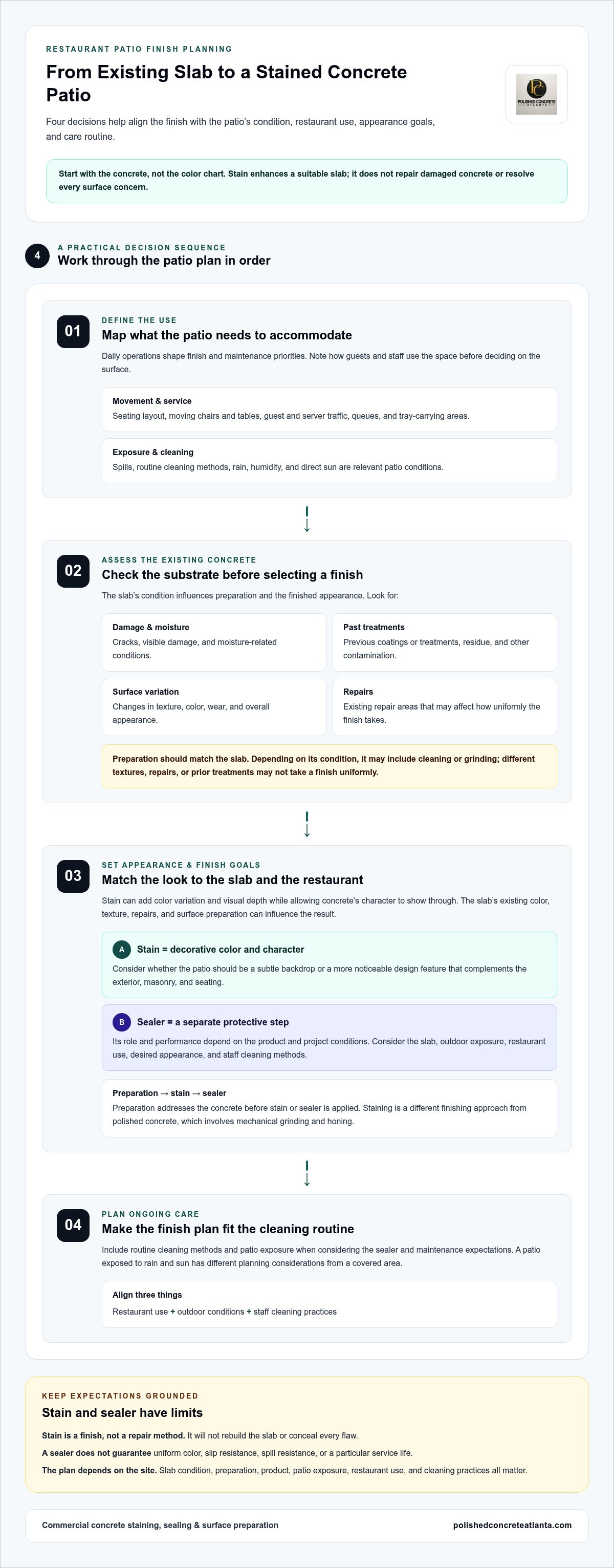
How to Choose Stained Concrete for a Restaurant Patio in Atlanta
Work through four decisions in order: how the patio operates, what condition the slab is in, what appearance suits the restaurant, and how the surface will be cared for. Stained concrete for restaurant patios Atlanta projects isn’t a universal fix for every slab or exposure. This sequence helps set practical expectations before finishing begins.
A practical decision sequence for restaurant operators
- Define patio use. Note operating hours, seating layout, furniture movement, guest and server traffic, spill exposure, and routine cleaning methods. These details define what the finished surface needs to accommodate.
- Assess the existing concrete. Record visible damage, uneven appearance, contamination, and any previous treatments or coatings. The slab’s condition informs the preparation needed before staining and sealing.
- Set appearance goals. Consider the restaurant’s exterior, furniture, and desired visual character. Then compare those goals with the concrete’s actual texture and variation. Don’t assume every part of the slab will look identical.
- Plan care and exposure. Account for rain, humidity, sun, traffic, and cleaning methods when planning sealer and maintenance. The finish should suit the patio’s actual conditions.
Questions the project plan should resolve
Before work is scheduled, establish what preparation the slab needs and how its existing condition may affect the result. Discuss how natural variation will be handled, and agree on a sample or mock-up process to review appearance expectations. This grounds design decisions in the concrete itself.
Plan access to the work area and how the project will be sequenced around restaurant operations. The approach depends on the site and scope. For additional context, read this guide to Atlanta stained concrete floors.
Once you’ve documented use, slab conditions, appearance goals, and care priorities, bring those details into your project discussion with Polished Concrete Atlanta. Discuss your restaurant patio staining project with a commercial concrete finishing team.
Plan Your Atlanta Restaurant Patio Staining Project with Confidence
A well-planned patio finish starts with the site, not a preset package. For stained concrete for restaurant patios Atlanta projects, the scope depends on the slab, its preparation needs, the desired appearance, and site conditions such as exposure and access. These factors shape the work plan and help set realistic expectations.
What to expect from project evaluation through finishing
Begin by defining the patio’s appearance goals and use, then evaluate the existing concrete. The slab’s visible condition, previous treatments, and moisture considerations inform the preparation plan. Preparation comes before staining and sealing, with the steps tailored to the concrete rather than assumed in advance.
Staining and sealing are planned as parts of the overall finish. Polished Concrete Atlanta provides commercial staining, sealing, surface preparation, and moisture mitigation for existing concrete. These services support a coordinated evaluation of the slab and finishing approach. The project scope should reflect the site, desired finish, and restaurant’s operating needs.
Keep the finished patio looking intentional
After completion, follow care guidance for the selected finish. Use cleaning methods compatible with the sealer, and address spills promptly using those methods. Avoid unverified cleaners or assumptions about stain resistance. Suitable, consistent care keeps maintenance aligned with the finish plan.
Coordinate access and work sequencing with restaurant operations so expectations are clear. The schedule should account for the specific slab and site conditions.
Ready to plan an existing-concrete patio project in Atlanta? Discuss stained concrete services with Polished Concrete Atlanta and outline your goals, slab conditions, and care priorities.
Move Forward With a Patio Finish That Fits
A successful patio staining project starts with the existing slab. Its condition and preparation shape what’s achievable, while stain and sealer choices should reflect the restaurant’s appearance goals, outdoor exposure, and daily care routine. That’s the practical foundation for evaluating stained concrete for restaurant patios Atlanta.
Polished Concrete Atlanta provides commercial concrete staining and sealing, along with floor preparation and moisture mitigation for existing concrete projects. Bringing these considerations together helps restaurant decision-makers connect slab evaluation, finish planning, and maintenance needs. Start with informed expectations about the concrete rather than assumptions about color or performance.
Ready to put your patio goals into a project plan? Discuss your Atlanta restaurant patio project with Polished Concrete Atlanta. Plan the finish around your outdoor dining space, the slab, and the way your restaurant operates.
Frequently Asked Questions
Is stained concrete a good choice for a restaurant patio in Atlanta?
Stained concrete can suit an Atlanta restaurant patio when the existing slab is appropriate for finishing and the desired appearance, use, and maintenance needs align. It can add color while retaining some of the concrete’s natural character. For stained concrete for restaurant patios Atlanta, assess the slab and outdoor exposure before choosing a finish. Staining won’t repair damaged concrete or, by itself, guarantee resistance to wear, spills, or slipping.
Can existing concrete be stained if it has cracks or previous coatings?
Cracks and previous coatings need to be evaluated before selecting a finish. Stain enhances existing concrete; it doesn’t repair structural damage or automatically conceal old coatings, repairs, or surface inconsistencies. Preparation may include removing coatings or grinding, depending on the slab. The concrete’s condition and history influence both the work plan and final appearance, so assess the surface before settling on a color.
Does a sealer make stained concrete suitable for rain and outdoor dining?
A sealer can be part of an outdoor concrete finishing plan, but it doesn’t automatically make every stained surface suitable for rain or restaurant use. Selection depends on the slab, outdoor exposure, desired appearance, traffic, and cleaning routine. Atlanta patios have site-specific weather and use conditions, so plan stain and sealer together. Don’t assume a sealer guarantees waterproofing, spill resistance, or a particular service life.
Is stained concrete slippery when wet?
Stained concrete isn’t inherently safe or slippery in every condition. Traction depends on factors including surface texture, sealer, moisture, and contaminants. A patio exposed to rain needs careful consideration of the finished surface and its intended use. Stain alone doesn’t provide slip resistance. Include traction expectations in finish planning and evaluate the selected system for the specific outdoor setting.
How do restaurants maintain stained concrete patio floors?
Follow care instructions for the stain and sealer selected for the patio. Use compatible cleaning methods, remove routine dirt, and address food or beverage spills promptly using the recommended approach. Don’t assume a cleaner suitable for another floor finish is appropriate for sealed concrete. Maintenance depends on the surface and restaurant cleaning practices, so include care expectations in the project plan.
How is a restaurant patio prepared before concrete staining?
Preparation starts with evaluating the existing slab for visible damage, residue, previous coatings, and surface inconsistencies. The concrete is then prepared according to its condition and the planned finish. This may involve cleaning or grinding, but the required steps vary by patio. Preparation creates the basis for stain and sealer application; it doesn’t replace repairs needed to address an unsuitable or damaged slab.


