
What if bubbles and peeling aren’t the root problem, but signs that the coating has lost its bond to the concrete? Preventing epoxy floor bubbling and peeling starts below the finish, where moisture, surface condition, and application choices affect adhesion. A new floor is a major investment, and poor preparation can lead to avoidable disruption and rework.
Moisture is one possible cause, but bubbling and peeling don’t always have the same cause. Trapped air, contamination, inadequate preparation, or application conditions can also contribute. Appearance alone isn’t enough to identify the failure, so guessing can lead to the wrong fix.
This guide explains what can cause each symptom and how to reduce the risk of coating failure through a disciplined process. You’ll learn what to assess before application, why concrete preparation and project-specific moisture testing matter, and how to follow the coating system’s requirements during application and curing. You’ll also see when professional grinding or moisture mitigation may be appropriate. Durable adhesion begins with the slab, not the topcoat.
Key Takeaways
- Raised pockets and coating separation are different failure symptoms. Document what you see before deciding what caused it.
- For preventing epoxy floor bubbling and peeling, follow a sequence from slab assessment and moisture testing through preparation, application, and documentation.
- Compare moisture test results with the selected coating manufacturer’s requirements. Mitigation is project-specific, not automatic.
- Use the system’s current technical data sheet to guide mixing, working time, application thickness, and recoat windows.
- Record defect locations, timing, site conditions, and coating history so corrective work addresses the cause instead of hiding the symptom.
Why epoxy floors bubble or peel: identify the failure before choosing a fix
Bubbling and peeling are symptoms, not diagnoses. Bubbling, also called blistering, appears as raised pockets beneath or within the coating. Peeling is coating separation, where the epoxy lifts or comes away from the concrete or another coating layer. Both point to a problem with the bond or film, but neither reveals the cause on its own.
Visible coating symptoms are clues; finding the root cause means investigating the slab, coating layers, and installation conditions. Moisture, dust, oils, curing residues, old adhesives, incompatible coatings, inadequate surface preparation, and application conditions can all contribute. A cluster of blisters may prompt a moisture investigation, for example, but the appearance alone can’t prove that moisture caused them. Choosing a fix before identifying the failure mechanism can lead to the same problem again.
How moisture, vapor, and slab conditions can affect epoxy adhesion
Concrete can retain moisture or allow moisture vapor to move toward the surface. Depending on the slab and coating system, that movement may interfere with adhesion or contribute to blistering and separation. Relative humidity testing within the slab and other appropriate moisture tests help assess conditions, but results must be interpreted against the selected manufacturer’s requirements. There is no universal pass limit for every system. An epoxy moisture control system is one approach to addressing moisture-related risk, not proof that moisture caused a particular defect.
How contamination and weak preparation create adhesion problems
Epoxy needs a suitable, properly prepared concrete surface to bond. Dust can remain after grinding, while oils, curing residues, old adhesives, or incompatible coatings can form a barrier between the concrete and epoxy. If the coating bonds to that layer rather than sound concrete, it may detach along with the contaminant. Concrete grinding and other concrete surface preparation steps help create the conditions for adhesion, but the preparation plan must suit the slab and coating system.
Use the defect pattern as a starting point for investigation, not a verdict. Bubbles and peeling can have different causes, and more than one factor may be involved. Record where defects appear, then inspect the exposed layers and substrate before deciding whether moisture testing, further preparation, or another corrective step is appropriate. This evidence-led approach is central to preventing epoxy floor bubbling and peeling.
How to prevent epoxy floor bubbling and peeling before installation
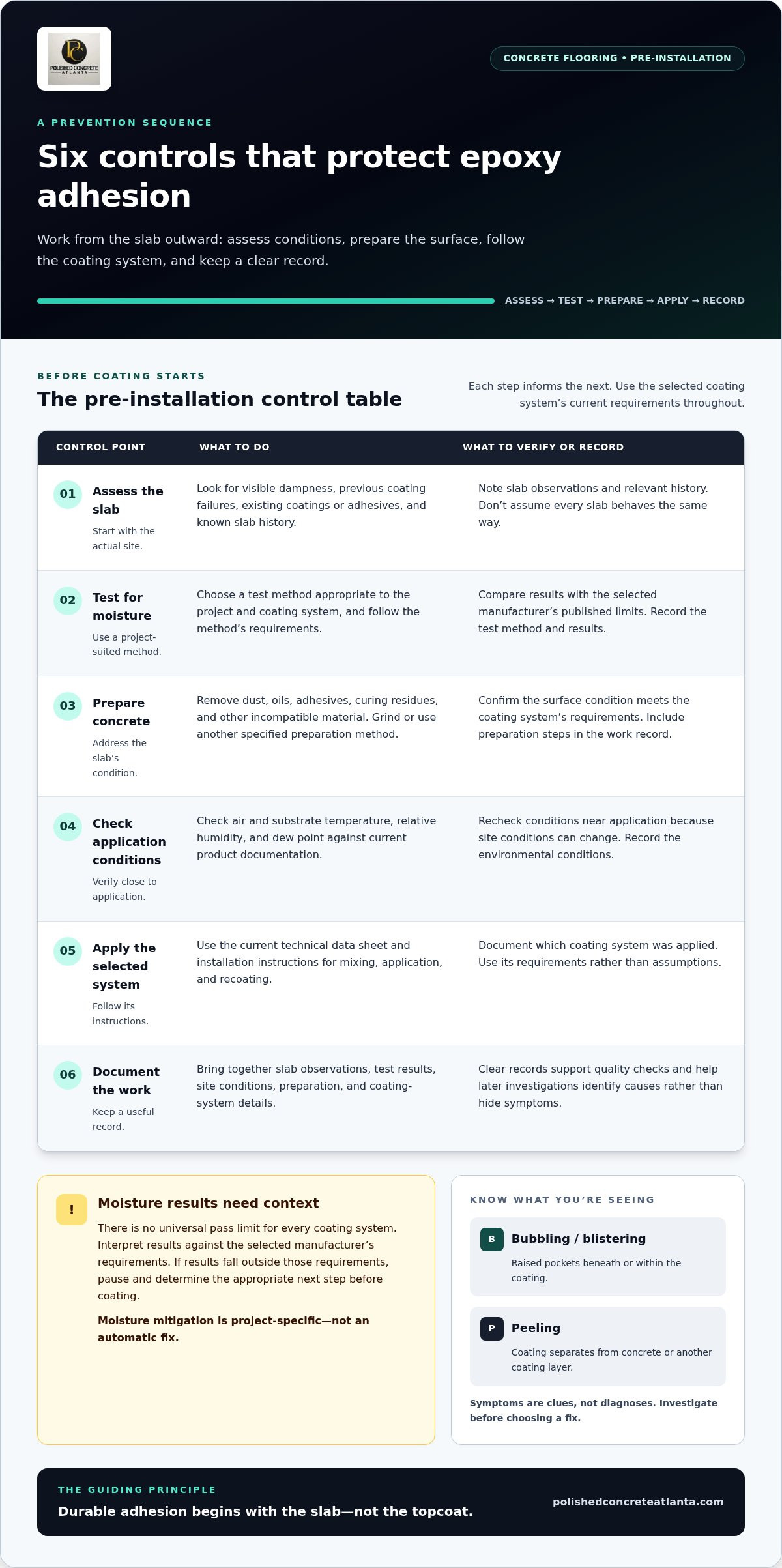
Prevention begins with a documented assessment of the concrete before coating starts. A consistent sequence helps facility teams select a coating system, plan preparation, and catch conditions that could compromise adhesion.
- Assess the slab. Note visible dampness, previous coating failures, existing coatings or adhesives, and any known slab history. In Atlanta, assess the conditions at the actual site rather than assuming every slab behaves the same way.
- Test for moisture. Choose a test method suited to the project and coating system, and follow the method’s requirements. Compare results with the selected manufacturer’s published limits. A test result is useful only when interpreted against the system it is meant to support.
- Prepare the concrete. Remove dust, oils, adhesives, curing residues, and other incompatible material. Use grinding or another specified preparation method to achieve the surface condition required by the coating system.
- Confirm application conditions. Check air and substrate temperature, relative humidity, and dew point against the current product documentation. Site conditions can change, so verify them close to application, not only during early planning.
- Apply the selected system. Follow its current technical data sheet and installation instructions, including requirements for mixing, application, and recoating.
- Document the work. Record slab observations, test method and results, environmental conditions, preparation steps, and the system applied. A clear record supports quality checks and helps with later investigations.
Assess moisture and project conditions before coating
Moisture testing isn’t a box to check against a universal pass number. The method, acceptance criteria, and interpretation depend on the project and coating system. If results fall outside the selected manufacturer’s requirements, pause and determine the appropriate next step before coating. Moisture mitigation or a different system may be relevant, but only when site findings and manufacturer guidance support that choice.
Prepare the surface and control application conditions
Preparation must address the actual condition of the slab. Grinding may be needed to remove residues and create the required profile, while glue removal may be necessary where old adhesive remains. Moisture mitigation is also project-specific, not an automatic fix. Base the plan on verified conditions and system compatibility.
For commercial and industrial floors, this sequence makes preventing epoxy floor bubbling and peeling a managed process rather than a guess. Atlanta commercial epoxy flooring expertise can help align slab assessment, preparation, and moisture mitigation with the project’s requirements.
Apply and inspect epoxy to reduce bubbles and peeling
Sound preparation sets the stage, but careful application still matters. Mixing, placement, recoat timing, and cure protection must follow the selected coating system’s current technical data sheet and installation instructions. Rushing or working through changing site conditions can increase application risk. A controlled, documented process helps keep each step on track.
Follow the coating system's mixing and application requirements
Mix ratios, mixing method, working time or pot life, and coverage vary by system. Follow the stated procedure, scraping the container as instructed and mixing thoroughly without whipping in unnecessary air. Before work begins, verify the specified application thickness, compatible primer requirements, and recoat window. Get temperature, humidity, substrate conditions, and other limits from the current manufacturer documentation rather than relying on a generic rule.
Protect the floor during curing and record quality checks
Keep foot and vehicle traffic, dust, debris, and other disturbances away for the manufacturer-specified cure period. Cure and return-to-service timing vary with the system and site conditions. Cure readiness follows the coating maker’s documented schedule, not appearance alone. Record batch identifiers, mixing and application times, environmental readings, recoat timing, and any observed defects to create a traceable quality record.
Use a simple inspection checklist at the appropriate project stages:
- Before application: Confirm the prepared substrate is clean and ready, and record relevant site readings.
- During application: Check mixing and timing records, observe coverage, and note visible bubbles, debris, or uneven areas.
- During cure: Maintain the required protection, then record defect locations and appearance during scheduled inspections.
Temperature or humidity can change during a work period, so recheck readings as the manufacturer directs. If a defect appears, document it instead of covering it immediately. Its location and timing may help distinguish an execution issue from a substrate concern. This quality control supports preventing epoxy floor bubbling and peeling without assuming any single step guarantees a flawless finish.
For commercial or industrial concrete floors, plan your epoxy flooring project with Polished Concrete Atlanta, including preparation and application considerations tailored to the site.
What to do when an epoxy floor bubbles or peels
Pause before applying another coat. A new layer may hide a visible defect temporarily, but if moisture, contamination, weak adhesion, or system incompatibility remains, the failure may return. Start by gathering evidence, then match corrective work to the confirmed cause.
A practical response when defects appear
Document affected areas before disturbing them. Take photographs and note when the bubbles or peeling appeared, where they occur, recent site conditions, and the floor’s coating and maintenance history. Include whether the defect is near joints, edges, doors, or areas exposed to water or heavy use. These details can guide an investigation, but they don’t establish the cause on their own.
A small visible patch doesn’t necessarily show the full extent of adhesion failure. An assessment may need to include nearby areas and the layers beneath the coating. Avoid covering the defect until the existing coating’s condition and compatibility with any proposed system have been evaluated.
Corrective work should follow a clear sequence:
- Assess the failure. Review the defect pattern, coating history, substrate, and site conditions. Use appropriate testing where moisture or adhesion concerns warrant it.
- Remove failed material where needed. The extent of removal depends on the coating’s condition and the assessment findings.
- Prepare the exposed substrate. Remove contaminants and prepare the concrete according to the selected system’s requirements.
- Select and apply a compatible system. Follow current manufacturer instructions for the prepared surface and verified site conditions.
When professional floor preparation or moisture mitigation makes sense
Professional preparation is useful when failed coatings, old adhesives, or surface contamination make the bond conditions uncertain. Polished Concrete Atlanta provides floor preparation, including floor glue removal, and moisture mitigation for commercial and industrial concrete floors. Moisture mitigation is appropriate when an assessment identifies a moisture concern and the selected system supports that approach. Neither measure should be automatic; the slab and coating requirements should determine the plan. The principles behind concrete surface preparation guidance explain why substrate condition matters to adhesion.
A project-specific assessment can help organize the next steps without relying on appearance alone. Discuss your Atlanta concrete flooring project.
Set the next floor up for lasting performance
A coating problem doesn’t have to define the next project. Treat what the floor revealed as useful information, and base the next decision on the concrete’s actual condition rather than assumptions. A careful, project-specific plan can reduce uncertainty before work begins and support a more confident investment in your facility.
For commercial and industrial spaces, epoxy performance depends on matching the coating system, substrate preparation, and any moisture mitigation to verified site conditions. Polished Concrete Atlanta provides commercial and industrial epoxy flooring, floor preparation, and moisture mitigation in Atlanta. A clear process starts with the slab and coating system, not a one-size-fits-all fix.
If you’re planning a new coating or addressing a floor that has begun to fail, take the next step with a team that understands concrete floor performance. Discuss your Atlanta concrete flooring project and move forward with a practical plan for preventing epoxy floor bubbling and peeling.
Frequently Asked Questions
Can epoxy be applied over an existing floor coating?
Yes, if the existing coating is sound and compatible with the new system. Peeling, powdery, oily, or poorly bonded material can undermine the new layer, even if the surface looks intact at first glance. The old coating’s condition, required surface profile, and primer compatibility all matter. In an Atlanta commercial facility, an appropriate adhesion check and preparation plan can help determine whether to recoat or remove existing material.
How long should an epoxy floor cure before people or vehicles use it?
Follow the coating manufacturer’s schedule for foot traffic, vehicle traffic, and full cure; these milestones may differ. There isn’t one reliable wait time for every epoxy system or job. Temperature, humidity, substrate conditions, and ventilation can affect cure progress. A floor that feels dry, for example, may still not be ready for a loaded vehicle or routine cleaning. Keep the area closed until the system’s documented instructions allow the intended use.
What should you do if bubbles appear while epoxy is curing?
Keep people and equipment off the area, and don’t puncture or roll over bubbles unless the installation instructions specifically direct that response. Photograph the affected spots and note when they appeared, along with site conditions and the application stage. A bubble that changes as the coating cures may call for a different response from one that remains raised or spreads. Record what you observe before corrective work alters the surface.
Can you clean an epoxy floor while it is still curing?
Don’t mop, scrub, or use cleaning chemicals during cure unless the coating instructions explicitly permit it. Water or cleaner can interfere with an uncured film, while foot traffic and cleaning tools may leave marks or embed debris in the surface. Protect the floor from spills and dust instead. If a spill occurs, follow the product maker’s cleanup directions and avoid improvising with solvents or detergents that may affect the coating.
Is peeling epoxy always a sign that moisture is coming through the concrete?
No. Moisture is one possible cause, but peeling can also relate to contamination, inadequate surface preparation, incompatible coating layers, or application conditions. The defect’s appearance alone can’t confirm the cause. For preventing epoxy floor bubbling and peeling in Atlanta facilities, compare the floor’s history and site conditions with appropriate inspection or test results. That evidence can help distinguish a moisture concern from other adhesion problems.


