
What if the floor that looks right on a proposal is wrong for the concrete beneath it? Choosing a commercial flooring contractor in Atlanta means looking beyond the finish to the facility’s slab, preparation needs, moisture conditions, and daily demands. Polished concrete, epoxy, and sealed concrete each require a scope suited to the existing floor.
It’s sensible to compare finishes and proposals closely, but estimates based on different assumptions about grinding, leveling, glue removal, or moisture mitigation aren’t directly comparable. Atlanta’s heat and humidity can also make slab moisture and condensation important considerations. A useful proposal explains how the floor’s condition and the selected system shape the work.
This 2026 buyer’s guide offers a practical way to match your facility’s concrete and operating needs to a flooring system. You’ll learn how polishing differs from coatings and other concrete finishes, which preparation steps may affect the scope, and how to compare proposals on equal terms. Polished Concrete Atlanta focuses on commercial concrete finishing and restoration, including preparation for new finishes. Start with the slab, then choose the finish.
Key Takeaways
- Start with how your facility uses the floor, then identify the concrete finish that fits its day-to-day demands.
- Compare contractors by their experience with concrete systems and the preparation work your slab may require.
- Use clearly defined project scopes to compare proposals based on the same finish and preparation assumptions.
- A practical checklist can take you from facility requirements to a contractor whose scope fits the project. That’s the core of choosing a commercial flooring contractor in Atlanta.
- Polished Concrete Atlanta focuses on commercial concrete finishing in Atlanta.
Choosing a Commercial Flooring Contractor in Atlanta Starts With Your Facility
A commercial floor must do more than look finished. It needs to suit the work happening on it, the condition of the existing slab, and the upkeep your team can manage. That’s why choosing a commercial flooring contractor in Atlanta should start with your facility’s requirements, not a finish sample alone.
A commercial concrete flooring contractor assesses and finishes existing concrete according to the facility’s use, slab condition, preparation requirements, and selected system. This focused work differs from broad residential flooring selection, where the discussion may center on choosing materials for rooms in a home. For a general overview of flooring materials and subfloors, consult Flooring.
Which facility demands should shape the flooring brief?
Start by describing how each area operates. An Atlanta retail space may prioritize appearance and routine cleaning. An office may need a consistent look across shared spaces, while a warehouse or industrial facility may need the flooring brief to account for equipment, heavier traffic, and exposure to materials used in daily operations. These settings call for different priorities.
Record traffic patterns, equipment movement, likely spills or other exposure, cleaning routines, and the appearance you want. Then note the existing concrete’s condition, since the surface affects what preparation may be needed before finishing. A useful brief connects the facility’s actual demands to the work proposed, rather than treating the slab as a blank canvas.
Which commercial concrete flooring systems belong in the discussion?
Polished concrete refines the existing slab to create a finished concrete surface. Epoxy flooring applies a coating system over prepared concrete. Stained concrete changes the slab’s appearance with color, while sealed concrete uses a protective sealer as its finish. These systems approach the existing floor differently. Compare them against your facility’s use, desired appearance, and maintenance expectations.
If you’re considering polished concrete floors in Atlanta, connect the visual goal to the slab’s condition and how the space functions. Polished Concrete Atlanta focuses on commercial and industrial concrete finishing and restoration, including polished, epoxy, stained, and sealed concrete floors. The company has served Atlanta since 2004. A facility-first brief gives the flooring discussion a practical foundation.
Evaluate Atlanta Flooring Contractors by Concrete Expertise and Preparation
Commercial concrete work calls for more than a broad flooring catalogue. Look for a match between the contractor’s experience, the system being considered, the slab’s condition, and the preparation your facility requires. A proposal should name the finish and describe relevant preparation tasks. General wording can leave important assumptions unclear.
Use these categories to compare project fit:
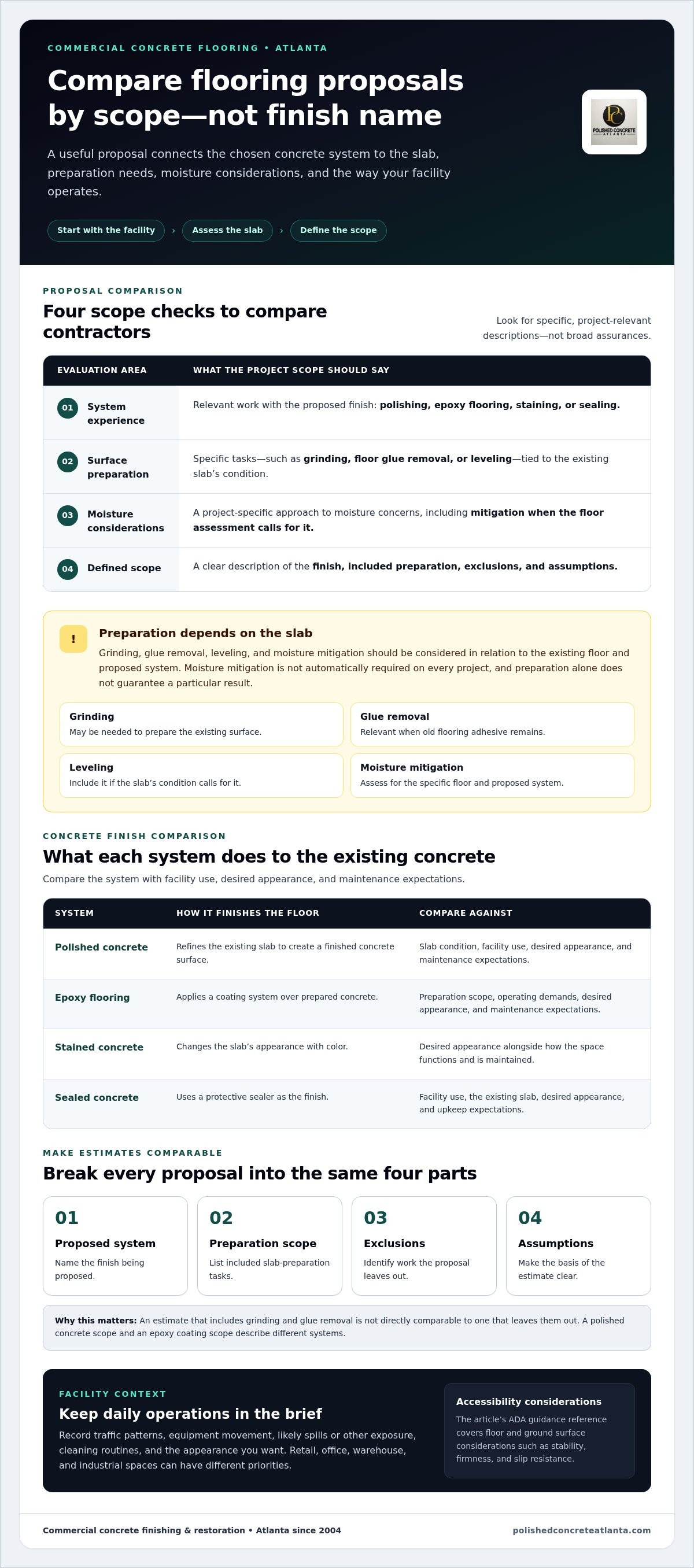
| Evaluation area | What to look for in the project scope |
|---|---|
| System experience | Relevant work with the proposed concrete finish, such as polishing, epoxy flooring, staining, or sealing. |
| Surface preparation | Specific tasks such as grinding, floor glue removal, or leveling, tied to the existing slab’s condition. |
| Moisture considerations | A project-specific approach to moisture concerns, including mitigation when the floor assessment calls for it. |
| Defined scope | A clear description of the finish, included preparation, exclusions, and assumptions. |
Surface preparation is an important part of a flooring scope, but it doesn’t guarantee a particular result. Grinding may be needed to prepare the existing surface; glue removal matters when old flooring adhesive remains; and leveling may belong in the scope if the slab’s condition calls for it. Moisture mitigation isn’t automatically required on every project. Consider it in relation to the specific floor and proposed system.
Compare proposals on equal terms
Separate each estimate into four parts: proposed system, preparation scope, exclusions, and assumptions. One proposal may include grinding and glue removal while another leaves them out. A polished concrete scope and an epoxy coating scope describe different systems, so their totals aren’t direct equivalents. Clear line items help reveal what each proposal actually covers.
Commercial requirements can include accessible floor and ground surfaces. The U.S. Access Board’s ADA guidance for floor and ground surfaces covers considerations such as stability, firmness, and slip resistance. Keep those needs in view alongside the finish and facility operations.
Choosing a commercial flooring contractor in Atlanta becomes more straightforward when the proposed system, preparation, moisture considerations, and scope fit the actual project. Polished Concrete Atlanta provides commercial concrete finishing and preparation services in Atlanta. Explore Polished Concrete Atlanta’s concrete flooring services.
Use a Practical Checklist to Select a Commercial Flooring Contractor
A disciplined selection process turns facility needs into a scope you can compare. The goal isn’t to pick the most attractive finish name or the shortest proposal. It’s to understand what the existing slab needs and how the proposed work fits the way your facility operates.
What should facility teams define first?
Before reviewing proposals, record how the space is used, what the floor must handle, and what appearance and maintenance approach you want. Note visible or known slab concerns, such as old adhesive, uneven areas, or signs of moisture. Separate essential operational needs from aesthetic preferences so the flooring decision stays practical.
- Describe the facility’s demands. Outline the activities in each area, traffic and equipment patterns, likely floor exposure, and routine cleaning. A warehouse work zone and a customer-facing entrance may need different priorities, even within the same property.
- Document the existing slab. Record conditions that could affect the work, including adhesive residue, surface wear, unevenness, and moisture symptoms. Existing concrete isn’t a uniform starting point. Its condition can change the preparation required and the work included in a project scope.
- Set priorities before choosing a system. Identify performance requirements separately from appearance preferences. Then assess whether polished, epoxy, stained, or sealed concrete fits the brief. This keeps a finish sample from deciding the project on its own.
- Review each proposal by its actual work. Compare the named concrete system and preparation tasks, not just the headline finish. Note what the scope includes, what it excludes, and which assumptions affect the work described. Grinding, leveling, glue removal, and moisture mitigation may apply differently depending on slab conditions.
- Select the contractor whose scope fits. Weigh the proposal against the facility brief, concrete system, and defined preparation. Treat budget and scheduling as project-specific. General averages can’t account for the floor’s condition or the work required.
How do you move from comparison to a clear scope?
Use the same facility needs, system, and scope as the basis for comparing proposals. If one estimate assumes adhesive removal or leveling and another doesn’t, they describe different work, even if both use the same finish label. Resolve those differences in the scope before making a decision.
For a project-specific path from existing concrete to a finished commercial floor, review commercial concrete flooring services.
Choose Polished Concrete Atlanta for Commercial Concrete Flooring in Atlanta
Choosing a commercial flooring contractor in Atlanta is easier when the contractor’s core work matches your facility’s floor. Polished Concrete Atlanta focuses on commercial and industrial concrete finishing and restoration, with services built around existing concrete surfaces. The company has served Atlanta since 2004.
The finish and the preparation are connected. The floor’s current condition, existing adhesive, uneven areas, or moisture concerns can shape the preparation scope. Polished Concrete Atlanta brings finishing and preparation services together, so a commercial flooring plan can account for the existing slab.
Which commercial concrete flooring needs does the company address?
For facilities seeking a professionally ground and polished existing surface, polished concrete finishes the slab itself. Epoxy flooring is another option for commercial and industrial concrete floors. Stained concrete focuses on the floor’s appearance, while sealed concrete provides a sealed finish. The right discussion starts with the facility’s priorities and the concrete in place.
Preparation is also part of project fit. Concrete grinding, floor leveling, and floor glue removal address different surface conditions, while floor moisture mitigation can be included when the project calls for it. These services help shape a scope around the actual floor instead of treating every slab as the same starting point.
What is a sensible next step for an Atlanta flooring project?
Bring together three details: how the facility uses the space, what you know about the existing floor, and the finish you want. Include concerns such as old adhesive, unevenness, or moisture symptoms. This gives the project a starting point based on the concrete and relevant finishing work, rather than a generic description of the desired surface.
Polished Concrete Atlanta provides polished concrete, epoxy flooring, staining, sealing, glue removal, and moisture mitigation for commercial projects involving existing concrete. A focused brief can help define a project-specific scope around your facility’s needs and priorities. Review commercial concrete flooring services.
Turn Your Flooring Decision Into a Clear Project Brief
Translate your flooring priorities into a brief that can guide the work: how the space operates, what the existing slab needs, which finish you’re considering, and what preparation belongs in scope. That clarity keeps decisions grounded in the facility rather than a surface sample or proposal headline. It also gives stakeholders a shared reference point as plans develop and responsibilities take shape.
As you move from planning to execution, treat choosing a commercial flooring contractor in Atlanta as a project-fit decision. A well-framed conversation can show where priorities align, where the concrete calls for attention, and which details need to be resolved before work begins. The result is a clearer path from the current floor to the finished space, without relying on assumptions that may not suit the site.
Bring your facility use, floor concerns, and desired outcome into the next step. Discuss your Atlanta commercial concrete flooring project and start defining a scope built around your floor.
Frequently Asked Questions
How do I choose a commercial flooring contractor in Atlanta?
Choose a contractor whose commercial concrete experience fits your facility’s operations and existing slab. For choosing a commercial flooring contractor in Atlanta, consider a distribution area with forklift traffic: its demands differ from those of a customer lobby, even if both have concrete floors. Assess whether the proposed system and preparation suit the specific use, then compare the project scope rather than relying on broad claims of flooring experience.
What should a commercial flooring proposal include?
A useful proposal identifies the floor areas covered, the selected concrete system, and the work included for the existing surface. It should also make exclusions and assumptions visible, such as areas omitted from the scope or preparation items treated separately. In an Atlanta office renovation, this clarity helps facility and project teams coordinate the flooring work with adjacent trades and compare estimates that describe the same work.
How much does commercial flooring cost in Atlanta?
There isn’t one reliable price for commercial flooring in Atlanta without defining the project. Cost depends on the area, selected system, and existing slab condition, including whether glue removal, leveling, grinding, or moisture mitigation is needed. Treat an early figure as provisional until the scope reflects the actual floor and preparation requirements. For a useful budget comparison, consider each amount alongside the specific work included.
Is polished concrete suitable for every commercial space?
No. Polished concrete isn’t the right fit for every commercial space. Suitability depends on how the facility operates, the desired appearance, maintenance practices, and the condition of the existing slab. A business seeking a finished look from its existing concrete may consider polishing, while another space may have operational requirements better addressed by a different system. Evaluate the floor in context, not by appearance alone.
Does Polished Concrete Atlanta pour new concrete floors?
Polished Concrete Atlanta focuses on finishing and restoring existing concrete. Its commercial flooring services include grinding and polishing an existing slab, epoxy flooring, staining, sealing, and relevant preparation. The company’s work centers on the concrete surfaces already in place, with the selected finish and preparation shaped by the floor’s condition.
Can a commercial flooring project address existing floor glue?
Yes. Floor glue removal is part of Polished Concrete Atlanta’s floor preparation services. In a commercial renovation, adhesive left after old flooring is removed may need attention before the existing concrete receives a new finish. The preparation required depends on the slab’s condition and the selected system, so include adhesive residue in the project scope. This makes it easier to account for glue removal alongside other relevant surface preparation.


