

A showroom floor can elevate a brand or distract from everything displayed on it. That’s why microcement flooring for Atlanta showrooms should be judged on more than its sleek, continuous appearance. The existing slab, customer and staff traffic, and daily cleaning all matter. Is it practical for your space? It can be when the design goals and preparation plan suit the floor’s condition and use.
This guide helps you make that decision. Learn what to assess in the existing floor, how microcement compares with polished concrete, epoxy, and stained concrete, and which questions about wear, spills, and maintenance to resolve during planning. We’ll also explain how preparation affects the project and how to connect your showroom’s visual goals with its day-to-day needs.
Key Takeaways
- Compare microcement flooring for Atlanta showrooms with your brand presentation, visitor routes, cleaning routines, and existing floor condition.
- Assess the slab before selecting a finish, since cracks, uneven areas, old coatings, and adhesive residue can affect preparation.
- Map entrances, display areas, and busy routes to identify the demands your showroom floor needs to handle.
- Plan work zones, display protection, access, and reopening around the project scope and finish system.
Is Microcement Flooring a Smart Fit for an Atlanta Showroom?
Microcement is a thin, hand-applied decorative finish installed in layers over a prepared surface. Its appeal is the potential for a continuous-looking floor that keeps attention on products rather than visual breaks underfoot. But appearance alone doesn’t determine whether it suits an Atlanta showroom. Consider brand presentation, visitor routes, cleaning routines, and the condition of the existing floor together.
A seamless look does not by itself establish wear resistance, stain protection, or maintenance needs. Those depend on the selected system, preparation, use, and care. For example, an entrance exposed to tracked-in grit has different demands from a display area with lighter foot traffic. The condition of the existing surface matters too, since it influences preparation and finish planning.
Choose a showroom finish by balancing brand image, visitor flow, cleaning practices, and the readiness of the existing floor, not by appearance alone.
What showroom priorities can microcement support?
A continuous-looking surface can give product displays a calm backdrop, especially across an open floor. Color, texture, and sheen shape the overall effect: a subdued finish can keep attention on the merchandise, while a more expressive surface can reinforce a distinctive brand. Before choosing a look, map the entrance, common visitor routes, display zones, and staff work areas. Also consider how often displays move and whether your cleaning routine fits the finish you have in mind.
When should a showroom assess other concrete finishes?
Microcement creates a decorative surface over a prepared substrate. Polished concrete takes a different approach by grinding and polishing the existing slab, so the slab’s condition and appearance play a central role. Epoxy flooring and stained concrete offer other visual and functional options. Start the comparison with what the space needs to communicate and support. For a closer look at the slab-focused option, explore this guide to polished concrete floors.
Compare trade-offs rather than assuming one finish is automatically tougher or easier to maintain. A showroom that changes displays often may prioritize a cohesive visual field. One with demanding cleaning routines may focus on how the finish fits its care practices. In both cases, the existing floor and its preparation needs belong in the decision.
How Microcement Flooring Works, and Why the Existing Slab Matters
A microcement floor is not simply a decorative coat placed over any surface. It is a finish system: the substrate is assessed and prepared, finish layers are applied, and protective finishing completes the surface. The materials and build-up depend on the selected system and project. Preparation is foundational, not a step to shortcut.
Microcement performance depends on the complete finish system and the condition of the substrate beneath it. A decorative layer won’t correct an unstable or structurally compromised slab. Cracks, movement, or moisture concerns should be assessed as part of project planning rather than covered by the finish.
What does a microcement floor system involve?
The general sequence is to evaluate the surface, prepare it for the selected finish layers, apply those layers, and complete the protective finish specified for the system. Depending on the assessment, preparation may involve cleaning, grinding, or addressing surface irregularities. Materials and application details vary, so there is no single build-up that fits every showroom. The finished appearance depends on the complete assembly, not just the visible top layer.
Which existing-floor conditions affect the project?
Cracks, uneven areas, old coatings, adhesive residue, and signs of moisture can all affect preparation and scope. Cracks may need further assessment. Coatings or glue residue may need removal so the surface is ready for a new finish. Unevenness may make concrete leveling relevant, while moisture concerns can call for investigation and, where appropriate, moisture mitigation. These decisions depend on site conditions; they are not automatic fixes.
For a showroom, note where defects occur and whether they cross entrances, display zones, or busy routes. That context connects slab observations to the intended finish and use. The American Concrete Institute’s concrete substrate resources offer broader information about concrete properties and practices. Project-specific assessment is still essential. For a focused overview of concrete surface preparation, see how surface condition informs adhesion planning.
Microcement flooring for Atlanta showrooms calls for a plan based on the actual slab, not assumptions from a sample or appearance alone. Concrete grinding, floor preparation, glue removal, leveling, and moisture mitigation may each be relevant depending on site conditions. Polished Concrete Atlanta provides microcement flooring and commercial concrete preparation. Review the project services and preparation approach to see how these needs fit into the project.
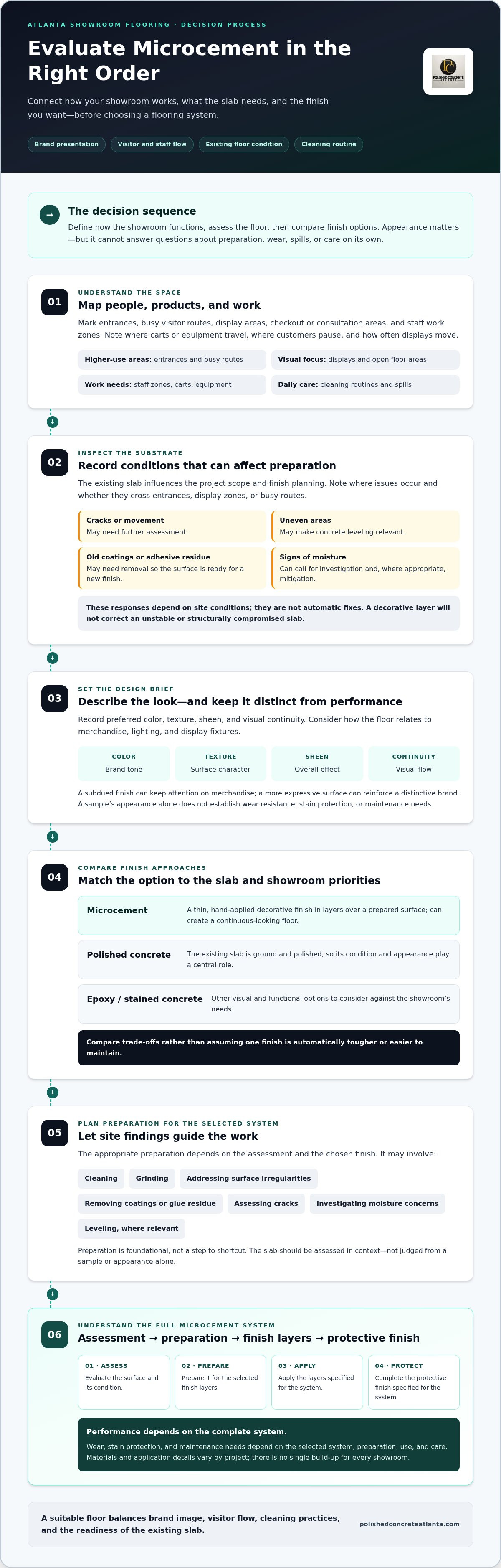
How to Evaluate Microcement for Your Atlanta Showroom
Make the decision in sequence: first define how the showroom functions, then assess the floor, and finally compare finish options. This keeps a striking sample from overshadowing practical questions about traffic, cleaning, and preparation. Use this framework to evaluate microcement flooring for Atlanta showrooms against the demands of your space.
- Map how people and work move through the showroom. Mark entrances, busy routes, display zones, checkout or consultation areas, and staff work zones. Note where carts or equipment travel and where customers tend to pause. This map shows which areas will see the most use and where a continuous-looking finish matters most.
- Set the design brief. Record preferred color, texture, sheen, and visual continuity. Note how the floor should relate to merchandise, lighting, and display fixtures. Keep these aesthetic preferences distinct from performance questions. A finish that suits the brand still needs to fit site conditions and daily routines.
- Describe operating and cleaning needs. Consider how often displays change, how staff clean the floor, and what enters the space from outside. These details help shape finish discussions and care planning. If possible, review a representative sample in the showroom’s lighting and alongside key materials. A small sample can look different from a larger floor in context.
- Document the existing floor. Note current finishes, visible cracks or damage, uneven areas, adhesive residue, and known moisture concerns. Photos and a simple floor plan help organize observations. A site assessment connects those conditions to preparation and project scope rather than relying on assumptions.
- Compare finishes against both goals. Weigh the desired look alongside the slab’s condition and showroom operations. Stained concrete is another decorative option with its own appearance and project considerations; this guide to Atlanta stained concrete flooring can help frame that comparison. Select a finish only after considering both design intent and site suitability.
A clear brief makes the project discussion more productive. Discuss your showroom flooring project with your traffic map, finish priorities, and observations about the existing floor in hand.
Planning Microcement Flooring Work for an Atlanta Showroom
A well-planned floor project starts with clear information, not assumptions. Microcement flooring for Atlanta showrooms combines finish decisions with commercial concrete preparation, so the scope should reflect the existing floor, selected finish system, and how the business operates. Access, display protection, work areas, and reopening plans belong in the same discussion as appearance.
What should the project discussion establish?
Bring together four essentials: how the showroom is used, the appearance you want, the visible condition of the existing floor, and the operational constraints the project needs to account for. Identify busy customer routes, staff work zones, entrances, and areas that need special attention. Share known floor issues and relevant site observations.
These details connect preparation needs with finish decisions and help define a scope for the space. Concrete grinding, leveling, glue removal, or moisture mitigation may be relevant depending on the floor’s condition. The sequence and extent of work depend on the site and selected system, so don’t treat a generic schedule or assumed disruption level as a project commitment.
How can the showroom prepare for the work?
Before work begins, coordinate practical site arrangements with the project team. Decide which displays can be moved, what needs protection, how work zones will be separated, and how staff will receive updates. Clarify access and how customer movement will be managed around active work areas. A clear layout reduces last-minute decisions and makes responsibilities easier to understand.
Plan reopening around the actual work sequence and finish system rather than an assumed fixed timeframe. Align expectations for access and use as the project details are established. Broader commercial surface considerations also inform planning; this guide to industrial flooring contractors in Atlanta offers additional context on commercial flooring decisions.
Polished Concrete Atlanta provides microcement flooring and commercial concrete preparation tailored to the showroom and existing substrate. A focused discussion can turn your operational needs, site conditions, and design goals into practical next steps. Discuss your showroom floor and plan the project.
Turn Your Showroom Flooring Vision Into a Project Plan
Bring your design intent and operational needs into one clear project conversation. Decide what the floor should communicate, identify how the showroom needs to function during the work, and list questions about the existing surface. Those priorities give the planning discussion a practical starting point and help guide finish decisions and project scope.
For microcement flooring for Atlanta showrooms, the right plan connects the visual goal to the space itself. Polished Concrete Atlanta provides microcement floors, commercial concrete finishing, and preparation. The work is tailored to the showroom, the existing floor, and the demands of daily use.
Discuss your Atlanta showroom flooring project and take the next step toward a floor plan built around your brand and space. A thoughtful start can help create a finish that feels considered from the first customer visit.
Frequently Asked Questions
Is microcement flooring durable enough for a busy showroom?
Microcement flooring for Atlanta showrooms can suit busy use, but durability depends on the complete floor system, substrate preparation, finish selection, traffic, and maintenance. A showroom with frequent rolling displays or equipment may place different demands on the surface than one used mainly for browsing. Assess actual routes, turning points, cleaning practices, and site conditions before choosing. No universal lifespan or performance claim fits every space.
Can microcement flooring be installed over an existing concrete floor?
An existing concrete floor may serve as the substrate for microcement, but suitability depends on its condition. Coatings or adhesive residue can affect preparation, while cracks, uneven areas, and moisture concerns may change the work required. Note prior repairs and areas that behave differently, such as a patch near an entrance. A site assessment turns those observations into a project-specific scope instead of assuming every slab is ready for the finish.
Does microcement flooring require grout lines?
Microcement is commonly chosen for a visually continuous surface without conventional tile grout joints. That appearance can help a showroom floor read as one field, particularly across open display areas. Still, a continuous look does not mean the slab has no construction joints or that movement-related details can be ignored. The system, substrate, transitions, and installation all influence the final result, so joint conditions belong in project planning.
Is microcement flooring slippery when wet?
Slip characteristics can vary with surface texture, sealer, contaminants, and moisture, so microcement should not be treated as automatically slip-proof. In an Atlanta showroom, consider water tracked in at the entrance, cleaning conditions, and how visitors move between zones. Review the finish for those real-use conditions, not just as a dry sample. Choose the surface with its intended use and care practices in mind.
How do you maintain a microcement showroom floor?
Follow the care guidance for the installed microcement system and its protective finish, since cleaning needs can differ by specification. Use products identified as compatible in the project instructions, and remove spills and abrasive debris using the recommended method. For example, grit brought in at the entrance may need prompt attention to limit surface abrasion. Keep the written care instructions accessible to staff so routine cleaning stays consistent.
Can damaged microcement flooring be repaired?
Damaged microcement may be repairable, but the appropriate approach depends on the damage type, location, extent, and original system and finish. A small chip at a display edge presents a different repair question from widespread cracking or surface separation. Even a well-matched repair can look different because surrounding areas have aged or worn differently. Evaluate the affected area, then match the repair plan to the floor.


