

The coarsest surface isn’t automatically the right surface. For commercial concrete shot blasting and grinding, the right choice depends on the slab’s condition and the finish that needs to bond to it. An unsuitable profile can undermine the performance of a floor coating, even when the coating is installed correctly.
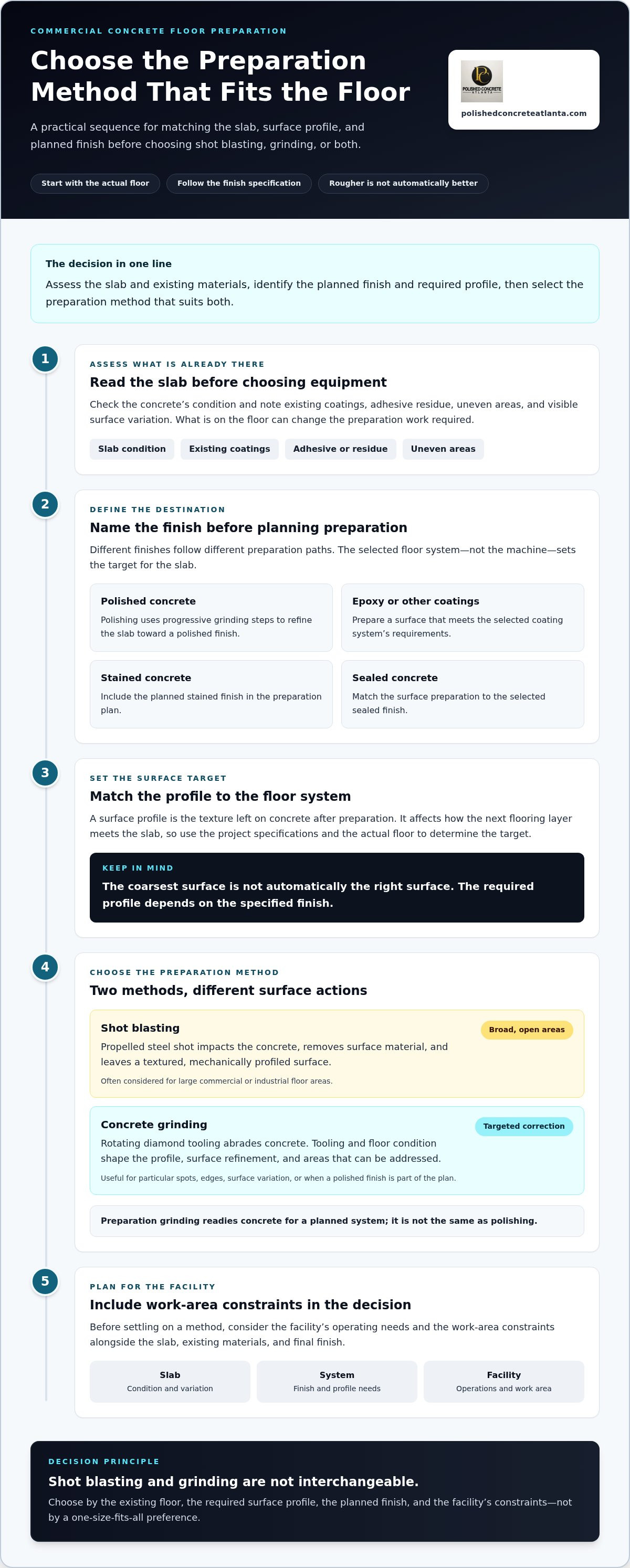
To decide whether a facility needs shot blasting, grinding, or both, start with the existing floor and the planned finish. These methods prepare concrete differently, so the equipment alone doesn’t determine the right approach. The required surface profile, existing materials, and finish specifications all matter.
This guide explains how shot blasting and concrete grinding differ, what each method can achieve, and which factors to consider when preparing for polished concrete, epoxy, stained, or sealed floors. It also shows why preparation should be planned as part of the complete commercial floor project. For Metro Atlanta facilities, Polished Concrete Atlanta brings decades of experience in concrete grinding, floor preparation, and commercial flooring. Start with the floor you have and the result your facility needs.
Key Takeaways
- Shot blasting profiles concrete through impact, while diamond grinding abrades the slab. The methods aren’t interchangeable.
- Use the required surface profile and planned finish to guide commercial concrete shot blasting and grinding decisions.
- Assess the slab’s condition, existing materials, target finish, and facility operating constraints before choosing a preparation approach.
- Preparation requirements vary for polished concrete, epoxy, stained, and sealed finishes.
- Polished Concrete Atlanta brings consultation, product selection, installation, and hand-off together in a commercial floor project.
Commercial Concrete Shot Blasting and Grinding: What Each Method Does
Choose a preparation method based on the finish, not the machine. A slab intended for a coating needs a surface that meets the coating system’s requirements. A floor intended for polishing follows a different preparation path. Commercial concrete shot blasting and grinding both change the concrete surface, but they use different methods and leave different characteristics.
Shot blasting propels steel shot against concrete to remove surface material and create a textured profile. Concrete grinding uses diamond tooling to abrade the slab, address surface conditions, and create a selected profile or finish. The practical distinction is important: the existing floor and the planned work determine which approach fits.
How commercial concrete shot blasting prepares a floor
A shot blasting machine propels steel shot at the concrete. The impact removes surface material and leaves a textured profile. Shot blasting is often considered for large, open commercial and industrial areas where profiling broad sections of floor is part of the project plan. For a general overview of the technique, Shot blasting describes its use as a surface preparation method.
For a facility team, the key question is whether the resulting texture suits the specified floor system and the area being prepared. Shot blasting is a preparation method, not a finished floor. Its role depends on the coating or other finish planned for the slab.
How concrete grinding prepares a commercial surface
Grinding uses rotating diamond tooling to abrade concrete in a controlled way. Depending on the tooling and floor condition, it can address surface irregularities or residue and prepare the profile for the next flooring stage. Preparation grinding is not the same as polishing.
Preparation grinding readies the concrete for a planned system. Polishing uses progressive grinding steps to refine the slab toward a polished concrete finish. For more detail on how surface condition and profile affect adhesion, explore this concrete surface preparation guide.
Base the plan on what is actually on the floor. Existing coatings, adhesive residue, uneven areas, and the intended finish all affect the work required. Polished Concrete Atlanta provides commercial concrete grinding and floor preparation, including floor glue removal and moisture mitigation. These services can be coordinated with finishes such as polished concrete, epoxy, stained concrete, or sealed concrete.
Shot Blasting vs. Concrete Grinding: Compare Profiles, Removal, and Finish
Neither method suits every commercial slab. Shot blasting and grinding differ in the texture they leave, how they treat the floor, and how they address existing surface conditions. Coating thickness may inform the decision, but it is not a universal rule. Follow the floor system’s requirements and assess the concrete before choosing a method.
| Comparison | Shot blasting | Concrete grinding |
|---|---|---|
| Mechanism | Propelled steel shot impacts the slab. | Diamond tooling abrades the concrete. |
| Typical profile | Leaves a textured, mechanically profiled surface. | Can create different profiles and surface finishes, depending on tooling and process. |
| Removal role | Profiles broad floor areas and removes surface material through impact. | Can adjust surface conditions and address localized areas, with results shaped by tooling and existing material. |
| Project context | Often considered for large, open commercial or industrial floors. | Useful where surface refinement, targeted correction, or a polished finish is part of the plan. |
How the surface profile affects the next flooring system
A surface profile is the texture left on concrete after preparation. It affects how the next flooring layer meets the slab, so it needs to align with the project specifications for the coating or finish. Start with the requirements for the selected system, then match the preparation plan to those requirements and the actual floor. A rougher surface is not automatically better.
The right preparation depends on the floor’s condition and the specified finish, not on a one-size-fits-all preference for blasting or grinding.
Where grinding and shot blasting differ in floor removal
Shot blasting is often used to profile broad, open areas. Grinding allows more targeted treatment of particular spots, edges, or areas with visible surface variation. What grinding can remove depends on the diamond tooling and the material on the floor. An existing coating or adhesive may change the preparation work required.
Consider the complete floor system, not just the preparation step. The industrial floor coatings guide provides context for evaluating finishes alongside the slab beneath them. For Metro Atlanta commercial projects, Polished Concrete Atlanta’s flooring services connect concrete grinding and floor preparation with finishes such as epoxy, polished, stained, and sealed concrete.
How to Select Concrete Preparation for an Atlanta Commercial Floor
A sound preparation plan starts with the actual floor and the facility’s operating needs. For commercial concrete shot blasting and grinding in Metro Atlanta, assess the slab, existing materials, final finish, and work-area constraints before settling on a method. This sequence helps keep assumptions from driving the decision.
- Record the current slab condition. Note visible surface variation, damaged or uneven areas, and differences between zones. Separate observations from conclusions: “adhesive residue is visible” describes a condition; “the floor needs shot blasting” proposes a solution.
- Identify existing materials. Document coatings, glue, and other residue that may affect preparation. Include floor glue removal in the project scope if adhesive remains. If there are moisture concerns, consider floor moisture mitigation as part of the plan.
- Define the intended finish. Decide whether the goal is polished concrete or a coating or finish such as epoxy, stained concrete, or sealed concrete. Polishing involves progressive refinement. Preparation for a coating needs to align with that system’s specifications.
- Map operating constraints. Identify access points, active work areas, and the sequence in which spaces can be made available. A warehouse or manufacturing facility may need a different work-area plan from a restaurant, office, or retail space.
Assess the slab, existing finish, and planned outcome
Base the assessment on observable details: where coatings or adhesives remain, where the surface changes, and what finish the project needs to deliver. A discoloration or rough patch alone does not establish which preparation method is required. Floor glue removal and moisture mitigation can add steps, so include them in the plan alongside the selected finish rather than treating preparation as an equipment decision.
Plan preparation around facility operations
Clarify access, active areas, and how work should be sequenced around daily operations. The project plan depends on the slab’s condition, existing materials, selected finish, and coordination needs. For broader context on facility requirements and project coordination, see this industrial flooring contractors guide.
Polished Concrete Atlanta manages commercial and industrial flooring projects in Metro Atlanta from consultation and product selection through installation and hand-off. Plan your commercial floor preparation as part of the finished-floor project.
Commercial Concrete Grinding in Atlanta: From Preparation to Finished Floor
Concrete grinding and floor preparation work best when planned as part of the complete flooring project. For Metro Atlanta commercial and industrial facilities, connect the slab’s condition and preparation scope to the selected finish, then coordinate the work through installation and hand-off. Polished Concrete Atlanta brings decades of experience to that process.
Match preparation planning to the specified commercial finish
The planned finish shapes the preparation plan. Polished concrete follows a progressive refinement process, while epoxy flooring, concrete staining, and sealed concrete each have their own surface preparation requirements. Coordinate the existing floor, preparation work, and finish as one project rather than selecting a method in isolation. For facility teams considering a polished surface, this guide to polished concrete floors in Atlanta offers additional context.
Commercial concrete shot blasting and grinding are preparation methods, not guarantees of a particular finished floor. Polished Concrete Atlanta provides concrete grinding and floor preparation, then coordinates those services with its commercial flooring work. Product selection and installation planning take the slab into account, creating a clear path from preparation to the intended finish.
Move from project consultation to installation hand-off
Project management spans consultation, product selection, installation, and hand-off. This gives facility teams a coordinated way to plan the flooring work. Polished Concrete Atlanta commits to on-schedule completion and a cost-effective process from beginning to end, keeping preparation connected to the finished-floor objective.
For commercial and industrial projects, the company can provide timely, agency-delivered certificates of insurance. Its project gallery includes more than 300 photos, offering examples to review as you consider flooring options. These resources support a focused project conversation, while the scope is tailored to the facility and selected finish.
If your facility is planning a concrete floor project in Metro Atlanta, explore commercial flooring services in Atlanta to see how preparation, product selection, and installation come together.
Turn Your Floor Requirements Into a Clear Project Plan
Before preparation begins, give the project team a shared picture of what the finished floor needs to do. Consider how each area is used, what the facility needs to maintain during the work, and which qualities matter most in the final surface. A warehouse, customer-facing retail space, and active office may have different priorities. Clear goals turn the commercial concrete shot blasting and grinding decision into a practical project discussion rather than an equipment debate.
Bring the intended finish, known slab conditions, and operating needs together in one brief. Identify who is responsible for facility access and project decisions, and define what a successful hand-off should include. These details give planning a clear direction and keep the floor’s purpose in view.
For a commercial concrete flooring project in Metro Atlanta, take the next step with Polished Concrete Atlanta. Share your facility’s needs and plan a route from preparation to finished floor.
Frequently Asked Questions
Can shot blasting and concrete grinding be used on the same commercial floor?
Yes. A project can use shot blasting in one area and grinding in another, or use different methods at separate stages when the floor conditions and finish requirements call for it. This is not a default sequence. Differences in existing materials or surface conditions between areas may affect the plan. The comparison of commercial concrete shot blasting and grinding explains the methods, while the actual floor and finish determine the preparation approach.
Can concrete grinding remove old floor glue before a new finish?
Yes. Polished Concrete Atlanta provides concrete grinding and floor glue removal as part of floor preparation. The approach depends on the adhesive, the concrete beneath it, and the finish planned next. Glue residue may vary across former flooring areas, so preparation needs can differ within one facility. Assess the existing materials and slab to define the scope.
How does moisture mitigation fit into commercial concrete floor preparation?
Moisture mitigation is a distinct service that can be included when preparing a concrete floor for a new finish. Shot blasting and grinding address the surface, while moisture concerns need separate consideration in the project plan. For example, a facility planning epoxy flooring can account for known moisture concerns alongside surface preparation and finish selection. Treating these as related but distinct needs helps define a complete scope.
Does shot blasting leave steel shot on the concrete floor?
Shot blasting propels steel shot against concrete, and the equipment is designed to recover the media as part of the process. Some shot may still need attention after blasting. Include cleanup in the work plan and consider how the prepared surface will transition to the next preparation or finishing step. This keeps media recovery, surface condition, and follow-on work in view.
How should an Atlanta facility manager prepare for a commercial floor consultation?
Before a consultation with Polished Concrete Atlanta, assemble a concise record of how each area is used, the existing floor finish, known adhesive or moisture concerns, the intended finish, and operating constraints such as access or active work zones. Photos or marked floor plans can show differences between areas. These details give the project discussion a practical starting point and help shape a preparation plan around the facility’s needs.


