
A commercial epoxy floor can meet a product specification and still fail if the concrete beneath it isn’t ready. When evaluating epoxy floor coating commercial systems, start with the slab and the work it must withstand, not product claims alone. That’s how you avoid choosing a coating that doesn’t suit your facility.
You need a floor matched to actual traffic, equipment, and chemical exposure. You also need to understand how moisture, surface condition, and preparation affect the finished coating, and to plan the work around facility operations. Include these concerns in the scope from the outset.
This checklist helps you compare system requirements with facility demands, identify slab conditions and preparation needs, and plan for installation. It also outlines what to consider when reviewing performance information and project documentation. The goal is a clear specification: a coating suited to the space, a prepared slab, and a plan that accounts for operations.
Key Takeaways
- Define traffic, equipment use, cleaning routines, and exposure risks before comparing an epoxy floor coating commercial system.
- Assess the existing slab’s surface, contaminants, previous coatings, and moisture to identify factors that could affect adhesion.
- Build a project scope that accounts for preparation, finish goals, and facility access constraints.
- Connect coating decisions to the concrete’s condition, including whether grinding, glue removal, or moisture mitigation is needed.
- Polished Concrete Atlanta considers facility requirements and existing slab conditions in commercial epoxy and industrial flooring projects.
What Should a Commercial Epoxy Floor Coating Meet in Your Facility?
Define how the floor will be used before comparing coating systems. A warehouse aisle, production area, and customer-facing space can sit in the same building but face different demands. For an epoxy floor coating commercial project, base the specification on operating conditions rather than broad product claims.
Epoxy refers to a family of materials with varied formulations and applications. The Epoxy overview offers general background, not a performance guarantee for a particular floor. Match each claimed property to the selected system and the conditions it must withstand.
Which operating conditions should a commercial floor withstand?
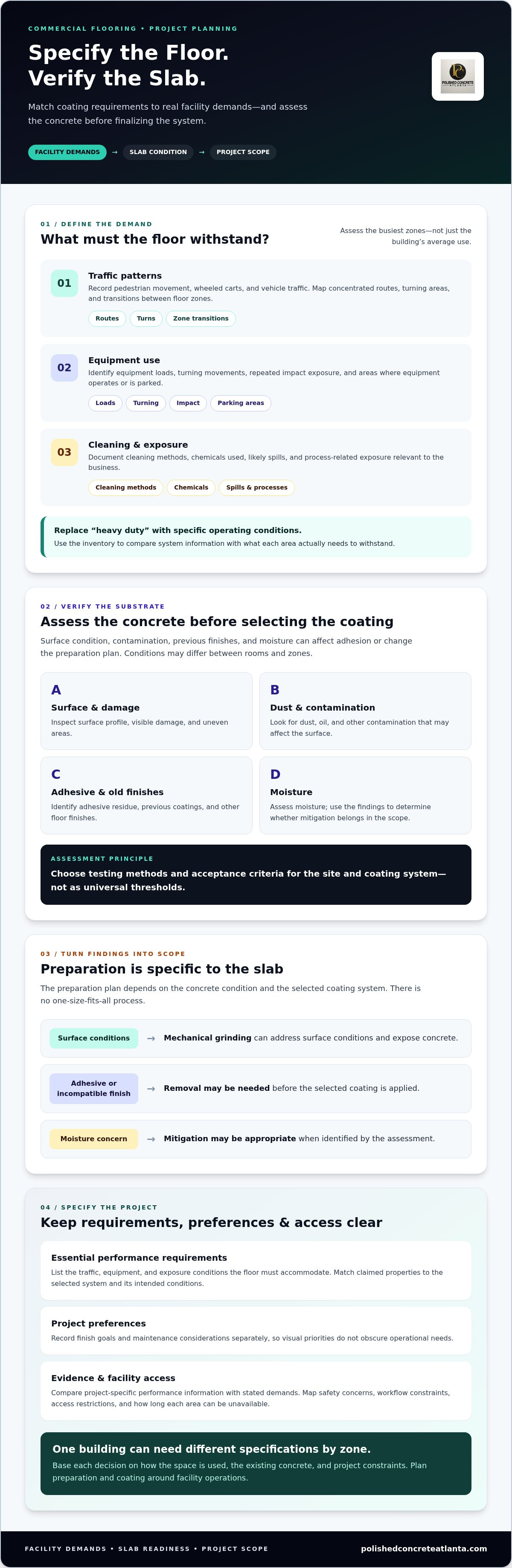
Assess the busiest zones, not just the building’s average use. Record what moves across each area, where it turns or stops, and what the floor encounters during cleaning and daily operations.
- Traffic: Note pedestrian movement, wheeled carts, and vehicle traffic. Map concentrated routes, turning areas, and transitions between floor zones.
- Equipment: Identify equipment loads, turning movements, repeated impact exposure, and areas where equipment operates or is parked.
- Cleaning and exposure: Document cleaning methods and the chemicals used in the facility. Include likely spills or process-related exposure relevant to the business.
This inventory turns a vague requirement such as “heavy duty” into usable project information. It gives the team specific operating conditions to consider when comparing systems.
How do facility priorities shape the coating specification?
Separate essential performance requirements from preferences. Resistance to identified traffic or chemical exposure may be essential; a particular appearance or simpler maintenance routine may be desirable. Keep these categories distinct so visual goals don’t obscure operational needs.
Then consider how each space functions. Identify safety concerns, workflow constraints, and how long an area can be unavailable during preparation and coating. A busy route may need a different project sequence from a low-use room. Set priorities with facility and project stakeholders before selecting a system.
- Essential requirements: List the traffic, equipment, and exposure conditions the floor must accommodate.
- Project preferences: Record finish goals and maintenance considerations separately.
- Evidence and access: Compare project-specific performance information with the stated demands, and map access restrictions and operational transitions.
Atlanta facilities vary in their operations and floor conditions. Assess each space based on its use, existing concrete, and project constraints rather than applying the same specification throughout the building.
How Do Concrete Conditions Affect Commercial Epoxy Coating Performance?
Substrate readiness is the condition of the existing concrete before a coating is applied. It affects whether the selected system can bond as intended, so assess the slab before finalizing the coating specification. Surface profile, dust, oil, adhesive residue, old coatings, and moisture can affect adhesion or change the preparation plan.
“A coating specification is only as sound as the verified condition of the concrete beneath it.” That principle applies to any epoxy floor coating commercial project. A slab that looks clean may still have a previous finish, embedded contamination, or moisture concerns that aren’t obvious from a quick visual check.
What should a slab assessment examine before coating?
Inspect the existing concrete systematically. Look for visible damage, uneven areas, contamination, and previous coatings or floor finishes. Map differences across the space because conditions can vary between rooms or zones. Assess moisture as well; the findings help determine whether moisture mitigation belongs in the project scope. Select testing methods and acceptance criteria for the site and coating system rather than treating them as universal thresholds.
Why are grinding, glue removal, and moisture mitigation project-specific?
Preparation should create a concrete surface suited to the selected coating. Mechanical grinding can address surface conditions and expose concrete, while remaining adhesive or an incompatible finish may need to be removed. Moisture mitigation may be appropriate when the assessment identifies a moisture concern. The right scope depends on the slab and the coating system, not on a one-size-fits-all process.
For more detail on how preparation supports bonding, see this concrete surface preparation guide. Polished Concrete Atlanta provides concrete floor grinding, glue removal, floor preparation, and moisture mitigation for commercial flooring projects. These services connect slab findings to a practical coating plan.
Existing floor markings and planned safety zones may also affect how the finished space is organized. OSHA’s OSHA Regulation 1910.144 covers safety color coding and markings; it is a reference for workplace markings, not a substitute for specifying coating performance. For Atlanta facilities, account for the actual concrete condition at each site instead of assuming all slabs are alike. Commercial concrete flooring services bring facility requirements and slab preparation into the same project scope.
What Should Your Commercial Epoxy Floor Coating Checklist Include?
A useful scope turns facility observations into decisions the project team can act on. Use this checklist to document requirements before selecting an epoxy floor coating commercial system. Keep notes by zone because a loading area, production floor, and corridor may have different demands.
- Map operating demands. Record pedestrian, cart, and vehicle traffic by area. Note equipment use, turning movements, impacts, cleaning routines, and relevant chemical exposure.
- Document slab findings. Capture visible damage, uneven areas, contamination, previous coatings or adhesives, and moisture concerns. Distinguish observed conditions from assumptions.
- Define preparation scope. Connect assessment findings to potential work such as concrete grinding, glue removal, or moisture mitigation. Base the scope on actual site conditions and the selected system.
- Set finish goals. Separate essential performance needs from preferences for appearance and maintenance. Specify which goals apply to each zone.
- Plan access and verification. Identify affected work areas, restricted routes, operational transitions, and desired project phasing. List any site-specific standards or compliance requirements for the project team to verify.
What information should be documented before specifying the coating?
Make the record specific enough to guide decisions. A marked floor plan can show traffic paths, equipment areas, and zones with different cleaning or exposure demands. Add slab observations, including previous finishes or adhesives and moisture concerns. Document finish preferences, access restrictions, and operational needs so the specification reflects the whole facility, not just one sample area.
How can the facility plan around preparation and installation?
Identify which work areas may be affected and how people, equipment, and materials move through the facility. Coordinate access restrictions and phasing with operations before scheduling. Include grinding, glue removal, or moisture mitigation where the assessment calls for it, then account for that preparation in the project plan. For broader context on system choices, explore this industrial floor coatings guide.
A sound coating specification connects facility demands with verified slab conditions. Use that as the test for every scope decision: does it address how each space operates and the condition of the concrete that will receive the coating?
Planning a commercial flooring project in Atlanta? Review Polished Concrete Atlanta’s commercial flooring services as you define your facility’s requirements.
How Polished Concrete Atlanta Approaches Commercial Epoxy Coating Projects
A commercial coating project starts with two realities: how the facility operates and the condition of its existing concrete. Polished Concrete Atlanta provides epoxy coatings and industrial floors for commercial and industrial environments in Atlanta. The company has operated since 2004, and its project work takes facility conditions and slab preparation into account.
An epoxy floor coating commercial project is more than a product choice. Traffic, equipment, cleaning needs, and access constraints inform the scope, while the concrete’s condition helps identify preparation needs. The goal is a flooring plan based on the site rather than assumptions about what every system or slab requires.
What does a project-focused coating approach address?
Consider facility demands alongside slab findings. A busy work zone may have different requirements from an office area, while previous adhesives, finishes, or moisture concerns can affect the work needed before coating. Polished Concrete Atlanta provides epoxy and industrial floor coatings, as well as floor preparation, floor glue removal, and moisture mitigation for existing concrete.
Preparation belongs in the project scope from the start. Concrete grinding may be included when the surface assessment calls for it; glue removal or moisture mitigation may also be appropriate based on site findings. The system, preparation plan, and installation schedule depend on project details, so the scope should reflect the facility rather than assume a fixed solution.
What is the next step for an Atlanta commercial facility?
Organize the facility’s operating demands, known slab concerns, affected work areas, and access constraints. Include finish priorities and operational requirements that may shape project phasing. This gives the project team a practical starting point for defining scope and making informed flooring decisions.
Polished Concrete Atlanta works with commercial and industrial facilities in Atlanta on epoxy flooring, industrial floors, preparation, glue removal, and moisture mitigation. The company’s commercial flooring services cover these project needs, from floor preparation to coatings.
Ready to move from assessment to scope? Plan your commercial epoxy flooring project with Polished Concrete Atlanta.
Turn Your Flooring Requirements Into a Clear Project Plan
Turn your facility priorities into a scope the project team can use. Identify which areas need attention, what operational constraints affect access, and which decisions need input from facility stakeholders. A clear plan keeps flooring decisions tied to how the space works.
An epoxy floor coating commercial project is a facility decision, not simply a surface upgrade. Use documented requirements to guide project discussions, set priorities, and coordinate work with the people responsible for daily operations. This creates a more deliberate path from assessment to a project scope that reflects your building’s needs.
To take the next step, start a conversation about your commercial epoxy flooring needs with Polished Concrete Atlanta. Bring your priorities, slab observations, and operational constraints to define a project plan for your Atlanta facility.
Frequently Asked Questions
Is epoxy floor coating suitable for every commercial facility?
No. Suitability depends on the facility’s operating conditions and the existing floor. An epoxy floor coating commercial system should match the traffic, equipment, cleaning practices, and exposure in each space. For example, a back-of-house area with frequent wheeled traffic may have different demands from a reception space. In Atlanta, assess each facility based on its use rather than assuming one coating suits every commercial setting.
Can commercial epoxy be applied over an existing floor coating?
Sometimes, but evaluate the existing coating first. A finish that is loose, damaged, contaminated, or incompatible with the new system can undermine adhesion. Determine whether the old finish can remain and what preparation is appropriate. In some cases, removal is necessary before applying a new coating. The decision depends on the existing surface and the selected system’s requirements.
How long does commercial epoxy floor coating take to cure?
There isn’t one cure time for every commercial epoxy system. The time before foot traffic, equipment use, or exposure to cleaning chemicals may differ, and the product’s application instructions govern. Treat “dry to the touch” and ready for normal facility operations as separate milestones. Plan around the specific system’s curing requirements and protect the coated area until it is ready for its intended use.
What happens if a concrete slab has moisture before epoxy coating?
Moisture can interfere with bonding and may contribute to coating problems such as blistering or loss of adhesion. Applying a coating without understanding the slab’s moisture condition can leave a critical risk unresolved. Assess the concrete using methods and criteria appropriate to the site and coating system. If the findings indicate a moisture concern, include suitable mitigation in the project scope before coating proceeds.
How do facility managers maintain commercial epoxy flooring?
Use cleaning practices suited to the installed system and the facility’s daily conditions. Remove loose grit and debris so it doesn’t become a recurring source of surface wear, and clean spills promptly using products compatible with the coating. Follow the system’s care guidance rather than assuming every cleaner or tool is suitable. Periodic inspection can help staff notice changes in high-use zones and address maintenance needs early.
Can a commercial epoxy floor project be completed while a facility stays open?
Possibly, depending on the work area, facility operations, preparation scope, and the coating system’s application and curing requirements. A project plan may sequence work by zone, but areas under preparation or coating need appropriate access restrictions. Map essential routes and operational dependencies before scheduling, then coordinate phasing with the people who use the space. For an Atlanta facility, the workable plan depends on its layout and daily activities.


