

An uneven commercial floor doesn’t automatically need a settled slab lifted. The first step is to identify what’s out of plane: a change in slab elevation, a rough or inconsistent surface, or a preparation issue that could affect the finished floor. For facility managers researching commercial concrete leveling Sandy Springs, distinguishing these conditions helps define the right scope and avoid unnecessary work.
Floor changes deserve attention because they can disrupt operations and create trip concerns. The right solution depends on the concrete’s condition and what the space needs to do next. Concrete floor leveling and slab lifting address different problems, so they aren’t interchangeable.
This guide explains how to assess an uneven floor, understand how leveling fits into commercial floor preparation, and plan around the finish you want. It also compares concrete grinding, polishing, staining, sealed concrete, and epoxy flooring to help you build a practical plan for a commercial property in Sandy Springs or the greater Atlanta area.
Key Takeaways
- Commercial concrete leveling Sandy Springs starts with identifying whether the issue is surface variation or a change in slab elevation.
- Match the floor work to facility use, traffic patterns, access constraints, and the finish you want.
- Document uneven areas and operational needs before work begins to define the project scope more clearly.
- Understand how leveling, grinding, and preparation work together to create a suitable base for the selected finish.
- Compare polished concrete, epoxy, stained, and sealed concrete in light of your facility’s goals.
Commercial Concrete Leveling in Sandy Springs: Identify the Problem Before Choosing a Fix
Concrete floor leveling addresses uneven areas in an existing floor. Slab lifting raises concrete that has settled. The distinction matters: correcting a surface for a commercial finish and changing a slab’s elevation are different outcomes. Commercial concrete leveling Sandy Springs should start with the floor’s condition and the facility’s intended use, not a method selected by default.
In commercial flooring, leveling may be coordinated with grinding and other preparation to create a suitable surface for the planned finish. The What is concrete leveling? overview describes common approaches, including slabjacking. Because “leveling” can refer to different work, facility managers should define whether the project goal is to address floor variation, prepare concrete for a finish, or raise a settled slab.
How to recognize uneven concrete in a commercial space
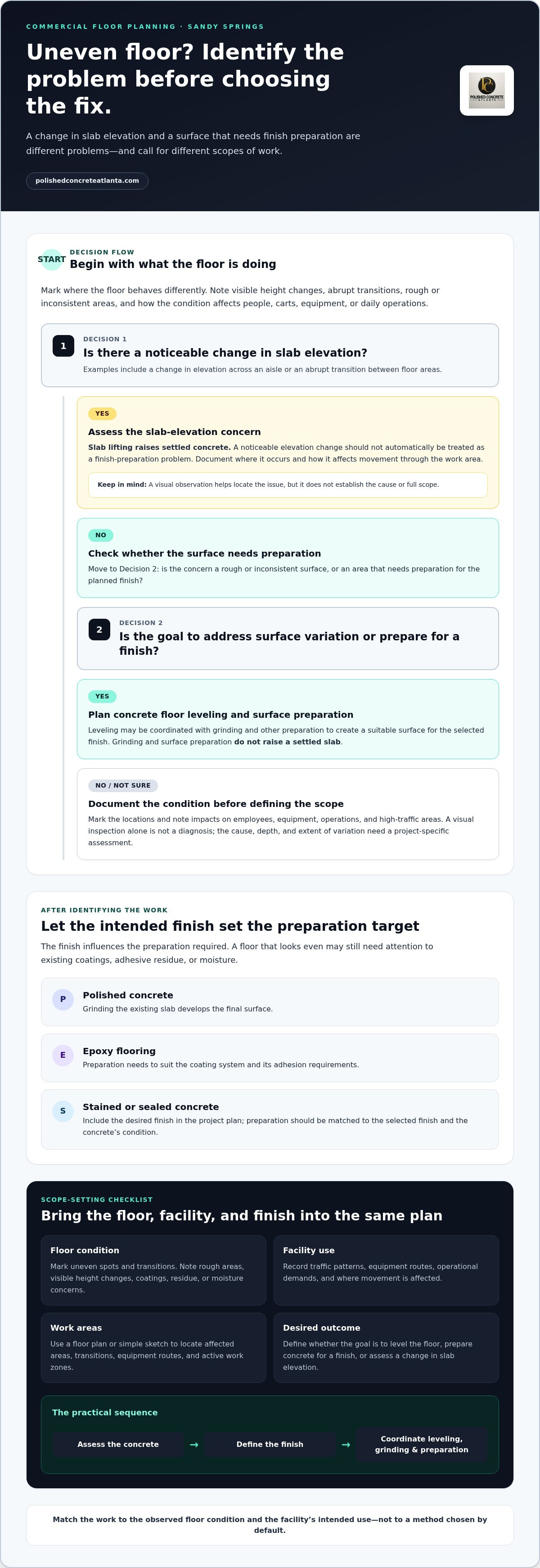
Look for visible height changes across a warehouse aisle, abrupt transitions between floor areas, or spots where carts and equipment move unevenly. These observations help pinpoint where the floor behaves differently, but they don’t establish the cause.
Mark each location, note how the condition affects employees, equipment, or daily operations, and record where traffic is heaviest. A visual inspection alone can’t establish the cause or full scope. Use your notes as a practical starting point for planning, not as a diagnosis.
Surface leveling versus concrete slab lifting
Slab lifting raises a settled section of concrete. Concrete floor leveling and surface preparation address uneven areas in the floor as part of a commercial flooring plan. Neither approach suits every condition, and they shouldn’t be treated as interchangeable.
Consider a showroom where a consistent surface matters, or a work area being prepared for epoxy flooring. The intended finish influences the preparation required. A warehouse aisle with a noticeable elevation change presents a different issue, one that shouldn’t automatically be treated as a finish-preparation problem. Identify the purpose of the work before setting the scope.
Facility use also shapes the plan. Traffic patterns, equipment movement, operational demands, and the desired finish help determine what work is appropriate. A clear evaluation focuses on the actual need: level the floor, prepare the surface for a commercial finish, or assess a change in slab elevation. Start with documented observations, then match the work to the floor and facility.
What Determines the Right Commercial Concrete Leveling Approach?
The right approach depends on the floor condition, how the facility operates, and the finish the project calls for. A rough surface in a space being prepared for a coating presents a different need from a change in slab elevation that affects movement through a work area. For commercial concrete leveling Sandy Springs, define the intended outcome before choosing the surface work. The cause, depth, and extent of variation require a project-specific assessment.
How the existing floor condition shapes the project
Uneven areas can reflect different conditions. A rough or inconsistent surface may affect finish preparation, while a noticeable elevation change or signs of movement may point to a broader slab concern. Neither observation alone proves the cause. Moisture, existing coatings, and adhesive residue can also affect preparation. A careful review keeps the plan grounded in the conditions present rather than assumptions about soil or structural issues.
Surface preparation is a coordinated part of the work, not an isolated step. Reviewing commercial concrete surface preparation can help explain why substrate condition and preparation matter to the flooring system.
How the planned finish changes the leveling decision
The finish sets the target. Polished concrete uses grinding of the existing slab to develop the final surface. Epoxy flooring needs preparation suited to the coating system and its adhesion requirements. A floor that looks even may still need attention to coatings, residue, or moisture before finishing. Grinding and other surface preparation do not raise a settled slab.
Keep the distinction clear:
- Concrete floor leveling and surface preparation: Address uneven areas and ready the concrete for a selected finish.
- Slab lifting: Raises settled concrete to address a change in elevation; it is not the same as finish-focused preparation.
Neither approach is a universal fix. Connect the observed floor condition to operational requirements, such as equipment movement and the demands of a busy work area, then select a finish suited to the space. For coating-specific considerations, the Atlanta industrial floor coatings guide offers additional context.
Use a clear sequence: assess the concrete, define the intended finish, then coordinate leveling, grinding, and preparation around that goal. For a cohesive commercial flooring plan, explore commercial floor leveling and preparation.
How to Assess a Sandy Springs Commercial Floor Before Work Begins
A useful assessment turns scattered concerns into a workable project scope. Map the affected areas, record how the facility uses them, and define the desired finish before planning the work. For commercial concrete leveling Sandy Springs, these steps connect floor preparation to operational needs without guessing at the cause from appearance alone.
Document the floor condition and facility requirements
Use a floor plan or simple sketch to mark uneven areas, transitions, equipment routes, and active work zones. Note visible conditions that could affect preparation, including existing coatings, adhesive residue, or moisture concerns. Keep observations factual: record what you see and where, rather than assigning a cause.
Next, describe how each area supports daily operations. A busy route for carts or equipment has different access and coordination needs from a showroom entrance or a low-traffic work zone. This context helps plan sequencing and identify where work needs to be coordinated with facility operations.
Set the scope around the intended commercial finish
Use this sequence to turn observations into a clear project brief:
- Mark the affected locations. Note transitions, areas where movement feels uneven, and the boundaries of each concern.
- Record existing conditions. Describe the concrete surface, coatings, adhesive residue, and visible moisture concerns.
- Map facility demands. Identify traffic patterns, equipment routes, active work zones, access constraints, and operational priorities.
- Define the finish goal. Specify whether the project is intended for polished concrete, epoxy flooring, stained concrete, sealed concrete, or another suitable finish.
- Use the records to guide scope. The slab condition and chosen finish inform the preparation required. Your notes support a project-specific evaluation rather than a guess based on appearance.
For a polished finish, the Atlanta polished concrete flooring guide offers useful context as you define the goal. Different finishes call for different preparation, so naming the intended result early helps align surface work with the finished floor.
Bring your condition notes, operational requirements, and finish goal together before setting the project scope. Plan your commercial floor leveling and preparation around your facility’s needs.
Plan Commercial Concrete Leveling in Sandy Springs Around a Lasting Floor Finish
A successful commercial flooring project is planned as a sequence, not a collection of disconnected fixes. Leveling, grinding, and floor preparation each serve a purpose. The existing concrete and selected finish determine how the steps fit together. For commercial concrete leveling Sandy Springs, coordinate the work around facility use and the floor’s final role rather than assuming one treatment suits every surface.
Coordinate leveling with grinding and floor preparation
Start with the concrete’s condition and the demands of the finish. Leveling addresses uneven areas as part of the flooring plan, while grinding and other preparation ready the substrate for the next stage. If the existing floor has adhesive or glue residue, removal may be needed. If moisture concerns could affect the planned system, moisture mitigation may also be part of the scope.
Select these steps for the conditions present rather than adding them automatically. A project-specific assessment helps define the right scope and sequence. It also aligns preparation with operational requirements, such as areas that need to remain accessible and routes that support daily work. Evaluate the floor and intended finish before setting expectations for the result.
Choose a finish that supports the facility’s priorities
The finish gives the preparation plan its direction. Polished concrete creates a refined concrete surface, while epoxy flooring provides a coated option for commercial floors. Stained concrete and sealed concrete are also options to consider based on the appearance and functional goals of the space. The right choice depends on the existing slab, facility requirements, and desired final look.
For example, polishing uses grinding to develop the finished concrete surface. A coating project instead needs preparation suited to the selected coating and the concrete beneath it. Treating preparation and finish as separate decisions can lead to avoidable rework. Coordinate them from the outset so the work responds to the floor’s condition and the intended result.
Define the project as one integrated scope: assess the slab, determine the surface work it needs, and select a finish suited to the facility. That’s the foundation for a deliberate, well-coordinated flooring plan. Review commercial flooring solutions to consider finish options alongside leveling and preparation.
Set Your Commercial Flooring Plan in Motion
Turn your floor observations into a project brief that aligns facility priorities with the intended finish. That clarity keeps decisions focused as the work moves from planning into execution. A considered plan for commercial concrete leveling Sandy Springs should account for the current floor and how the space needs to function after the flooring work is complete.
Founded in 2004, Polished Concrete Atlanta provides commercial concrete floor leveling, grinding, and preparation alongside finish options such as polished concrete and epoxy flooring. The project scope can bring these services together around the existing surface and your facility’s needs.
Ready to define the next step? Plan your commercial concrete flooring project with a clear direction for the surface work and finish. Start with the floor’s condition, operational needs, and intended result.
Frequently Asked Questions
What is commercial concrete leveling?
Commercial concrete leveling addresses uneven areas in an existing concrete floor as part of preparing it for business use or a new finish. It differs from lifting a settled slab, which changes the slab’s elevation. The distinction matters because a floor planned for polishing or a coating needs preparation suited to that finish. In an Atlanta-area facility, the project scope should account for how the space operates as well as the concrete’s condition.
Is concrete leveling the same as concrete lifting?
No. In commercial flooring, leveling addresses uneven areas in the floor, while lifting raises a settled slab. The goals are different. For example, preparing an uneven surface for a coating isn’t the same task as changing the elevation of a slab. Treating the terms as interchangeable can lead to a project scope that doesn’t match the facility’s actual flooring objective.
Can uneven commercial concrete be prepared for polished concrete or epoxy flooring?
Suitability depends on the existing slab, its condition, and the selected finish. A polishing plan may call for grinding the concrete, while epoxy flooring requires preparation appropriate to the coating and substrate. Existing coatings, residue, or moisture concerns can also affect the work. An assessment helps establish the preparation scope and the appropriate finish plan.
How do I know whether a commercial concrete floor needs leveling?
Start by recording where the floor changes height or affects routine movement, such as along a cart route, doorway, or equipment path. Note whether the condition disrupts work, creates difficult transitions, or complicates cleaning. These details help describe the impact and guide evaluation. Visible symptoms alone don’t reveal the underlying cause or define the required scope, so don’t treat a visual check as a diagnosis.
How long does commercial concrete leveling take?
There isn’t one reliable duration for every commercial floor project. Timing depends on the scope, concrete condition, preparation required, and selected finish. A project involving grinding and coating preparation has different work stages from a narrower surface-preparation plan. Facility access and coordination with daily operations also shape scheduling. A project-specific review is needed to develop a realistic sequence rather than rely on a generic time estimate.
What affects the scope of commercial concrete leveling in Sandy Springs?
The scope depends on the floor’s condition, the area affected, site access, facility operations, and the intended finish. Commercial concrete leveling Sandy Springs should also account for equipment routes, active work zones, and how the space is used within the greater Atlanta business environment. These details help shape the preparation and finishing plan. Base the project scope on the specific floor and facility rather than general assumptions.


