
The most durable finish is not automatically the right one for every floor. Choosing durable concrete floor finishes means matching the surface to the space: polished concrete creates a reflective, integrated finish, while epoxy, stained, and sealed concrete offer different combinations of protection and appearance.
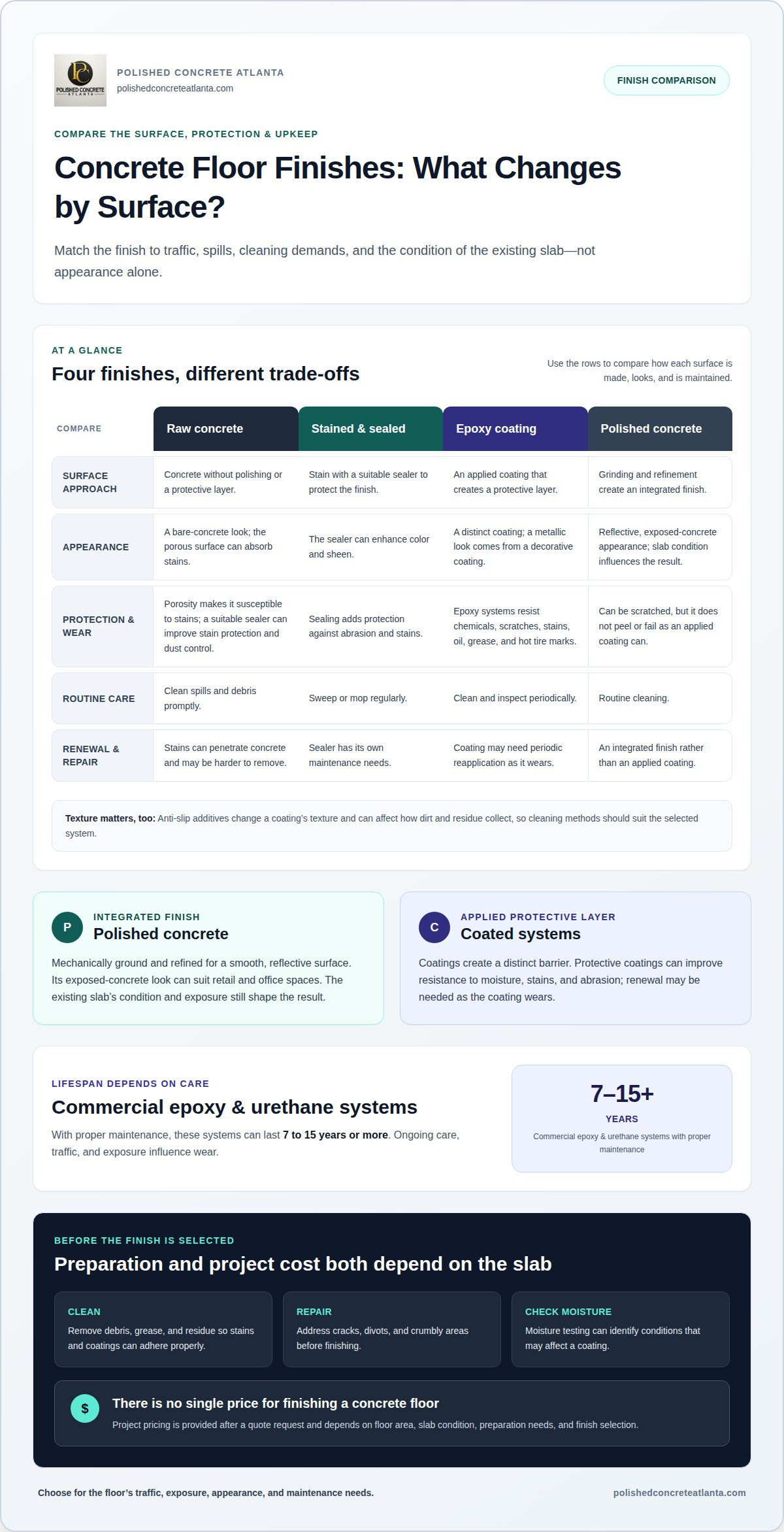
Cost is a key part of the decision, but there’s no single price for finishing a concrete floor. Project pricing is provided after a quote request and depends on factors such as floor area, slab condition, preparation needs, and finish selection.
Looks matter, but so do traffic, spills, cleaning demands, and the condition of the existing slab. This guide compares common concrete finishes by cost factors, maintenance, appearance, durability, and suitability for commercial and industrial spaces in Atlanta, helping you identify the option that best fits your floor and priorities.
Key Takeaways
- Match the finish to the floor’s traffic, exposure to spills, and desired appearance rather than choosing by looks alone.
- Prioritize surface preparation: contaminants, damage, and moisture can affect how well a new finish performs.
- Choose polished concrete for an integrated reflective look, while keeping in mind that the slab’s condition influences the result.
- Plan for routine cleaning and the maintenance appropriate to the finish, including periodic sealant or coating renewal where needed.
- Use the comparison to narrow down which option fits your space, from a commercial walkway to an area exposed to equipment or vehicles.
ARE CONCRETE FLOORS EASY TO MAINTAIN?
Finished concrete is generally straightforward to clean, but maintenance depends on the finish. Sealed floors need regular sweeping or mopping, while coatings may need periodic renewal. VOC limits or permits can also be relevant, depending on the coating, project, and applicable jurisdiction.
Surface Preparation and Sealing
Preparation helps stains and coatings adhere properly. Clean away debris, grease, and residue, and address cracks, divots, or crumbly areas before finishing. Moisture testing can identify conditions that may affect a coating. Acid-based and water-based stains require different preparation, and muriatic acid should not be used before an acid-based stain.
Sealing adds protection against abrasion and stains, while polishing creates an integrated surface rather than an applied coating. Stained concrete benefits from a suitable sealer to protect its finish. A sealer can also enhance color and sheen, so its maintenance needs differ from bare concrete with no protective layer.
Anti-Slip Additives and Upkeep
Anti-slip additives change a coating’s surface texture. Compared with a smoother finish, that texture can affect how dirt and residue collect, so cleaning methods should suit the selected system. For epoxy floors, routine cleaning and periodic inspection support upkeep. Choose a texture suited to the space’s use and cleaning demands.
Regular sweeping or mopping helps maintain sealed concrete’s appearance. For coated floors, periodic reapplication can preserve performance and appearance. Abrasive cleaning may affect a coating or sealer, so use practices suited to the finish rather than treating every concrete surface the same way.
Maintenance, Repair, and Lifecycle
Durable finishes still need inspection and timely repair. Look for worn coating, new cracks, or stains that persist despite routine cleaning. Repairing damage before applying a new finish helps address the underlying surface instead of covering a problem. Unlike polished concrete, an applied coating may need renewal as it wears.
Commercial epoxy and urethane floor systems can last 7 to 15 years or more with proper maintenance. That lifespan depends on ongoing care, while the floor’s traffic and exposure influence wear. Routine cleaning and periodic inspections are usually sufficient for epoxy systems. Plan renewal around visible wear and maintenance needs, not appearance alone.
Raw concrete is porous and can absorb stains, making busy areas harder to keep presentable. Stains penetrate concrete and are less likely to rub off than paint, but still benefit from sealing. Without polishing or grinding, cleaning the surface and applying a suitable sealer can improve stain protection and dust control.
| Finish | Routine care | Renewal or repair consideration |
|---|---|---|
| Raw concrete | Clean spills and debris promptly | Porosity leaves it susceptible to stains |
| Stained and sealed concrete | Sweep or mop regularly | Sealer helps protect the finish |
| Epoxy coating | Clean and inspect periodically | Coating may need reapplication |
| Polished concrete | Routine cleaning | Integrated finish, not an applied coating |
Choose based on the floor’s exposure, desired texture, and the maintenance required for its protective layer.
Polished concrete durability and appearance
Polished concrete gets its appearance through grinding and refinement, not a conventional coating. Its reflective surface can brighten retail and office spaces, but the slab’s condition and exposure still shape the result.
Polished Concrete Grinding and Finishing
Grinding removes surface irregularities and progressively refines the concrete to the chosen sheen. Indoor floors are commonly polished with a planetary grinder, then refined with a transitional hybrid tool. Unlike an applied coating, this finish is integrated into the concrete, so it does not peel or fail as a coating can.
Surface preparation matters. Cracks, uneven areas, and heavy contamination may require attention before grinding begins. Moisture also matters when a separate sealer is part of the finish. A polished surface may not need a sealer, while a urethane-based sealer can be used when the selected system calls for one.
Polished and Burnished Concrete
Polished concrete is mechanically ground through stages to create a smooth, reflective surface. Burnished concrete uses a high-speed burnisher to create sheen at the surface rather than refining the slab through the same grinding process. The distinction affects both the finish and the work involved.
For retail or office floors, polished concrete offers an exposed-concrete appearance and reflective quality. A metallic look, by contrast, comes from a decorative coating rather than the natural appearance of polished concrete. Choose based on the desired visual effect and the existing slab’s condition.
How resistant are these finishes to chemicals, abrasion, moisture, UV, and hot tires? Polished concrete can be scratched, while protective coatings can improve resistance to moisture, stains, and abrasion. Epoxy systems resist chemicals, scratches, stains, oil, grease, and hot tire marks. UV performance depends on the selected finish and should be considered separately.
For commercial spaces, the practical comparison is between an integrated finish and an applied protective layer. Polished concrete avoids coating peel, while coated systems create a distinct barrier. Choose according to the floor’s exposure and desired appearance, not sheen alone.
- Retail: Reflective polished concrete can enhance lighting and create a clean, continuous look.
- Offices: A refined concrete surface suits spaces where appearance and routine cleaning both matter.
- Vehicle areas: Epoxy designed for garage floors resists hot tire marks, oil, and grease.
Polished concrete is most suitable when the underlying slab is in good condition. Where the slab is cracked, uneven, or heavily contaminated, repair and preparation come first. For a floor where chemical exposure or hot tires are central concerns, compare coating performance rather than assuming polished concrete provides the same protection. A professional assessment of the slab can clarify whether polished concrete floor finishing fits the space.
Residential, commercial, and industrial uses
The most durable finish depends on the floor’s traffic, exposure, and purpose. Epoxy, polished concrete, sealed concrete, and urethane cement suit different applications.
For durability, epoxy coatings suit areas exposed to vehicles, equipment, or heavy machinery, while polished concrete offers an integrated finish. In garages, epoxy designed for concrete can resist oil, grease, and hot tire marks. Warehouses may use epoxy for heavy traffic, while urethane cement suits facilities exposed to high heat, moisture, and aggressive chemicals. Sealed concrete can serve indoor and outdoor areas.
Commercial Concrete Floor Finish Types
Commercial concrete finishes include polished concrete, epoxy coatings, stained concrete, and urethane cement. Their differences matter: polishing refines the slab itself, epoxy creates a coating, and staining adds color that penetrates concrete. Urethane cement suits demanding exposure, including heat and moisture. Choose by matching foot traffic, abrasion, chemical exposure, and the desired appearance.
In retail spaces, polished concrete can create a clean, reflective look. In warehouses, equipment traffic and abrasion may make a coating a better fit. Stoncrete EFX is a named commercial-flooring term, but its specific properties cannot be assumed from the name alone; compare systems by their documented application and performance.
Durable Finishes for Garages and Basements
For a garage exposed to cars, epoxy flooring designed for concrete can resist oil, grease, and hot tire marks. Unlike polished concrete, which provides an integrated finish, epoxy creates a protective coating barrier. In a basement, consider the slab’s condition and moisture exposure, then match the finish to its intended use.
Vehicle use is a practical deciding factor. A garage with regular tire traffic needs a finish designed for that exposure; a basement used for storage may prioritize easy cleaning and a consistent appearance. Surface condition and moisture also influence the appropriate application.
Durable Finishes for Warehouses and Outdoor Areas
Warehouses face foot traffic, equipment, and abrasion. Epoxy concrete flooring can handle forklift traffic when installed at the correct thickness, while urethane cement suits facilities exposed to heat, moisture, and aggressive chemicals. These finishes meet different demands, so let the operating environment guide your selection.
Sealed concrete is suitable for indoor and outdoor applications. Outdoor exposure differs from warehouse conditions, so choose a finish with the relevant protection rather than assuming one coating fits both. A lasting result starts with a finish matched to the application and the slab.
Benefits of finished concrete floors
A finished concrete floor can do more than improve appearance. The right system helps control dust, supports cleaning, and adds resistance suited to the space. In a garage, that may mean protection from oil and hot tire marks; in retail, it may mean a polished surface that reflects light.
Durable concrete floor finishes help Atlanta property owners match floor treatments to daily demands. Polished concrete has an integrated surface, while coatings add a protective layer. Sealers can help protect against abrasion and stains, and coatings can improve resistance to moisture and chemicals. No single option delivers every advantage equally, so the floor’s use should guide the decision.
Light and upkeep matter, too. Polished concrete’s reflective surface can enhance lighting in commercial spaces, while stained and sealed concrete can improve dust control compared with bare concrete. A coating can add color or a subtle sheen, changing the room’s look without replacing the slab.
- Cleaner appearance: Sealed and finished surfaces help control dust compared with raw concrete.
- Targeted protection: A suitable coating can improve resistance to moisture, stains, abrasion, or chemicals.
- More reflective light: Polished concrete can enhance lighting in a retail or office space.
- Decorative flexibility: Stains offer color variation, while coatings can add color and sheen.
- Slab preservation: A finish can help protect concrete and extend its service life.
For garages, epoxy coatings can resist oil, grease, and hot tire marks. In warehouses, epoxy concrete flooring can handle forklift traffic when installed at the correct thickness. These examples show why traffic and exposure matter more than choosing a finish by appearance alone.
Finished floors also need a realistic maintenance plan. Sealed concrete needs regular sweeping or mopping, and coatings may need periodic reapplication to maintain performance and appearance. Planned upkeep helps preserve the floor’s color, sheen, and protective qualities. Polished concrete avoids an applied coating, though it can still be susceptible to scratches.
For Atlanta properties, weigh the slab’s condition, expected traffic, exposure, and desired finish together. A sound slab and reflective appearance may favor polishing; chemical exposure or vehicle use may point toward a protective coating. Durable concrete floor finishes work best when chosen for the demands of the space, not appearance alone.
Ready to match a finish to your floor’s traffic, exposure, and appearance goals? Plan your concrete floor finish around the demands of the space.
Polished Concrete Atlanta: Polished Concrete Floors
Polished Concrete Atlanta helps Atlanta property owners match concrete finishes to floor conditions and daily demands. Its Polished Concrete Floors create a refined, integrated surface, while Epoxy Flooring and Stained Concrete offer different options for protection and appearance.
Floor condition is central to the decision. Floor Preparation addresses the existing surface before finishing, helping align the selected system with the slab and its intended use. Consider polished concrete for a reflective look, epoxy for a coated finish, or stained concrete when color is a priority.
For help selecting a finish for your commercial or industrial space, contact Polished Concrete Atlanta.
Set Your Floor Up for Long-Term Use
Choose durable concrete floor finishes with the space’s future demands in mind, not just its current appearance. Changes in traffic, equipment, or daily cleaning can shift what matters most. Defining those priorities now helps make the finish a considered part of your facility plan.
Polished Concrete Atlanta offers Polished Concrete Floors, Epoxy Flooring, and Stained Concrete. Connect your preferred look with how the space operates so the selected finish supports both practical use and the impression you want to create.
Contact Polished Concrete Atlanta to discuss a concrete floor finish for your space. Move forward with a clear plan and a finish chosen for the work ahead.
Frequently Asked Questions
How Much Does It Cost to Finish a Concrete Floor?
The cost depends on floor area, slab condition, preparation needs, and finish selection. Durable concrete floor finishes can involve different scopes: a floor needing glue removal or moisture mitigation requires different work from a clean, sound slab. Pricing depends on the project and is provided after a quote request. Desired color, sheen, and protective system also shape the work involved.
Does coated concrete require ongoing maintenance?
Yes. Coated concrete needs routine cleaning, periodic inspection, and reapplication when wear affects performance or appearance. For example, inspect areas near entrances and equipment routes as part of the regular cleaning routine. Tracking where wear first appears helps determine whether the coating needs localized attention or broader renewal. Consistent care helps maintain the floor’s intended function.
How Does Polished Concrete Compare?
Polished concrete uses the slab itself as the finished surface rather than relying on an applied coating. It can suit a showroom or office where a refined, reflective appearance is a priority. The existing concrete affects the result, as damage or unevenness can be visible. Consider the desired look, slab condition, and expected use together before selecting this finish.
What Benefits Do Coated and Sealed Concrete Offer?
Coatings and sealers both protect concrete, but they are different treatments. A coating forms a distinct layer, while a sealer protects the concrete surface. For a work area, desired chemical resistance may guide the choice; in a customer-facing space, color or sheen may matter more. The best fit depends on exposure, appearance goals, and the maintenance plan.
How do epoxy, polyaspartic, polyurethane, and polished concrete compare for durability?
Each finish suits different demands, so compare exposure rather than treating options as interchangeable. Epoxy resists chemicals, stains, and scratches; polyaspartic coatings can accommodate floor movement. Urethane cement suits facilities exposed to heat, moisture, and aggressive chemicals. Polished concrete has no applied coating to peel, though it can scratch. Let the slab’s use guide the final selection.
How long do different concrete floor finishes last?
Commercial epoxy and urethane floor systems can last 7 to 15 years or more with proper maintenance. That figure does not apply to every finish or floor. For Durable concrete floor finishes, lifespan is influenced by traffic, exposure, slab condition, preparation, and ongoing care. Periodic inspections help identify wear and inform when a coating needs renewal, rather than relying on appearance alone.


