

A warehouse floor must support steady movement from forklifts and heavy equipment, not just look clean. When facilities in Marietta, GA need reliable concrete preparation, Polished Concrete Atlanta provides expert industrial floor grinding services Marietta GA to smooth uneven areas and create a more consistent surface. Mechanical polishing uses diamond tooling and machinery to grind, hone, and polish concrete, producing a durable, refined finish for demanding commercial spaces.
That matters when equipment travels through open warehouse areas or follows changing routes. A smoother, more consistent floor supports day-to-day movement, while polished concrete avoids the regular stripping and waxing associated with VCT flooring.
The right treatment depends on the floor’s condition and how the space operates. This article explains how grinding can benefit forklift and heavy-equipment traffic, which commercial floor services are available from our Atlanta-based team for Marietta facilities, and how polished concrete may suit a warehouse. You’ll also learn what grinding involves and which project considerations shape the approach.
Key Takeaways
- Grinding can smooth uneven concrete and create a more consistent surface for warehouse equipment traffic.
- Consider how forklifts move through the space, especially in open areas where travel paths aren’t fixed.
- Commercial floor preparation and finishing options can address different concrete conditions and facility needs.
- Mechanical polishing uses diamond tooling to grind, hone, and polish concrete into a refined floor surface.
- Polished concrete doesn’t require the regular stripping and waxing associated with VCT flooring.
Benefits for forklift and heavy-equipment traffic
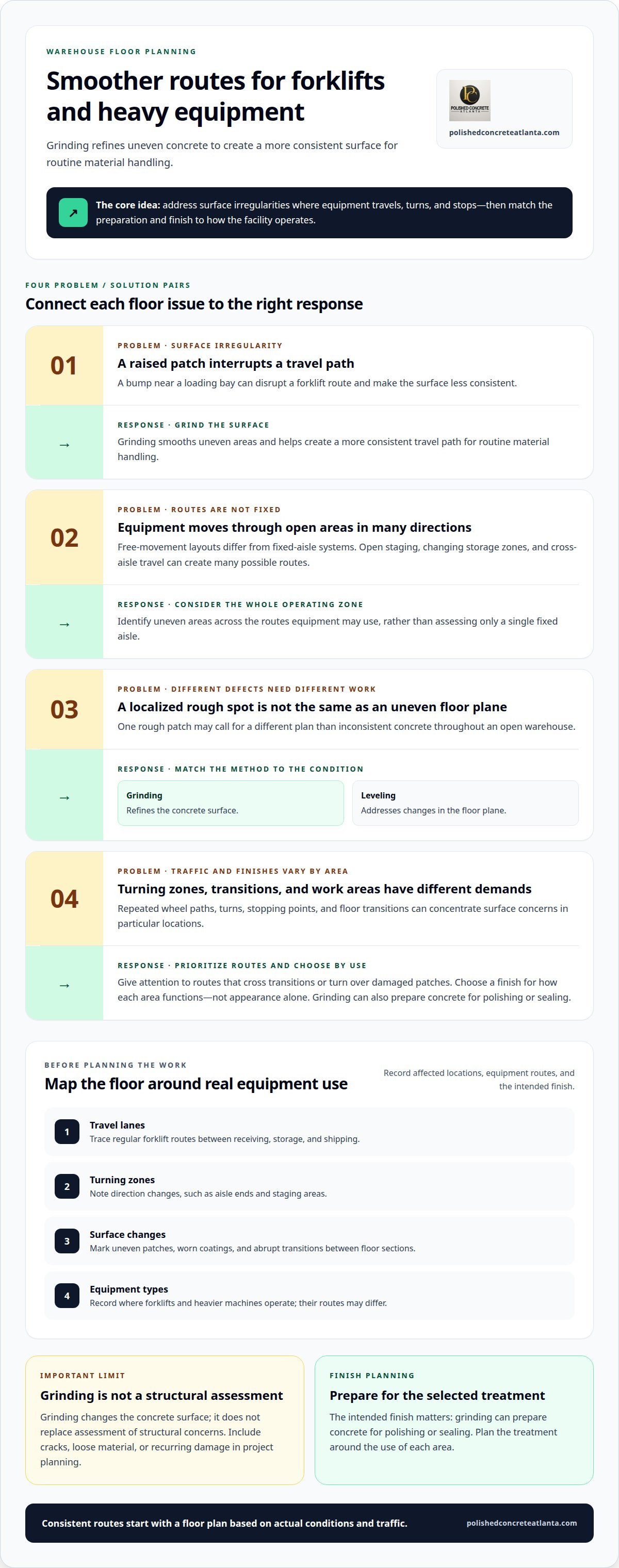
Forklifts expose warehouse floors to repeated wheel paths, turns, and stopping points. Grinding addresses surface irregularities that can disrupt movement. For example, a raised patch near a loading bay can create a bump on a forklift’s route. Smoothing it helps create a more consistent travel path and a floor better suited to routine material handling.
Traffic patterns determine where floor preparation matters most. In a free-movement layout, materials-handling equipment travels in random, undefined directions along many possible routes. That differs from a fixed-aisle system. A warehouse with open staging areas, changing storage zones, or cross-aisle movement needs a consistent surface across multiple routes. Grinding can help address uneven areas throughout these operating zones.
Review how equipment uses each part of the building before planning the work. A practical assessment should identify:
- Travel lanes: Trace regular forklift routes between receiving, storage, and shipping areas.
- Turning zones: Note places where forklifts change direction, such as aisle ends or staging areas.
- Surface changes: Mark uneven patches, worn coatings, or abrupt transitions between floor sections.
- Equipment types: Record where forklifts and heavier machines operate, since their routes may differ.
This map helps distinguish a localized surface issue from a wider floor condition. A rough spot in one aisle, for instance, calls for a different work plan than inconsistent concrete across an open warehouse. Grinding refines the surface, while leveling addresses changes in the floor plane. They are related but distinct tasks. Matching the method to the observed condition avoids treating every defect alike.
Prioritize areas where wheel traffic repeatedly crosses a floor transition or turns over a damaged patch. Smoothing the profile can make those routes more consistent. Grinding also prepares concrete for a selected finish when the project includes polishing or sealing. Choose the finish for how the area functions, not just its appearance. A receiving zone may need a different treatment plan from a pedestrian-facing office entrance.
Grinding has limits: it changes the concrete surface but does not replace assessment of structural concerns. Cracks, loose material, or recurring damage need attention during project planning. For a Marietta facility, document affected locations, equipment routes, and the intended finish before work begins. Clear site details support an accurate scope and help align surface preparation with warehouse operations.
Commercial and industrial flooring services in Marietta
Commercial floor grinding is one part of planning a warehouse surface, not a decision in isolation. Before approving work, compare the floor’s condition, intended finish, dust controls, scheduling needs, and written scope.
Compare contractors by asking each to assess the same areas and describe the same requested finish. Request itemized quotes that distinguish grinding, floor leveling, repairs, preparation, and coatings, so the scope can be compared directly.
Safety Standards and Dust Control
Plan how the work zone will be separated from forklift routes and nearby staff. Discuss the dust-control method, equipment safeguards, cleanup approach, and protection for stored materials. For example, a grinding area beside active inventory needs a clear boundary and a plan to keep dust away from products and equipment. Review these details before work starts.
Applicable permits, waste-disposal requirements, and local rules depend on the work scope, site conditions, and how removed material is handled. For a Marietta or Cobb County site, include these responsibilities in the project plan and identify who handles waste and which local requirements apply before grinding begins.
The project scope for industrial floor grinding depends on the floor’s condition, preparation needs, repairs, and selected finish. When discussing the work, describe the area, surface issues, equipment traffic, and intended result. These details help define the work required.
Project duration depends on the area, concrete condition, preparation, and finish sequence. Scheduling outside regular business hours depends on site access, operational shutdowns, noise constraints, and coordination with warehouse staff. Share receiving schedules and forklift routes early so the work plan accounts for active loading bays and storage zones.
Preparation, Repairs, and Coatings
After grinding, preparation can address remaining surface needs before applying a finish. Floor leveling can help correct uneven areas, while visible damage can be included in the scope. Finishing options include polished concrete, sealed concrete, stained concrete, and epoxy flooring. The right choice depends on the warehouse’s use and desired appearance.
Connect each proposed step to a specific floor condition. Residue from an old covering, for example, may require glue removal, while moisture concerns call for moisture mitigation in the preparation plan. A clear sequence identifies the prepared surface, any repair work, and the final coating or treatment. This makes the scope easier to evaluate and coordinate with facility operations.
For Marietta facilities, industrial concrete floor preparation is worth discussing when unevenness, residue, or coating needs affect warehouse use.
Industrial and warehouse polished concrete flooring
Mechanical concrete polishing uses specialized diamond tooling and machinery to grind, hone, and polish the floor. The process depends on the existing surface and intended finish.
Grindable Industrial Floor Types
Concrete, terrazzo, and epoxy-coated floors can be ground, but each presents different surface conditions. A warehouse concrete slab may need grinding before polishing, while terrazzo requires attention to its aggregate and existing finish.
Epoxy-coated floors need a separate assessment of the coating’s condition and bond. An intact coating and a peeling coating, for example, are different starting points. Identify the floor material, existing layers, damaged areas, and desired result before defining the grinding scope.
Identifying the material helps match preparation to the finish. A concrete slab intended for polishing differs from terrazzo, where exposed aggregate contributes to the appearance. An epoxy-coated surface may need coating removal or preparation, depending on the project goal. Documenting these conditions gives the work plan a clear starting point.
Grinding Methods and Equipment
Mechanical polishing combines grinding, honing, and polishing with specialized diamond tooling and machinery. Grinding prepares the concrete surface; honing and polishing refine it toward the selected finish. The equipment and tooling must suit the floor material and condition, rather than treating every warehouse floor alike.
An open concrete warehouse floor and a smaller area with coating remnants, for example, may need different preparation scopes. The project plan should identify the surface to be ground and the intended final treatment. A clear scope aligns the equipment process with the actual floor.
Polished concrete can suit facilities seeking a finished concrete surface without the routine stripping and waxing associated with VCT flooring. That distinction matters in warehouses where maintenance planning must account for daily operations. Polished concrete is not an untouched slab: its appearance and finish depend on the mechanical steps used.
Before choosing polished concrete, consider the whole facility rather than one room in isolation. The main storage area may have different needs from a receiving zone, where residue or previous coatings affect preparation. The finish should suit both the floor’s existing condition and the activities performed there.
Use a practical sequence: identify whether the surface is concrete, terrazzo, or epoxy-coated; note coatings, wear, and visible damage; then define the intended finish. This gives the grinding plan specific criteria and clarifies whether the goal is to expose and polish concrete or prepare the surface for another treatment. Assess the surface first, then choose the finish.
What types of industrial floors can be ground, such as concrete, terrazzo, or epoxy-coated floors?
Concrete, terrazzo, and epoxy-coated floors can be ground, but each needs a material-specific assessment. The existing surface, its condition, and the intended finish determine the preparation approach. A warehouse slab planned for polishing differs from a terrazzo floor where the existing finish matters.
Concrete is a straightforward starting point for mechanical grinding. Grinding can prepare a slab for polishing or another finish. The assessment should note uneven areas, old coatings, and visible damage. Concrete with coating residue, for example, may need a different preparation scope from bare concrete. The target finish matters too: refining exposed concrete is different from preparing it for a separate coating.
Terrazzo can also be ground, but its surface contains visible aggregate within a surrounding matrix. That makes assessment especially important. Identify existing wear, prior treatments, and the desired appearance before defining the work. Retaining an established terrazzo look calls for a different goal from preparing the surface for a new finish. Match the grinding scope to the surface rather than treating terrazzo as ordinary concrete.
Epoxy-coated concrete requires attention to both the coating and the slab beneath it. A sound coating and a damaged or peeling one present different starting conditions. If the goal is to expose the concrete, the existing epoxy layer affects preparation. If the coating is to remain, the scope must account for its condition and the desired result. Grinding a coating does not produce the same outcome as grinding bare concrete.
Before requesting a scope, record the floor material and describe its visible condition. Note coating residue, uneven sections, damaged areas, and transitions between materials. Then specify the intended finish, such as polished concrete, sealed concrete, or a new coating. These details help assess the proposed work against the actual floor.
A useful site review follows a clear sequence:
- Identify the material: distinguish concrete, terrazzo, and epoxy-coated concrete.
- Describe the surface: record wear, residue, damage, and changes in finish.
- Define the goal: state whether the project seeks exposed concrete, polishing, or coating preparation.
- Match the scope: connect each proposed grinding step to a specific surface condition.
For a Marietta warehouse, this assessment helps avoid applying one preparation plan to unlike surfaces. The material sets the starting point; its condition and intended finish determine the work.
When choosing polished concrete, consider how the area will be used as well as its finish. Polished concrete can be hard underfoot, so the page recommends shock-absorbing flooring or mats in gym areas used for impact activities such as weightlifting or cardio. Include this consideration when defining the flooring scope for those activities. It applies specifically to gym areas used for impact activities; concrete, terrazzo, and epoxy-coated floors still need assessment according to their own condition and intended finish. Keeping use and finish in view helps make the flooring plan responsive to the activities expected in the space.
Polished Concrete Atlanta: Polished Concrete Floors
Polished Concrete Atlanta prepares concrete surfaces for polished concrete flooring. Consider this option when your warehouse needs a finished floor and grinding is part of the plan. Floor preparation supports the chosen finish, while epoxy flooring and stained concrete provide alternatives for different project goals.
When discussing your project, share the floor’s current condition, areas needing work, and intended use. These details help shape a scope around the facility’s surface and preferred finish, rather than treating every warehouse floor alike.
Contact Polished Concrete Atlanta to discuss polished concrete floors for your warehouse.
Plan the Next Step for Your Warehouse Floor
Make the floor’s intended use the starting point for your project decision. Identify the areas that matter most to daily operations, the finish you want, and any known conditions that could affect preparation. A clearly defined scope gives the conversation a practical focus and helps align the proposed work with your facility’s needs.
If you’re considering industrial floor grinding services in Marietta, GA, Polished Concrete Atlanta offers Polished Concrete Floors, Epoxy Flooring, and Stained Concrete. These options give commercial facilities distinct ways to finish their concrete floors, depending on the desired result and project goals.
Share your warehouse flooring goals with Polished Concrete Atlanta and discuss a suitable next step. A considered plan can help you move toward a floor that fits the work your facility does.
Frequently Asked Questions
What are the Benefits of Grinding Your Floor?
Grinding can refine an existing concrete surface and prepare it for a selected finish. It also helps facility managers assess the slab before choosing that finish. For example, once an old surface layer is removed, the exposed concrete can help determine whether polishing, staining, or another treatment suits the space. Grinding is a useful step when updating an existing warehouse floor without replacing the slab.
Which contractors offer industrial floor grinding services in Marietta, GA?
Polished Concrete Atlanta provides concrete floor grinding in Marietta as part of its Metro Atlanta service area. Its commercial and industrial flooring work includes polished concrete, epoxy flooring, stained concrete, and floor preparation. When discussing a Marietta warehouse project, share the floor’s current condition and desired finish to connect the grinding scope with your facility’s goals.


