
The toughest finish isn’t automatically the best choice for a busy commercial floor. Heavy traffic commercial concrete sealers can help protect a slab while preserving its natural appearance. Coatings create a surface layer, while polished concrete offers a distinct finish. The right option depends on traffic, cleaning demands, and the concrete’s condition.
A commercial floor finish should stand up to daily wear without adding unnecessary maintenance or downtime. But sealing, coating, and polishing work differently. Choosing by appearance alone can overlook the demands of a warehouse, kitchen, showroom, or other high-use space.
This comparison explains how sealers, coatings, and polished concrete perform, what each can address, and which factors should guide a decision for a heavily trafficked commercial floor. Consider protection, appearance, slip resistance, preparation, and upkeep to weigh the trade-offs with confidence.
Key Takeaways
- Distinguish penetrating sealers, which protect within the concrete, from coatings that create a surface film.
- Match the floor system to traffic, cleaning demands, moisture conditions, and the look you want.
- Address unresolved moisture, surface instability, and other substrate issues before sealing or coating.
- Compare sealing with coatings and polished concrete by weighing preparation, finish, maintenance, and downtime.
- Plan maintenance around the sealer type and the floor’s exposure; heavy-use areas may need more frequent attention.
Sealing vs Coating Concrete: What’s Better for High-Traffic Areas?
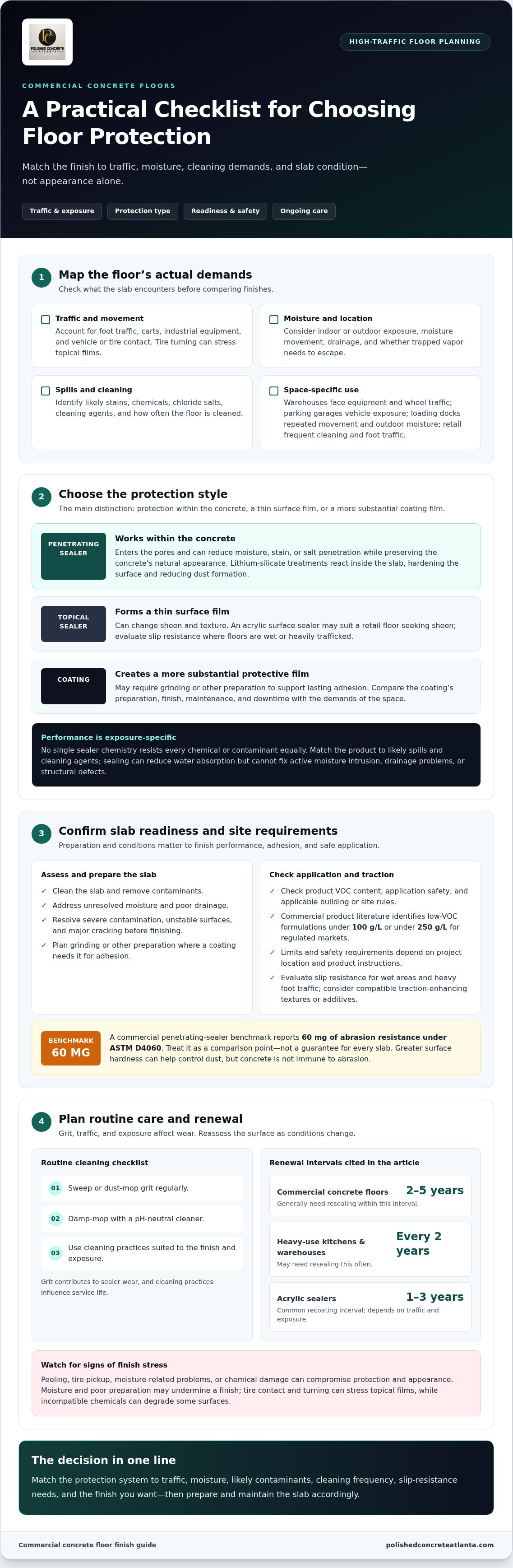
Sealers penetrate concrete or form a thin surface layer, while coatings create a more substantial protective film. For busy floors, compare abrasion, chemical exposure, moisture conditions, slip resistance, and maintenance requirements.
Sealer Protection and Abrasion Resistance
A concrete sealer limits absorption or reinforces the surface, helping protect it from wear and staining. That distinction matters where frequent foot traffic, carts, or industrial equipment can wear a finish. Penetrating sealers work within concrete and can preserve its natural appearance, while surface films provide a separate protective layer. A commercial penetrating sealer benchmark reports 60 mg of abrasion resistance under ASTM D4060. That figure offers a comparison point, not a guarantee of performance on every slab.
Lithium-silicate penetrating sealers react inside the slab, hardening its surface and reducing dust formation. Greater surface hardness can help control dust, but it doesn’t make concrete immune to abrasion. Wear still depends on traffic, preparation, and cleaning practices.
Chemical, Stain, and Chloride Resistance
Resistance describes how well a sealer limits damage or penetration from specific contaminants, such as chemicals, stains, and chloride salts. This matters because warehouse floors and food-service floors face different spills and cleaning routines. Concrete is porous, so unprotected surfaces can absorb water and stains. A properly selected sealer can reduce absorption.
No single chemistry resists every exposure equally. Match the product to likely contaminants and the floor’s cleaning agents. Sealing can reduce water absorption, but it won’t fix active moisture intrusion, drainage problems, or structural defects. Address those conditions before applying a finish.
Commercial Sealer Safety and Requirements
Commercial sealer requirements involve product VOC content, safe application, and applicable building or site rules. These matter because product choice and application conditions affect workers and nearby occupied spaces. Commercial product literature identifies low-VOC formulations under 100 g/L or under 250 g/L for regulated markets. Applicable limits and safety requirements depend on the project location and product instructions.
Before application, clean and assess the slab, remove contaminants, and address unresolved moisture, poor drainage, severe contamination, unstable surfaces, or major cracking. Coatings may require grinding or other preparation for lasting adhesion. In wet areas or spaces with heavy foot traffic, evaluate slip resistance before choosing a finish. There’s no universal rating to rely on here, so consider actual conditions and compatible traction-enhancing textures or additives.
Sealer Failure and Ongoing Care
Sealer failure can include peeling, tire pickup, moisture-related problems, or chemical damage. A film that loses adhesion or a surface damaged by spills can compromise protection and appearance. Moisture and poor preparation can undermine the finish; tire contact and turning can stress topical films, while incompatible chemicals can degrade some surfaces.
Sweep or dust-mop grit regularly, then damp-mop with a pH-neutral cleaner. Grit contributes to sealer wear, and cleaning practices influence service life. Commercial concrete floors generally need resealing every 2-5 years; heavy-use kitchens and warehouses may need resealing every 2 years. Acrylic sealers commonly need recoating every 1 to 3 years, depending on traffic and exposure. Reassess the surface as wear and use change.
When to choose a penetrating sealer or a coating
Choose based on how the slab handles moisture, stains, traffic, and cleaning, not appearance alone. Penetrating treatments preserve a natural concrete look; topical products add a surface film that can change sheen and texture. When comparing heavy traffic commercial concrete sealers, let the floor’s exposure and operating demands guide the choice.
Penetrating and Topical Sealer Differences
A penetrating sealer enters concrete pores and repels moisture, stains, and salts, while a topical sealer forms a thin film on the surface. This distinction matters when a facility wants protection without a visible layer. A warehouse prioritizing a natural concrete appearance may suit a penetrating treatment, while a retail floor seeking sheen may favor an acrylic surface sealer.
A reactive, penetrating water-repellent works within the slab rather than creating a film above it. Lithium-silicate treatments react inside concrete, hardening the surface and reducing dust. For exterior slabs, breathable sealers limit moisture entry while letting trapped vapor escape. This balance matters where moisture movement could affect a surface treatment.
Choosing a Sealer for Commercial Spaces
The right commercial sealer depends on traffic type, moisture exposure, likely stains or chemicals, cleaning frequency, and desired finish. Needs vary by space: warehouses face equipment and wheel traffic, parking garages encounter vehicle exposure, loading docks see repeated movement and outdoor moisture, and retail floors combine foot traffic with frequent cleaning. Choosing heavy traffic commercial concrete sealers means matching protection to the floor’s actual use.
For exterior concrete, choose a breathable treatment when trapped vapor needs to escape. Indoors, water-based sealers can offer less odor and easier cleanup, making them useful near occupied spaces. A topical finish may add sheen, but evaluate slip resistance in wet areas or places with heavy foot traffic before selecting it. Appearance alone doesn’t establish traction.
Before selecting a finish, assess the slab’s condition and the facility’s main exposures. Address moisture issues first: a sealer cannot repair active moisture intrusion or drainage problems. If stains are the primary concern, consider whether a penetrating product’s pore protection suits the exposure. If the priority is a visible film or finish, consider a topical system and its preparation requirements.
Preparation affects the result: remove contaminants and evaluate the concrete so the chosen treatment can interact with a suitable surface. For projects where concrete condition or moisture complicates selection, commercial concrete floor preparation can be part of a sound flooring plan.
Concrete sealing compared with coatings and polished concrete
Sealing, coatings, and polishing finish and protect concrete in different ways. Compare the desired appearance, exposure to spills and abrasion, and the facility’s tolerance for downtime.
Water-Based and Solvent-Based Compounds
Water-based and solvent-based compounds differ in carrier, odor, cleanup, and performance. This matters when a facility needs to protect indoor surfaces without disrupting nearby occupied spaces. Water-based sealers generally have less odor, allow easier cleanup, and are often suitable indoors. They can be a practical choice near active work areas.
Service life can vary between solvent-based and water-based acrylic sealers, depending on the product and conditions. That comparison applies to acrylics, not every sealer chemistry. For exterior concrete, a breathable sealer should limit moisture entry while allowing trapped vapor to escape. This matters during freeze-thaw exposure, which can contribute to cracking and other concrete damage.
Coats, Application, and Curing
The number of coats and curing process depend on the product and intended finish, so follow its application instructions. A high-gloss appearance can usually be achieved with two coats of a high-resin sealer. Prepare the concrete for the selected material; coatings may require grinding or other preparation for lasting adhesion.
Application means distributing the compound evenly across the prepared surface, then allowing it to cure as directed before normal use. Commercial concrete sealing projects are typically completed overnight or in a single day, while coatings are described as requiring 1-4 days of downtime. Those differences can shape scheduling for an operating facility.
For a floor exposed to substantial abrasion or spills, coatings offer a distinct surface system that can include color, texture, or slip-resistant additives. Professional contractors like Elite Concrete Coatings utilize specialized coating systems to provide durable protection against heavy commercial wear. Coatings are described as films 20-250+ mils thick, with an expected lifespan of 10-20+ years. Polished concrete has a distinct finish, and its durability varies with traffic. These are broad comparisons, not a guarantee for a particular slab.
Sealing can also help protect commercial pavers by reducing moisture and stain absorption while retaining their surface character. Plan inspections around visible wear and exposure; commercial properties should inspect sealed pavers every 12 months. In high-traffic settings, paver resealing intervals often range between 18 and 36 months, depending on wear and finish type.
Indoors, water-based sealers may suit occupied spaces where odor and cleanup matter. Outdoors, breathable treatments help manage moisture movement. Choose according to substrate condition and exposure, not appearance alone. A sample area can show whether a sealer darkens concrete, adds sheen, or changes its color before treatment covers the full floor.
Commercial concrete floors exposed to heavy traffic
Forklifts, delivery trucks, and steady pedestrian movement create different wear patterns across commercial concrete floors. Consider aisles, loading zones, walkways, and turning areas separately because traffic, moisture exposure, and cleaning needs vary across a facility. Choosing heavy traffic commercial concrete sealers starts with identifying these wear zones.
How long do heavy-duty commercial concrete sealers last under forklift, truck, or pedestrian traffic? Commercial concrete floors generally need resealing every 2-5 years, while high-traffic areas may need reapplication every year or two. Commercial kitchens and warehouses with heavy traffic may need resealing every 2 years; forklifts and trucks place different demands from pedestrian traffic, so the sealer type, slab preparation, moisture, and maintenance practices affect service life.
For floors with heavier traffic and frequent cleaning, a more durable clear sealer is recommended. Commercial slabs may use water- or solvent-based two-component epoxies or one- or two-component urethanes. These systems differ from penetrating sealers: some form a surface film, while penetrating treatments act within the concrete. The right heavy traffic commercial concrete sealer depends on exposure and the required finish, not traffic volume alone.
Wheel traffic concentrates abrasion where forklifts turn, brake, and repeatedly cross the same route. Trucks at loading docks bring outdoor moisture and contaminants onto the slab. Pedestrian traffic spreads wear across entrances and walkways, while regular cleaning adds exposure to water and cleaning agents. Mapping these patterns helps identify where the floor may need a clear sealer, a coating, or another finish.
Service life isn’t a fixed property of the sealer alone. It depends on chemistry, surface preparation, traffic, moisture exposure, cleaning practices, and how the space is used. A polyaspartic coating can last several years under heavy wheel traffic. That benchmark isn’t a universal lifespan for every forklift route or truck bay; exposure and application conditions still matter.
Inspect busy zones for visible wear, loss of protection, peeling, or changes in appearance. Grit can accelerate wear, so routine sweeping or dust mopping helps protect the surface. Use a pH-neutral cleaner for regular damp mopping, and handle spills with cleaning practices compatible with the finish. Wet floors and areas with heavy foot traffic also need slip-resistance evaluation before you choose a sealer.
When wear concentrates in specific routes, plan the floor system around those areas rather than treating every zone as identical. Aisles may need abrasion resistance, while an entrance may face moisture and tracked-in grit. Plan a commercial concrete floor solution around traffic patterns, slab condition, and the facility’s maintenance needs.
Polished Concrete Atlanta: Polished Concrete Floors
Polished Concrete Atlanta helps commercial property teams match floor finishes to traffic, appearance, and maintenance priorities. If a penetrating sealer doesn’t suit the floor’s demands, polished concrete, epoxy flooring, or stained concrete may be a better fit. The right choice starts with the slab: its condition, existing finish, moisture concerns, and daily use all influence preparation and the finished surface.
Floor preparation is part of the decision, not an afterthought. Understanding the site’s requirements helps align the finish with its intended use, whether the priority is a polished appearance or a coated surface. For commercial floors, discussing traffic patterns and substrate condition can clarify which option fits best.
Make the Next Floor Decision Deliberate
Before choosing a finish, define what the floor must support throughout its operating life. Map the busiest routes, identify areas with different demands, and decide what matters most: appearance, straightforward upkeep, or a surface system suited to the facility’s work. This gives the flooring decision a practical foundation.
Choosing among heavy traffic commercial concrete sealers and other floor systems is easier when intended use leads the discussion. Polished Concrete Atlanta offers Polished Concrete Floors, Epoxy Flooring, and Stained Concrete, giving commercial spaces distinct options to weigh against their operational priorities. The goal is a floor plan that fits how the business runs, not a finish chosen in isolation.
Bring your facility’s priorities into the conversation and explore a suitable next step with Contact Polished Concrete Atlanta. A clear plan starts with the way your floor needs to work. You can move forward with confidence.
Frequently Asked Questions
But Are Sealers Enough for Heavy Action?
Sometimes, but a sealer alone may not suit floors with concentrated forklift turns, repeated truck movements, or demanding spill exposure. Consider the actual wear pattern: a pedestrian corridor and a loading bay in the same facility may need different protection. If repeated wheel stress challenges the surface film, a coating system may fit better. The key is whether the finish can handle the floor’s toughest regular use.
Can You Remove Old, Failing Sealer Before Re-Coating?
Yes. A failing or poorly bonded sealer should be removed or corrected before applying a new system, giving the new finish a sound surface. Preparation depends on the old material and the concrete beneath it. Mechanical grinding, for example, may be part of preparing an existing commercial slab. In an Atlanta warehouse, the preparation plan should also account for worn traffic lanes and any contamination that could interfere with adhesion.
Can sealing concrete change the look of the floor?
Yes. Some sealers can darken concrete, add sheen, or shift its color, so the finished surface may differ from the untreated slab. A sample area is a practical way to judge the change before treating a larger floor. View the sample under the facility’s usual lighting and compare it with nearby untreated concrete. This helps teams assess the finish against existing floors, fixtures, and visual requirements.
Does sealing concrete improve appearance?
It can. A sealer may enhance concrete by adding sheen or deepening its color, while a penetrating treatment generally preserves a more natural look. The result depends on the sealer and the slab’s existing surface, so sealing won’t conceal every mark or uneven area. Stains and patchwork, for example, may remain visible beneath a clear finish. Decide whether you want to preserve, enrich, or change the surface’s character.
Does sealing concrete make it easier to clean?
Often, yes. Sealed surfaces can be easier to clean because contaminants are less likely to absorb into the concrete. This can help with routine dust, tracked-in soil, and occasional spills in a commercial setting. Clean spills promptly using practices suited to the floor’s finish, rather than letting residue accumulate. A sealer supports cleaning; it doesn’t eliminate the need for regular floor care or appropriate spill response.
Does sealing concrete prevent water damage?
Sealing can reduce water absorption and help limit moisture-related damage, but it doesn’t stop every source of water. Water entering through active moisture intrusion, poor drainage, or a structural problem requires the underlying condition to be addressed. For an exterior slab exposed to freeze-thaw cycles, moisture management matters because those cycles can contribute to cracking. Think of sealer as surface protection, not a repair for water reaching the concrete from elsewhere.


