
A wet concrete floor isn’t always leaking. Often, moisture from warm, humid air condenses when it meets a cooler slab and reaches the air’s dew point. Understanding what concrete sweating is and how to fix it starts with determining whether moisture is condensing from the air or moving through the slab.
That distinction matters because the right response depends on the cause. Learn how to recognize sweating and other signs of moisture trouble, why temperature and humidity can make a cool floor damp, and which practical steps can reduce condensation. Diagnose the problem before choosing a fix, so you don’t mistake a slippery surface or recurring dampness for a different issue.
Key Takeaways
- Concrete sweating is surface condensation, often caused by warm, humid air meeting a cooler slab.
- White residue, damp patches, musty odors, and visible mold can point to moisture problems that need closer attention.
- Compare the air’s dew point with the concrete’s surface temperature to help identify whether condensation is likely.
- Moisture may also rise through the slab or enter through openings, so finding its source is an important step toward choosing a fix.
- Air movement, humidity control, or slab moisture mitigation may help address the problem, depending on its cause.
1. What Is Sweating Slab Syndrome and Why Should You Care?
Concrete sweating is moisture that forms on a slab when water vapor in the air condenses. Also called sweating slab syndrome, it often describes intermittent dampness on an interior concrete floor. The floor may look wet even without a plumbing leak or a spill, because the moisture can come from the air. Understanding what concrete sweating is and how to fix it begins with distinguishing surface condensation from moisture entering through the slab.
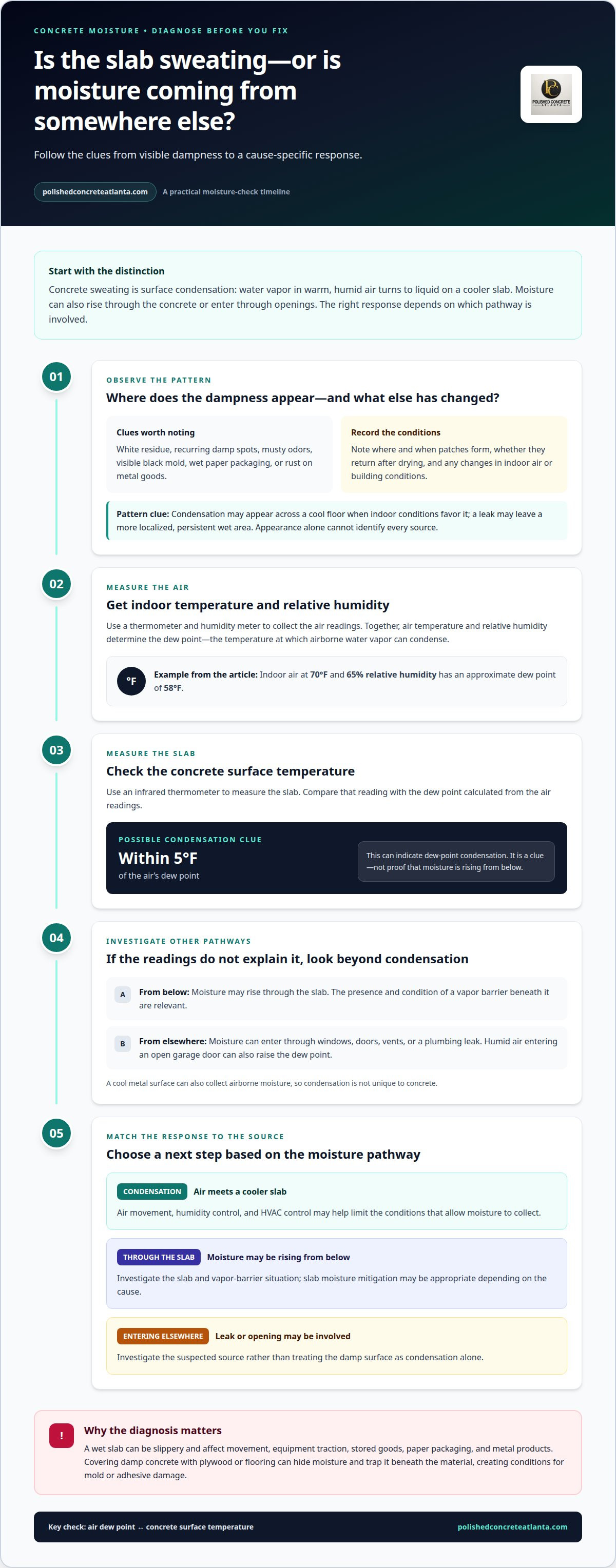
Dew-point condensation happens when a surface becomes cool enough for airborne water vapor to turn into liquid. The dew point changes with air temperature and relative humidity, so the same slab may be dry one day and damp another. For example, at an indoor air temperature of 70°F and relative humidity of 65%, the approximate dew point is 58°F. If the concrete surface reaches that temperature, moisture can condense on it. The floor doesn’t need to change visibly for conditions in the air to trigger sweating.
A practical clue is the relationship between the slab’s surface temperature and the calculated dew point. A concrete surface within 5°F of that dew point may indicate dew-point condensation. That reading points to a possible air-and-surface temperature problem, not proof that moisture is rising from below. The same condensation mechanism can affect metal surfaces: a cool metal object exposed to warm, humid air can become damp. Concrete is not the only surface that can collect airborne moisture.
What are the risks of ignoring concrete sweating? A wet slab can become slippery, creating a hazard where people walk or work. In a busy warehouse, moisture can also disrupt operations and affect stored goods. Dampness may wet paper or product packaging and contribute to rust on metal products. Address the surface condition before water interferes with routine movement, storage, or handling.
Forklifts and carts need reliable traction and stopping distance. When condensation makes a large slab slick, equipment may slide or struggle to stop, increasing collision risks or the chance of sliding off a loading dock. Damp patches may appear only in certain areas, making them easy to miss during a quick walkthrough. Note where and when they form, then compare those observations with slab temperature and the air’s dew point. This helps determine whether condensation is likely or whether another moisture source needs investigation.
2. Signs of moisture problems in concrete
Surface moisture is only one clue. Discoloration, residue, odor, and the condition of nearby materials can indicate a broader moisture problem. In a warehouse, for example, damp packaging alongside wet floor patches suggests moisture is affecting more than the walking surface.
Concrete sweating is condensation; a leak involves water entering from a source such as plumbing or an opening. Sweating often appears across a cool floor when indoor conditions favor condensation, while a leak may leave a more localized, persistent wet area. These patterns can guide an investigation, but appearance alone cannot identify every moisture source.
Look for these visible or detectable changes:
- White residue: Deposits on the slab can accompany moisture movement.
- Damp spots: Recurring wet patches deserve attention, especially when they remain after surrounding areas dry.
- Musty odors or visible black mold: These can signal a persistent damp environment and possible growth on nearby materials.
- Changes to stored goods: Wet paper packaging or rust on metal products can indicate moisture exposure around the floor.
Covering a damp slab with plywood can hide the surface moisture while creating conditions for mold beneath the covering. Similar concerns apply to moisture trapped under vinyl, tile, carpet, or wood flooring. Persistent dampness can damage the adhesive holding those materials in place. The visible floor may look dry after covering, while the material beneath remains exposed to moisture.
Moisture can originate below the slab or enter from elsewhere in the building. If dampness appears to rise through the concrete, the presence and condition of a vapor barrier beneath the slab are relevant. A vapor barrier installed according to building codes can reduce the chance of moisture rising through concrete. Moisture entering through vents, windows, or doors follows a different pathway from moisture originating in the soil.
Heating, ventilation, and air conditioning systems affect indoor temperature and humidity. Warm, humid air reaching a cooler concrete surface can cause condensation, while HVAC control can help limit the conditions that allow moisture to collect. Note when damp patches appear and compare them with changes in indoor air or building conditions. This record can help distinguish recurring condensation from a persistent leak or moisture traveling through the slab.
When dampness persists, a moisture-focused flooring plan can help connect visible signs with an appropriate next step. Identify the affected area, note nearby stored materials, and describe whether the moisture returns after drying. Those details make the moisture pattern easier to assess.
3. What causes concrete to sweat?
Concrete sweats when moisture in the air condenses on a slab cooler than the air’s dew point. Temperature swings and rising humidity can create this condition, even if the concrete temperature stays steady. In a garage, humid air entering through an open door can raise the dew point and leave a previously dry floor damp. Moisture can also come from the ground below or enter through windows, doors, and vents, so identifying the source matters.
To assess condensation, compare the air’s temperature and relative humidity with the concrete’s surface temperature. A thermometer and humidity meter provide the air readings; an infrared thermometer can measure the slab surface. Use those readings to calculate the dew point, then compare it with the surface temperature. A slab close to the dew point is at risk of condensation. A surface should be at least 10 degrees warmer than the calculated dew point to avoid condensation.
A consistent measurement process makes the readings useful:
- Measure indoor air temperature and relative humidity near the damp floor.
- Measure the concrete surface where moisture appears, rather than relying on room temperature alone.
- Calculate the air’s dew point using the temperature and humidity readings.
- Compare the dew point and surface temperatures, then note whether dampness changes as indoor conditions shift.
Humidity and temperature work together; no single humidity reading makes every slab sweat. Condensation occurs when the surface is below the dew point, and warmer, moister air raises that dew point. For example, humid air blown onto cold concrete can add moisture instead of drying the floor. Air movement alone does not always address the cause.
A dehumidifier can remove moisture from indoor air and reduce the chance of condensation. Better ventilation or fan-driven airflow can help evaporate moisture on the surface, provided the incoming air is not more humid. Moving air across the slab may speed drying, but blowing humid outdoor air onto a cool floor can worsen condensation. Air conditioning or heating can also help bring the air and concrete to more similar temperatures.
Temperature changes can explain why sweating appears intermittently. A stable slab may become wet after humid air enters through a loading door, window, or ventilation system. If humidity control and airflow don’t resolve recurring dampness, investigate whether moisture is rising through the slab. The source determines the appropriate response.
4. Warm, moist air and cool concrete floors
A cool slab can collect moisture when warm, humid air reaches its surface. The air cools at the concrete, and water vapor condenses into liquid. In a warehouse, an open loading dock can admit humid air while the floor remains cool, leaving wet patches even without a plumbing leak. Air conditioning may also cool a room faster than the slab, keeping the floor at a temperature that favors condensation.
Air movement can help dry the floor, but the source of that air matters. A high-volume, low-speed fan moves air across the slab and increases surface evaporation. Blowing humid outdoor air onto cool concrete can create more moisture instead. A dehumidifier reduces moisture in indoor air, while heating or air conditioning can help bring the floor and surrounding air to similar temperatures. These measures address conditions that allow condensation to form.
Regular cleaning supports moisture control, but it cannot replace humidity and temperature management. Tire marks, debris, grime, and salts can affect concrete porosity or draw moisture from the air. In a warehouse, routine cleaning with commercial cleaning agents can help prevent condensation-related buildup. Keep the surface clear and note whether dampness returns after cleaning. Recurring wetness points to a condition cleaning alone won’t resolve.
Moisture beneath vinyl, tile, carpet, or wood flooring can damage the finish even when the concrete is out of sight. Trapped moisture can harm the adhesive holding those materials in place. Alkali attack is another concern with damp concrete and floor finishes: moisture moving through the slab can bring alkaline compounds into contact with adhesives or coatings. Bubbling, loosening, or other changes to a finished floor warrant investigation below the surface, not simply another covering.
There isn’t one best sealer or coating for every sweating floor. Densifiers, paints, coatings, and sealers may worsen sweating slab syndrome if they interfere with concrete porosity. One recommended treatment sequence is a chemically reactive concrete densifier followed by an impregnating, penetrating sealer. However, a surface treatment won’t correct humid air or moisture rising from below. Identify the moisture source before choosing a finish, and don’t seal over a damp slab without addressing the cause.
For recurring dampness, slippery areas, or flooring adhesive failure, request help assessing concrete floor moisture before selecting a coating. An informed assessment helps connect the moisture source with the right floor treatment.
Polished Concrete Atlanta: Sweating Slab Syndrome Remediation
Polished Concrete Atlanta provides Sweating Slab Syndrome Remediation for persistent concrete moisture problems. Consider this service when dampness keeps returning, affects floor use, or complicates plans for a new finish. The right response depends on whether condensation, moisture moving through the slab, or both are involved.
Addressing moisture before selecting a floor finish keeps the decision focused on the slab’s condition. Polished Concrete Atlanta also offers Polished Concrete Floors, Epoxy Flooring, and Stained Concrete. These finishes are options for a flooring project, not substitutes for identifying the moisture source.
If recurring dampness is affecting your concrete floor, contact Polished Concrete Atlanta to discuss Sweating Slab Syndrome Remediation.
Make the Next Flooring Decision with Confidence
Recurring moisture is a reason to pause before choosing a new floor finish. First, relate the slab’s condition to the demands of the space, then plan a finish that suits the project. Understanding what concrete sweating is and how to fix it can help clarify your priorities.
Once the flooring plan is ready, Polished Concrete Atlanta offers Polished Concrete Floors, Epoxy Flooring, and Stained Concrete. Each is a distinct option for a concrete floor project. The right choice depends on the surface and the result you want, so include moisture management in the conversation rather than treating the finish as a separate decision.
Ready to discuss your floor and the path forward? Contact Polished Concrete Atlanta to talk through your project. A considered next step can help you move ahead with confidence.
Frequently Asked Questions
What causes concrete to sweat?
Concrete sweats when water vapor condenses on a slab whose surface is cool enough for the surrounding air. A change in building conditions can trigger it: opening a loading door, for example, may bring humid air across a cooler warehouse floor. If dampness follows, condensation is one possible cause. Moisture traveling upward through the slab is another, so recurring wet areas need assessment beyond surface appearance.
How to Prevent Sweating Slabs?
Reduce the conditions that allow condensation: manage indoor humidity, limit humid air entering through open doors or vents, and keep air moving across the floor. In a garage or warehouse, coordinate ventilation with heating or air conditioning instead of directing humid outdoor air onto a cool slab. If moisture comes from below, airflow alone won’t address the source; investigate the slab before choosing a longer-term floor treatment.
What Is Sweating Slab Syndrome and Why Should You Care?
Sweating slab syndrome is intermittent moisture on an interior concrete floor, often caused by condensation. It matters because damp concrete can affect more than appearance: a slippery work area, wet packaging, or rust on nearby metal can disrupt daily operations. For example, a facility storing paper goods should treat recurring floor dampness as a potential product-handling issue, not just a cleaning task.
What is concrete sweating and what causes it?
Concrete sweating is moisture collecting on a slab as water vapor turns into liquid at its surface. A cool garage floor can become damp after humid air enters, even without a leak. Air temperature, relative humidity, and slab temperature all influence whether this occurs. Moisture can also originate below the slab, so consider the wet areas alongside building conditions and where they appear.
How do you stop concrete floors from sweating?
Match the response to the moisture source. For condensation, reduce indoor humidity and use suitable airflow, heating, or cooling to manage conditions around the floor. A dehumidifier can remove moisture from indoor air, while a fan can support surface drying. If dampness continues despite these measures, investigate moisture rising through the concrete before applying a coating or sealer.
How do you test a concrete slab for moisture before coating it?
Before coating, assess airborne conditions and the slab to determine whether moisture is condensing from the air or moving through the concrete. Compare indoor temperature and relative humidity with the surface temperature where dampness occurs. A simple test can also help distinguish moisture from the soil from condensation. These findings guide surface preparation and moisture mitigation before you select or apply a finish.


