

The color chip isn’t the floor you’ll get. The slab beneath it has the final say. Commercial concrete stain colors and finishes can look different on site because concrete’s age, porosity, composition, and existing surface conditions all affect how stain appears. Choosing from a swatch alone can leave you with a finished floor that differs from your expectations.
Appearance matters, but a commercial floor also needs to suit traffic, cleaning routines, and daily operations. This guide compares acid-based and water-based stains, explains how sealers influence sheen and protection, and shows how to test a sample on the actual slab before approving a color.
Start with the concrete and the space, then narrow down the color and finish. You’ll learn which slab conditions may call for floor preparation or moisture mitigation, what to weigh when selecting a finish, and what to discuss with an Atlanta-area concrete finishing contractor. A clear plan helps set realistic expectations before work begins.
Key Takeaways
- Assess the existing slab and the facility’s traffic, cleaning routines, and operating needs before choosing a color or finish.
- Compare acid-based and water-based stains by their color range and expected variation. The right fit depends on the project and the slab.
- Use the selection process to narrow down commercial concrete stain colors and finishes, then test samples on the actual floor before approval.
- Consider how the sealer affects sheen and protection, and ask what maintenance the chosen finish will require.
- Discuss slab conditions, preparation, moisture concerns, samples, and maintenance with an Atlanta-area contractor before finalizing the project plan.
Commercial Concrete Stain Colors and Finishes: Start with the Slab and the Space
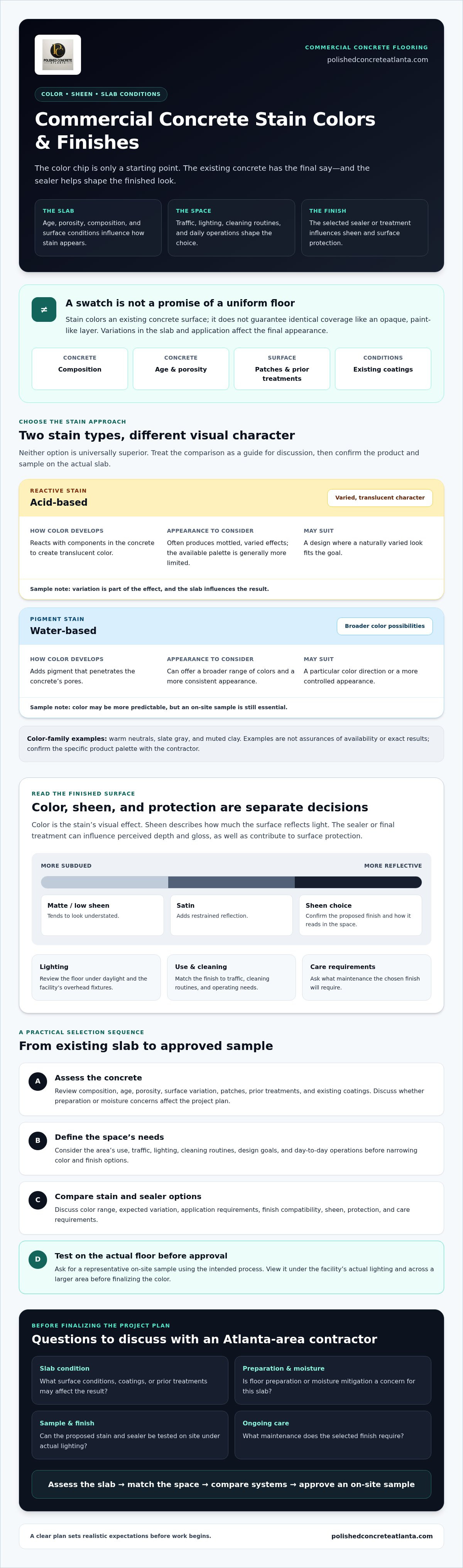
Choose for the floor you have and the work it needs to support, not for a color chip alone. Stain creates color and variation; the sealer or final treatment influences the surface’s sheen and protection. The right combination depends on the existing slab, facility use, lighting, traffic, cleaning routines, and design goals.
Stained concrete is an existing concrete surface colored with stain. Its final appearance reflects the slab and application, rather than a guaranteed uniform coating. A lobby, showroom, or production area may call for different visual effects and maintenance considerations. Decide what matters most in the space, then assess whether the concrete can support that result.
How the existing concrete influences stain color
Concrete varies. Its composition, age, and porosity can affect how it takes stain, while surface variation, patches, and prior treatments may create visible differences across the floor. Existing coatings can also affect preparation and the project plan. Stain isn’t an opaque, paint-like layer that guarantees identical coverage.
That’s why preparation and a representative on-site sample matter. Ask the contractor to assess the slab and prepare a test area using the intended process before you approve a color. Check it under the facility’s actual lighting and consider how the finished surface looks across a larger area. A small chip can suggest a color, but it can’t predict every variation in a commercial slab.
Separate color, sheen, and protection
Color is the stain’s visual effect; sheen describes how much the finished surface reflects light. The selected sealer or finish can change the perceived depth and gloss, as well as contribute to surface protection. Confirm the proposed system and its care requirements rather than assuming the stain alone determines appearance or performance.
Consider how daylight and overhead fixtures reveal the floor, whether the design calls for a subdued or more reflective look, and how the facility’s cleaning routine fits the finish. Polished concrete offers a useful contrast: mechanical processing shapes its surface finish, while staining focuses on color. For broader staining fundamentals, consult the guide “Stained Concrete Floors Atlanta.”
Compare Commercial Concrete Stain Types, Colors, and Finish Effects
Stain type shapes the character of the floor, but the slab and specific product still matter. Use this comparison to guide questions, not to assume a particular result. Confirm color options, application requirements, and finish compatibility with the contractor and product specifications.
Neither option is universally superior. A design might explore warm neutrals, slate gray, or muted clay, but these are color-family examples, not assurances of availability or exact results. Concrete composition and finishing influence how the surface accepts stain. The American Cement Association’s information on concrete mixture and finishing standards provides helpful background on the material itself. Ask the contractor to confirm the specific stain’s palette and application details, then review a representative sample.
How sheen changes the finished commercial floor
Matte or low-sheen finishes tend to look understated, while satin adds a restrained reflection and gloss creates a more reflective, prominent look. Lighting changes how each appears. Overhead fixtures may make a glossy surface especially noticeable, while a softer sheen can support a quieter visual effect. These are appearance considerations, not performance guarantees.
Cleaning and maintenance depend on the selected sealer or finish system. Confirm its specifications, care instructions, and compatibility with the stain before approval. For more on sealer considerations, see “The Definitive Guide to Sealed Concrete.” To discuss staining and sealing for a commercial floor, explore commercial concrete staining options with a contractor. That conversation helps turn preferences for commercial concrete stain colors and finishes into a project-specific plan.
Choose Stain Colors and Finishes by Commercial Use, not by a Swatch Alone
A good selection process starts with operations, not a favorite color. The same floor may need to support steady foot traffic, rolling equipment, occasional spills, or frequent cleaning. Those demands should shape the finish-system discussion before anyone approves a sample. Don’t assume stain alone provides a particular level of resistance.
Match appearance to traffic, cleaning, and operations
Before requesting a proposal, document how the area is used and what matters most visually. Note pedestrian routes, equipment movement, likely spill areas, cleaning products and methods, lighting conditions, and the desired design effect. A customer-facing lobby and a back-of-house work area may call for different appearance priorities and finish considerations. Clear requirements help the contractor assess the slab and discuss a suitable plan.
Approve a representative sample before the full project
A small color chip cannot guarantee how stain will look across a large, varied concrete floor. Ask for an on-site sample on representative concrete after the proposed preparation process. Review it beside areas that show typical slab variation, and check both color and sheen in daylight and under the facility’s normal lighting. Look at it close up and from the distances people will actually see the floor.
Once you approve a sample, record the accepted appearance, stain and sealer specifications, and agreed finish expectations. That gives everyone a clear reference during project communication. If the sample differs from what you expected, resolve that before proceeding across the full area.
Before approving a sample, confirm the facility’s traffic, equipment, spills, cleaning routine, slab condition, lighting, color target, sheen, preparation process, and specified finish system.
Use this five-step process to make the decision methodical:
- Define facility needs. Document traffic, equipment, spills, cleaning practices, and appearance priorities.
- Assess the slab. Ask a contractor to evaluate existing conditions and preparation needs.
- Shortlist colors. Compare options against the design intent and the actual concrete, not a chip alone.
- Test samples. Review a prepared on-site area in representative locations and lighting.
- Approve the finish. Confirm sheen, product specifications, care expectations, and the accepted sample in writing.
This process turns preferences into a practical project brief for selecting commercial concrete stain colors and finishes. Discuss your commercial concrete staining project with a contractor who can assess the existing slab and clarify preparation and finish considerations.
Plan a Commercial Concrete Staining Project in Atlanta with Confidence
A sound project plan starts with an honest assessment of the existing floor. Coatings, repairs, surface wear, and moisture concerns can affect preparation and the appropriate stain-and-sealer system. A contractor should inspect the slab before recommending a finish. That assessment connects your priorities for commercial concrete stain colors and finishes to the actual site conditions.
What to confirm with an Atlanta concrete finishing contractor
Ask how the contractor will assess the concrete and identify existing coatings, patches, or other conditions that could affect the work. Then confirm the proposed preparation steps, stain type, sealer specifications, and how each relates to your slab and facility use. Polished Concrete Atlanta provides commercial concrete staining, sealing, floor preparation, and moisture mitigation. Which services are appropriate depends on the project assessment.
- What slab conditions or existing coatings could change the preparation plan?
- Which stain and sealer specifications are proposed for this concrete?
- How will the sample be prepared, reviewed, and approved before the full area?
- What site access and operating schedule should facility staff plan around?
- What maintenance guidance applies to the specified finish system?
Turn the finish decision into a project plan
Before a project discussion, gather the facility’s use patterns, cleaning expectations, preferred visual references, and any known history of coatings, repairs, or moisture issues. Note which areas matter most and what site-access constraints the contractor should understand. These details make it easier to evaluate the slab and discuss practical options.
For background on why surface readiness matters, read “The Engineering of Adhesion.” Then bring your notes and questions to a project discussion. Request a project consultation to discuss commercial concrete staining, sealing, floor preparation, or moisture mitigation for your Atlanta-area facility. You don’t need to have every finish decision settled first. A clear assessment is the right starting point.
Make Your Commercial Floor Choice with Confidence
The right commercial concrete stain colors and finishes begin with the slab and the demands of the space, not a sample chip alone. Compare stain types for the appearance you want, then evaluate sheen, protection, and care requirements as part of the specified system. Most importantly, review a representative sample on the existing concrete before approving the full project.
For Atlanta-area facilities, a contractor’s assessment can clarify whether surface preparation or moisture mitigation should be considered alongside staining and sealing. Polished Concrete Atlanta is a privately owned and operated independent contractor founded in 2004, offering commercial concrete staining, sealing, preparation, and moisture mitigation.
Bring your facility requirements, preferred visual references, cleaning expectations, and any known slab history to the project discussion. Discuss your commercial concrete staining project and take the next step toward a floor plan grounded in real site conditions. With clear expectations and a tested sample, you can move forward with greater confidence.
Frequently Asked Questions
What colors are available for commercial concrete staining?
Commercial concrete stain colors vary by stain type and product. Acid-based stains generally offer a more limited, earth-toned palette, while water-based stains come in a broader range of colors. Warm neutrals, gray tones, and muted clay shades are examples to discuss, not guaranteed options. The existing slab also affects the result, so request product-specific color details and an on-site sample before approving a selection for your Atlanta facility.
Is acid stain or water-based stain better for a commercial concrete floor?
Neither is automatically better; the right choice depends on the desired appearance, the slab, and the specific product. Acid stain reacts with concrete and often creates varied, translucent effects. Water-based stain deposits pigment in the concrete’s pores and may offer a broader color range or a more controlled appearance. Ask an Atlanta-area contractor to assess the slab and verify application requirements and sample expectations for each option.
Can commercial concrete stain look exactly like a color sample?
No sample can guarantee an exact match across a large commercial floor. Concrete composition, age, porosity, patches, prior coatings, and preparation can all affect how stain appears. Use a chip to narrow choices, then request a sample on representative areas of the actual slab after the proposed preparation. Review it under the facility’s daylight and artificial lighting, and agree on the expected variation before work proceeds.
What finish is best for stained concrete in a commercial space?
The best finish depends on the facility’s visual goals, lighting, traffic, cleaning routine, and the specified sealer system. Matte or low-sheen finishes create a subdued look; satin adds moderate reflection, while gloss is more reflective. Sheen alone doesn’t establish durability or suitability. Ask the contractor to confirm sealer compatibility, protection claims, and maintenance instructions for the actual system proposed for your commercial floor.
Does concrete need preparation before commercial staining?
The slab usually needs assessment and suitable preparation, but the work required varies by its condition. Existing coatings, adhesive residue, repairs, contamination, or moisture concerns may affect whether staining is appropriate and what preparation is needed. An Atlanta contractor should inspect the concrete before recommending a plan. Polished Concrete Atlanta lists floor preparation, floor glue removal, and moisture mitigation among its services; not every project needs each one.
How do I choose a concrete stain contractor in Atlanta?
Choose an Atlanta contractor who evaluates the existing slab before recommending stain and sealer options. Ask how they identify coatings and surface issues, what preparation they propose, whether they’ll create a representative on-site sample, and what maintenance the specified finish requires. Confirm product details and expectations in the project scope. Polished Concrete Atlanta is a privately owned independent contractor founded in 2004, with commercial staining and related floor services among its offerings.


