

A durable topcoat can’t make up for concrete that’s cracked, uneven, or retaining moisture. For Atlanta food processing plant flooring solutions, the slab matters as much as the finish. Floors need dependable traction, surfaces that are easy to clean, resistance to washdown moisture and cleaning chemicals, and a sound substrate to support the coating. Repair and leveling affect how well a floor performs in demanding food and beverage operations.
Slip resistance and sanitation are natural priorities: standing water, residue, and worn areas can make safe movement and cleaning more difficult. But choosing a flooring system starts with the concrete’s condition and the work happening on it. This article explains how traction, cleanability, chemical and moisture resistance, concrete repair, and preparation fit together in production, washdown, and other food and beverage areas in Atlanta. The key decision is the complete floor system, not just its visible surface.
Key Takeaways
- Choose floor texture to support traction without making washdown and residue removal harder.
- Match the flooring system to each area’s work, from production and washdown zones to spaces with different traffic demands.
- Prioritize cleanable, durable surfaces and address cracks, spalling, and other damage that can complicate sanitation.
- Consider chemical exposure, moisture, temperature changes, and heavy equipment traffic when comparing flooring materials.
- Sound concrete preparation, repair, and leveling help create a better foundation for epoxy, polished concrete, or stained concrete finishes.
Slip resistance
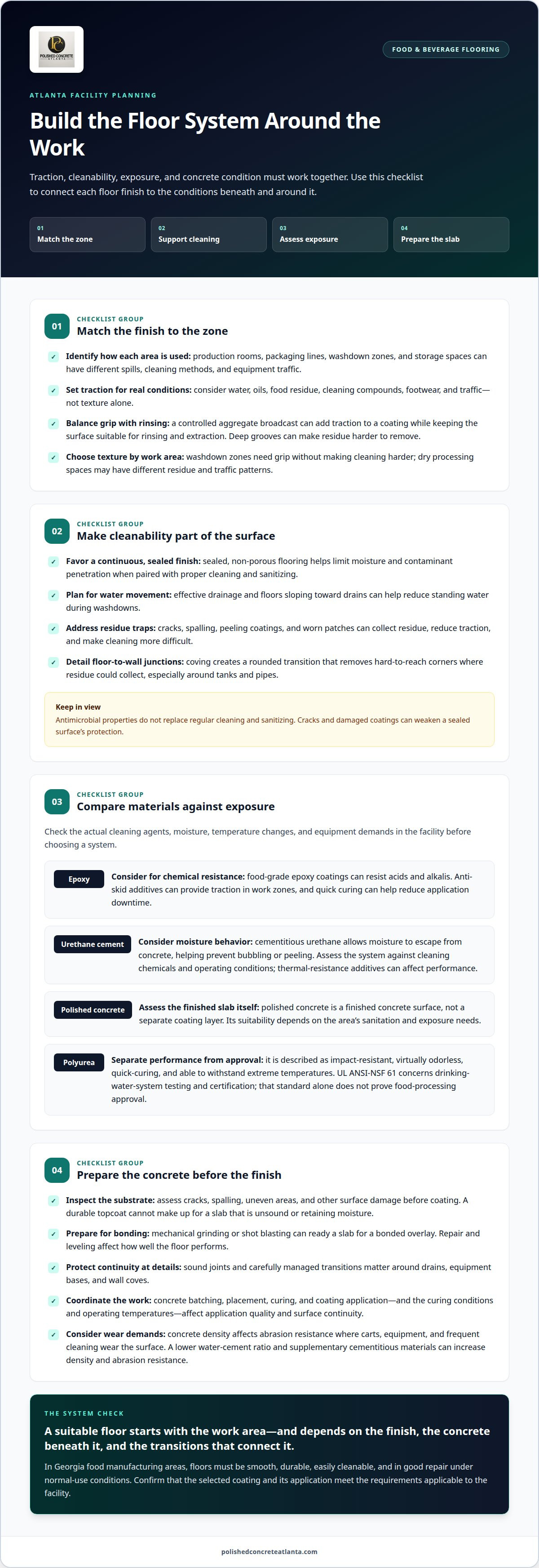
In a wet production area, traction must work alongside washdown needs. Water, oils, food residue, and cleaning compounds can make a smooth floor hazardous underfoot. A slip-resistant surface can help reduce accident risk, but texture alone isn’t enough. The finish also needs to let crews rinse away residue rather than trap it in deep grooves.
A controlled aggregate broadcast can add traction to a coating while maintaining a surface that supports rinsing and extraction. The right texture depends on the work area: a washdown zone needs grip without making cleaning harder, while dry processing spaces may have different residue and traffic patterns. Match the finish to actual conditions, including footwear, spills, and cleaning methods.
Food safety and slip resistance are connected. A surface that’s difficult to clean can hold food residue, while standing moisture can complicate sanitation. Sealed, non-porous flooring helps limit moisture and contaminant penetration when paired with proper cleaning and sanitizing. Cracks, peeling, and worn patches also need attention because residue can collect there, making effective cleaning more difficult.
Chemical exposure matters as much as texture. Food-processing floors must withstand the cleaning agents used by maintenance staff, including repeated contact with cleaners and sanitizing compounds. Chemical-resistant binders and sealers can help protect concrete. Food-grade epoxy coatings can resist acids and alkalis, while a urethane system should be assessed against the facility’s cleaning chemicals and operating conditions.
Moisture control starts with a continuous, sealed surface and effective drainage. Sloping floors toward drains can help reduce standing water during washdowns. Regular cleaning and sanitizing remain necessary, even when a floor has antimicrobial properties. A sealed finish helps limit moisture intrusion in food and beverage areas, but cracks and damaged coatings can weaken that protection and complicate sanitation.
Concrete density affects how well a floor withstands abrasion from routine operations. A lower water-cement ratio and supplementary cementitious materials can increase density and abrasion resistance. These properties matter where carts, equipment, and frequent cleaning wear the surface. Preparation matters too: mechanical grinding or shot blasting can ready a slab for a bonded overlay, while cracks and surface damage should be assessed before coating.
Common flooring failures include cracks, spalling, peeling coatings, and worn or slippery areas. They can create residue traps, reduce traction, and make cleaning harder, increasing safety and sanitation risks. Georgia food processing plants must report qualifying positive finished-food or ingredient test results to the Georgia Department of Agriculture within 24 hours of obtaining them. That reporting requirement is separate from floor maintenance, but both underscore the importance of sound facility practices.
Where Can Food & Beverage Flooring Be Used?
Flooring needs vary among production rooms, packaging lines, washdown areas, and storage spaces. In Georgia food manufacturing areas, floors must be smooth, durable, easily cleanable, and in good repair under normal-use conditions. FDA and USDA requirements also inform which floor coatings are acceptable. The facility’s tasks, spills, cleaning methods, and equipment traffic all help determine the appropriate surface.
Food-processing areas can use food-safe epoxy coatings that withstand exposure to acids and alkalis, with anti-skid additives to provide traction in work zones. Quick curing can help reduce application downtime. The concrete still needs suitable preparation, and application must match operating conditions. A continuous finish also depends on sound joints and carefully managed transitions, not just the coating material.
Production rooms with tanks, pipes, and frequent splashing need special attention at floor-to-wall junctions. Coving creates a rounded transition that removes hard-to-reach corners where residue could collect. Walls near tanks face different exposure from floors, including splashes and cleaning, so their coating system should suit those conditions and connect cleanly with the floor finish. This distinction matters in beverage manufacturing, where equipment layout and washdown patterns shape exposed surfaces.
Polyurea coatings are described as impact-resistant, virtually odorless, quick-curing, and able to withstand extreme temperatures. However, UL ANSI-NSF 61 concerns testing and certification of drinking-water systems. That standard alone should not be presented as proof that a coating is approved for food-contact or food-processing use. Coating selection should distinguish the system’s performance characteristics from the regulatory requirements applicable to the facility.
Application quality depends on the concrete beneath the coating. Coordinating concrete batching, placement, curing, and coating application helps maintain surface continuity and joint integrity. Prepare the substrate for the chosen finish, and account for curing conditions and operating temperatures when scheduling application. These details matter around drains, equipment bases, and wall coves, where uneven transitions can interrupt a seamless surface.
Epoxy, urethane cement, and polished concrete serve different purposes. Epoxy provides a coating that can resist acids and alkalis. Cementitious urethane allows moisture to escape from concrete, helping prevent bubbling or peeling. Polished concrete is a finished concrete surface, not a separate coating layer, so its suitability depends on the area’s sanitation and exposure needs. Thermal-resistance additives can also affect urethane performance.
Food-safe flooring and sanitation
In Georgia food manufacturing areas, floor surfaces must be smooth, durable, easily cleanable, and in good repair under normal-use conditions. A food-safe floor supports hygiene through its condition and cleanability, not through a coating label alone. Sealed, non-porous surfaces help limit moisture and contaminant penetration when paired with proper cleaning and sanitizing. Even antimicrobial flooring still needs regular cleaning.
How should food-processing floors be cleaned and maintained? Follow the facility’s established cleaning and sanitizing procedures, and clean drain systems daily. Inspect floors for cracks, spalling, stains, peeling, and chemical damage. Address defects promptly so residue and moisture don’t collect in damaged areas.
Inspections connect floor condition with sanitation records and traceability. A documented inspection can identify a crack near a production line, record its location, and track repair and follow-up. This helps reveal recurring damage and connect maintenance actions with cleaning observations. Deep scratches, chips, or peeling may indicate that recoating or replacement should be considered.
Drainage design affects cleaning and water control. Food-processing floors should slope toward drains to reduce standing water and support washdowns. Floor drains may be required under some conditions in Georgia, and their placement must follow applicable regulations and local codes. Coordinate drain locations with production equipment and floor slopes to avoid low spots where wash water can collect.
Drain systems need attention as part of routine sanitation, not just after a blockage. Daily drain cleaning helps remove buildup, while regular floor inspections can reveal pooling, damaged edges, or deterioration around drain openings. A sound floor-to-drain transition supports cleanability. Damaged joints or coating edges can make that transition harder to maintain.
Thermal changes also affect floor integrity in washdown areas. Floors exposed to heated-water rinsing followed by cooler air need to maintain adhesion between the concrete slab and antimicrobial layer through temperature changes. Cracks, peeling, or moisture intrusion can complicate cleaning validation and inspection scoring. Repairing floor penetrations after a production area is repurposed or retooled helps preserve a continuous, cleanable surface.
Food safety depends on the full sanitation system. Sealed surfaces, proper drainage, regular cleaning, and timely repairs each address a different risk. Georgia food manufacturing requirements call for floors that remain cleanable and in good repair under normal use. Maintaining inspection records and documenting repairs gives facilities a practical way to track floor condition alongside routine hygiene work.
Which flooring materials resist chemicals, heat, moisture, and heavy traffic?
Food-processing floors face several stresses at once: chemicals, moisture, heat, abrasion, impacts, and equipment movement. A material that handles one condition may struggle with another. Compare the cleaning compounds, temperature changes, and traffic patterns in each area. A washdown room, freezer, and forklift route place different demands on the concrete and its finish.
Epoxy coatings suit areas where resistance to acids, alkalis, oils, grease, and harsh cleaning chemicals matters. Food-grade epoxy can withstand acids and alkalis, while urethane systems can include additives that improve thermal resistance. Urethane coatings cost more than food-grade epoxy coatings. The choice should reflect the facility’s exposure conditions, not just the material name.
Heat can challenge conventional coatings during hot-water rinses or other high-temperature processes. Traditional floor coatings in food processing facilities can fail at temperatures as low as 140 degrees. Repeated changes between heated wash water and cooler air create thermal shock. In those zones, assess how the flooring system bonds to the slab through temperature shifts, not just its resistance to steady heat.
Moisture behavior beneath the surface matters. Cementitious urethane allows moisture to escape from the concrete substrate, helping prevent bubbling or peeling. This can be useful where the slab releases moisture, but the coating still needs suitable preparation and installation. An impermeable finish over a damp substrate can fail if moisture pressure disrupts adhesion.
Heavy foot traffic, forklifts, pallet jacks, and impacts can wear finishes and stress slab joints. In areas with forklift and pallet-jack traffic, fiber reinforcement or rebar can limit crack width and help preserve joints. These measures support concrete performance, but don’t replace a coating selected for chemicals, washdowns, and temperature changes. Joint integrity remains central to floor durability.
Match the system to each room’s combined demands. For example, a production lane exposed to grease, cleaning chemicals, and pallet jacks needs chemical resistance and mechanical durability. A heated washdown area needs adhesion through temperature changes, while a moisture-prone slab presents different concerns. Record operating conditions by zone before comparing materials, then assess the slab, joints, and existing damage.
For Atlanta food processing plant flooring solutions, material selection works best when the slab and finish are treated as one system. Plan a flooring assessment for your facility around chemical exposure, temperature cycling, moisture, and traffic. A clear operating profile helps align the flooring choice with the demands it must withstand.
Polished Concrete Atlanta: Epoxy Flooring
Polished Concrete Atlanta installs epoxy flooring for facilities considering a new coating or addressing a worn concrete surface. When cracks, uneven areas, or moisture concerns affect the floor, the project starts with assessing the slab and preparing it for the selected finish.
Floor preparation supports coating adhesion, and epoxy flooring is an option for commercial and industrial concrete. Polished concrete floors or stained concrete may suit other areas, depending on the existing surface and operational needs. Choose a finish that aligns with the facility’s cleaning demands, traffic, and floor condition.
For Atlanta food processing plant flooring solutions, Polished Concrete Atlanta can match the floor’s condition and finish to the operation’s needs. Contact the team to discuss your flooring project.
Set Your Flooring Project in Motion
Start by turning your facility’s operating demands into a clear project scope. Identify the areas that need attention first, the production conditions the floor must handle, and how the existing concrete affects the work. This gives the flooring decision a practical foundation instead of treating every room as if it had the same needs.
For Atlanta food processing plant flooring solutions, Polished Concrete Atlanta offers epoxy flooring, polished concrete floors, and stained concrete. Each option can be evaluated in relation to the concrete surface and the facility’s intended use. A focused discussion can help define the right direction for your project.
Start a flooring conversation with Polished Concrete Atlanta and take the next step toward a floor plan built around your operation.
Frequently Asked Questions
Need Professional Flooring Help?
Polished Concrete Atlanta provides concrete floor finishing and preparation for commercial and industrial facilities in Atlanta. For an existing production floor with coating failure, surface damage, or a need for a new finish, the project can start by assessing the concrete and its intended use. Epoxy flooring, polished concrete floors, and stained concrete are options. The choice should reflect the facility’s operations and the condition of its existing slab.
What flooring systems are best for food processing plants in Atlanta?
The right system depends on each area’s exposure and concrete condition. Epoxy flooring is an option for facilities considering a coated concrete surface, while cementitious urethane can allow moisture to escape from the substrate. Polished concrete is a different finish, and its suitability depends on the room’s sanitation and operating demands. A packaging room and a heated washdown zone, for example, may have different performance priorities, so assess them separately.
What are USDA- and FDA-compliant flooring requirements for food processing facilities?
Food facilities must select flooring that supports applicable sanitation requirements, but a product label alone doesn’t establish compliance. In Georgia food manufacturing areas, floors must be smooth, durable, easily cleanable, and in good repair under normal-use conditions. USDA and FDA requirements inform acceptable coatings. Consider intended use, cleaning chemicals, and maintenance practices together, then ensure the selected system and its use align with applicable requirements.
What flooring and cove base details help prevent bacteria and water intrusion?
A continuous floor finish, properly integrated coving, and sealed transitions help limit places where moisture or residue can collect. Pay particular attention to wall-floor junctions, drain edges, equipment bases, and repaired penetrations. A gap where a pipe passes through the floor, for example, can interrupt cleanability even when the surrounding surface is intact. Routine inspection of these interfaces can reveal deterioration before it compromises the finish.
How long does food plant flooring installation take, and what shutdown is required?
Installation time and production shutdown depend on the work area, concrete repairs, moisture conditions, preparation, coating system, and required curing. An isolated area differs from a production floor requiring extensive repairs. Planning can define work zones, access restrictions, and the sequence for returning areas to use. The system’s application and curing requirements, along with production schedules, determine the timeline and operational impact.
Which Atlanta contractors install sanitary industrial flooring for food processing plants?
Polished Concrete Atlanta provides epoxy flooring, polished concrete floors, stained concrete, and floor preparation for commercial and industrial settings. Its services address existing concrete surfaces, including preparation before a finish is applied. For a food-processing project, the scope should reflect facility operations and concrete condition. Contact Polished Concrete Atlanta to discuss flooring needs for your Atlanta facility and identify a suitable project direction.


