

Non slip epoxy commercial kitchen flooring needs to provide dependable traction when water, oil, or food residue reaches the floor, without making routine cleaning harder than necessary. The right choice depends on how each area of your Atlanta kitchen is used and maintained, not simply on whether a product is labeled “non-slip.”
Texture can affect both grip and how easily staff remove grease and food soil. Even a well-chosen coating can fail if the concrete beneath it is poorly prepared or has unresolved moisture issues. A label alone does not show whether a system suits your kitchen’s traffic, spills, cleaning methods, and operating schedule.
This guide explains how to compare traction information, cleanability, epoxy system suitability, concrete preparation, and moisture assessment. It also covers practical planning for installation, cleaning, and reopening, so you can evaluate a floor against your kitchen’s day-to-day requirements.
Key Takeaways
- Choose non slip epoxy commercial kitchen flooring based on the spills, traffic, footwear, and cleaning practices in each kitchen zone, not on a generic traction claim.
- Compare smoother and more textured finishes by weighing grip needs against how easily grease and food residue can be removed.
- Ask for written details about the proposed system, concrete preparation, moisture assessment, compatibility, and any relevant slip-resistance testing.
- Confirm that the coating system suits the kitchen’s actual exposures and cleaning procedures before committing to a specification.
- Plan equipment movement, closure, installation, cleaning, and reopening around site conditions and the system manufacturer’s instructions.
What Non-Slip Epoxy Commercial Kitchen Flooring Can, and Cannot, Do
Epoxy flooring is a resin-based coating system applied over concrete that has been assessed and properly prepared. Epoxy resin is the binding material, but the finished floor’s performance depends on the complete system and the condition of the slab beneath it. Texture and installation matter, yet neither makes a floor immune to slips.
A “non-slip” claim describes an intended traction feature. Verified performance describes how a specified floor performed under stated test conditions. That distinction matters because grip can change with texture, water or grease on the floor, footwear, cleaning residue, wear, and maintenance. No finish should be treated as slip-proof in every kitchen condition.
Why commercial kitchens need a floor-specific assessment
Start with the work, not the coating label. Water near dishwashing sinks, cooking oils around hot lines, food residue in preparation areas, cleaning products, and frequent washdowns create different exposure patterns. A floor with repeated wet or greasy traffic needs a different assessment from one where spills are occasional and promptly cleaned.
Map how staff move through cooking, dishwashing, storage, and service areas. Note where spills occur, which routes stay wet during normal operations, how often each zone is washed, and what products staff use. These details help identify where traction matters most and what the floor must tolerate during routine use.
What a non-slip claim does, and does not, tell you
A label does not establish how a coating will perform in your kitchen. Experienced commercial flooring providers such as Deluxe Resin Services recommend asking the installer or manufacturer for the test method, test conditions, and results supporting the traction claim. Check that the documentation applies to the proposed system and finish, rather than to a different product or sample.
Test results are useful evidence, not a promise about every installed condition. A laboratory measurement cannot reproduce every combination of footwear, spills, cleaning practices, and wear. Detergent residue may leave a film, grease or food can cover the floor texture, and wear may change the surface over time.
How Epoxy Texture, Cleaning, and Concrete Preparation Affect Kitchen Performance
The right finish balances traction needs with cleaning demands. A smoother surface may be easier to scrub, while a more textured finish may have a different traction profile but can hold food soil or grease in its irregularities. Professional coating specialists such as Drip Epoxy Flooring emphasize evaluating the complete system against the kitchen’s cleaning routine and actual exposure, rather than choosing by texture alone.
| Buyer priority | Smoother finish | More textured finish |
|---|---|---|
| Routine cleaning | May be simpler to scrub and rinse. | Ask how texture affects residue removal and cleaning effort. |
| Traction considerations | Request test documentation for the proposed finish and conditions. | Confirm the texture is supported by relevant test data and suits the area. |
| Zone suitability | Consider areas with different exposure and cleaning needs. | Ask whether distinct finishes are compatible within the selected system. |
Choose texture around cleaning and exposure
Ask how the specified texture performs under your normal scrubbing process and how readily staff can remove food residue. Review the manufacturer’s approved cleaning methods, then confirm compatibility with the facility’s detergents and sanitizers. A finish is practical only if the kitchen can clean and maintain it as intended. If different zones need different finishes, confirm that they are compatible within the proposed system.
Cleaning remains part of floor safety. OSHA’s walking-working surfaces standard addresses maintaining walking surfaces in a safe condition. A coating does not replace prompt spill cleanup or routine care.
Prepare the slab before specifying the coating
Adhesion depends on the existing concrete as well as the coating. An assessment should identify old coatings, adhesive residue, cracks, contamination, and surface irregularities, then determine the preparation needed for a suitable substrate. Moisture also matters. Ask what assessment is appropriate for the slab and proposed system, and how the findings could affect the installation plan. Skipping these steps can leave a coating vulnerable to bonding problems or premature failure.
Polished Concrete Atlanta provides floor preparation and moisture mitigation in Atlanta. For a kitchen project, ask whether the company’s services and proposed scope fit the existing slab and coating requirements. Review Atlanta floor preparation services for information to support that discussion.
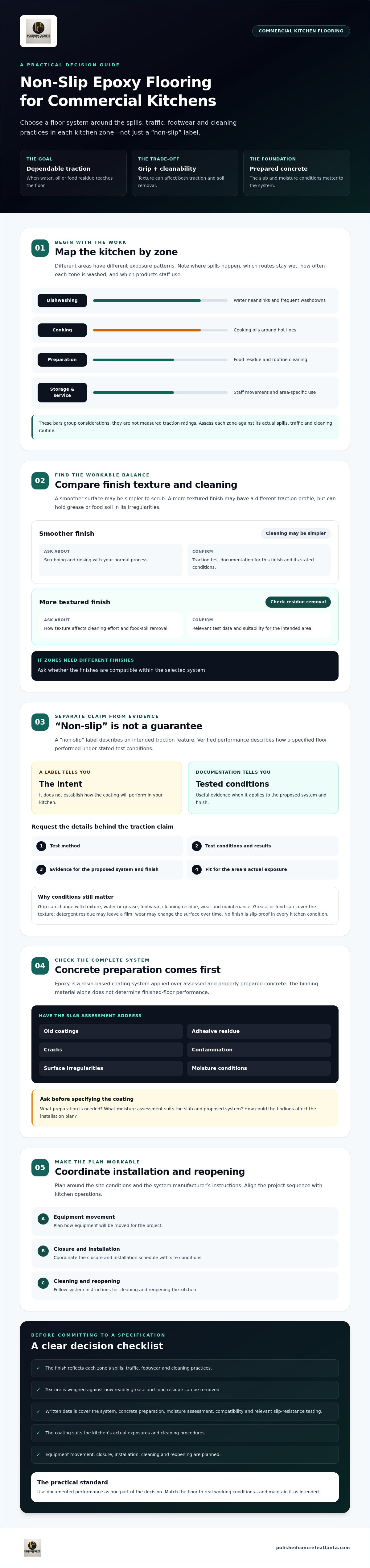
How to Evaluate Non-Slip Epoxy Flooring Before You Choose a System
A useful proposal explains how the floor fits your kitchen, rather than relying on a broad “non-slip” label. Use this checklist to compare the proposed scope, operating fit, and condition of the existing slab.
- Map zones and exposure. Identify cooking, dishwashing, storage, and service areas. Record where water, oil, food residue, or cleaning chemicals reach the floor, how often each area gets wet or greasy, and the kitchen’s operating schedule.
- Describe cleaning practices. Share the cleaning agents, scrubbing methods, washdown frequency, and time available for routine care. Ask whether staff can follow the proposed system’s written maintenance instructions consistently.
- Request a slab assessment. Ask how the contractor will evaluate concrete condition, moisture, contamination, existing coatings, adhesive residue, and surface irregularities before recommending preparation.
- Get the system in writing. Request the proposed layers and the purpose of each layer, along with preparation steps and compatibility details for the substrate, finish, and intended exposure.
- Verify performance claims. Ask for the test method, conditions, and results behind any traction claim. Confirm that the documentation applies to the proposed system and relevant use, rather than treating a rating as universal.
- Clarify care and project limits. Get maintenance guidance, the approach to future repairs, exclusions, and expected access restrictions during installation. Record unanswered questions before comparing proposals.
Compare the operating fit, not the headline
Two proposals may use similar language but differ in preparation scope, system documentation, cleaning requirements, or coordination. Compare those details side by side. If the cleaning team cannot use the specified products or follow the care instructions, the system may not be a practical match for daily operations.
Ask the contractor to explain how each layer supports the proposed application and how the preparation plan responds to site findings. For traction claims, request relevant documentation rather than relying on a universal rating or verbal assurance. No single test result guarantees identical performance under every combination of spills, footwear, cleaning, and wear.
For an Atlanta project discussion, bring your zone map, cleaning procedures, and unresolved slab questions to the site evaluation. Polished Concrete Atlanta provides epoxy flooring, floor preparation, and moisture mitigation. Confirm project fit and ask about the proposed system details. Review floor preparation and moisture assessment information.
Planning a Commercial Kitchen Epoxy Floor Project in Atlanta
A kitchen floor project needs an operating plan as well as a coating specification. The schedule and access requirements depend on the existing slab, preparation scope, selected system, site logistics, and the manufacturer’s current instructions. Avoid setting a reopening date based on a generic estimate.
Coordinate installation around kitchen operations
Ask the contractor to document the expected work stages and access restrictions for your site. Confirm the system’s current curing and return-to-service requirements in writing, including conditions that could affect timing. Then coordinate the plan with the people responsible for kitchen operations.
- Schedule the kitchen closure and determine which areas must remain inaccessible.
- Arrange equipment movement and identify who is responsible for clearing and returning each area.
- Coordinate pre-installation cleaning, staff communication, and any required workspace preparation.
- Plan a final inspection before reopening and confirm the floor is ready for its intended use under the system instructions.
Build flexibility into the schedule. If slab conditions or moisture assessment change the preparation plan, the work sequence may need to change too. For non slip epoxy commercial kitchen flooring, align installation and reopening decisions with documented site conditions, not assumptions.
What Atlanta facility managers should verify
Confirm that the contractor serves your Atlanta-area facility and can address the project requirements. Polished Concrete Atlanta serves commercial and industrial environments in Atlanta and provides epoxy flooring, floor preparation, and moisture mitigation. Confirm directly whether a particular kitchen project fits the company’s scope.
Check applicable food-service, workplace, and building requirements with qualified local authorities. Requirements can depend on the facility and project, so do not treat a coating proposal as a substitute for checking what applies at your location.
Project scope and budget depend on the slab’s condition, required preparation, selected flooring system, and site logistics. Request a written scope that identifies those factors, along with access restrictions and the basis for the proposed schedule. This helps your team coordinate closure, equipment relocation, installation, cleaning, and reopening while keeping expectations tied to the actual project.
Choose a Kitchen Floor Plan Built on Evidence
A dependable kitchen floor starts with the conditions it must handle. Match texture and cleaning requirements to actual kitchen zones, ask for written system and traction documentation, and include concrete preparation and moisture assessment in the decision. A “non-slip” label alone cannot establish how a floor will perform through spills, cleaning, and daily wear.
For non slip epoxy commercial kitchen flooring, base the decision on the slab’s condition, the kitchen’s operating routine, and the selected system’s requirements. Plan installation access and reopening around documented instructions, not assumptions.
Polished Concrete Atlanta provides epoxy flooring and concrete preparation services, with moisture mitigation available as part of its floor preparation expertise. To discuss your Atlanta commercial kitchen project, request a project assessment from Polished Concrete Atlanta and review the existing slab and project requirements.
Frequently Asked Questions
Is epoxy flooring safe for a commercial kitchen?
Epoxy flooring can be suitable for a commercial kitchen when the system, surface texture, and installation are matched to the facility’s conditions. Safety also depends on managing spills, maintaining the floor, and confirming that the specified surface can be cleaned as required. Ask for written system details and relevant performance documentation, and check applicable food-service and workplace requirements with qualified local authorities in Atlanta.
Can epoxy flooring be made slip-resistant when a kitchen floor gets wet or greasy?
A system can be specified with a textured finish intended to improve traction, but no finish stays slip-proof under every condition. Water, cooking oil, food residue, cleaning films, footwear, and wear all affect real-world grip. For non slip epoxy commercial kitchen flooring, request the test method, conditions, and results for the proposed finish, then compare them with the kitchen’s actual exposures and cleaning practices.
How do you clean textured epoxy flooring in a commercial kitchen?
Follow the selected system’s manufacturer-approved cleaning instructions, including guidance on cleaners, tools, and rinsing. Texture can support traction needs, but its contours may also retain food soil or grease if cleaning does not reach them effectively. Ask the installer how the proposed finish performs under your scrubbing routine and whether your detergents and sanitizers are compatible. Remove spills and cleaning residue promptly.
What should I ask an installer before choosing non-slip kitchen flooring?
Ask how the installer will assess the concrete, moisture, contamination, cracks, and existing coatings. Request written system specifications, the purpose of each layer, preparation steps, and compatibility details. For traction claims, ask for the test method, conditions, and results relevant to the proposed finish. Also clarify cleaning and maintenance instructions, the repair approach, access restrictions, schedule assumptions, and exclusions. Compare complete scopes, not just headline claims.
How much does commercial kitchen epoxy flooring cost?
There is no single reliable price for every commercial kitchen project. Scope depends on the existing slab’s condition, required preparation or moisture mitigation, the selected coating system, and site logistics such as equipment movement and access. For an Atlanta estimate, provide the contractor with the floor area, operating conditions, and known slab issues. Request a written proposal that identifies included work, assumptions, and exclusions.
How long does epoxy flooring installation take in a working kitchen?
Installation time varies with site conditions, preparation needs, the chosen system, and its current manufacturer instructions. The work plan should identify each stage, areas that must remain inaccessible, and curing and return-to-service requirements. Coordinate closure, equipment relocation, staff communication, cleaning, and inspection before setting a reopening date. Ask the installer for a site-specific schedule in writing rather than relying on a generic timeframe.


