
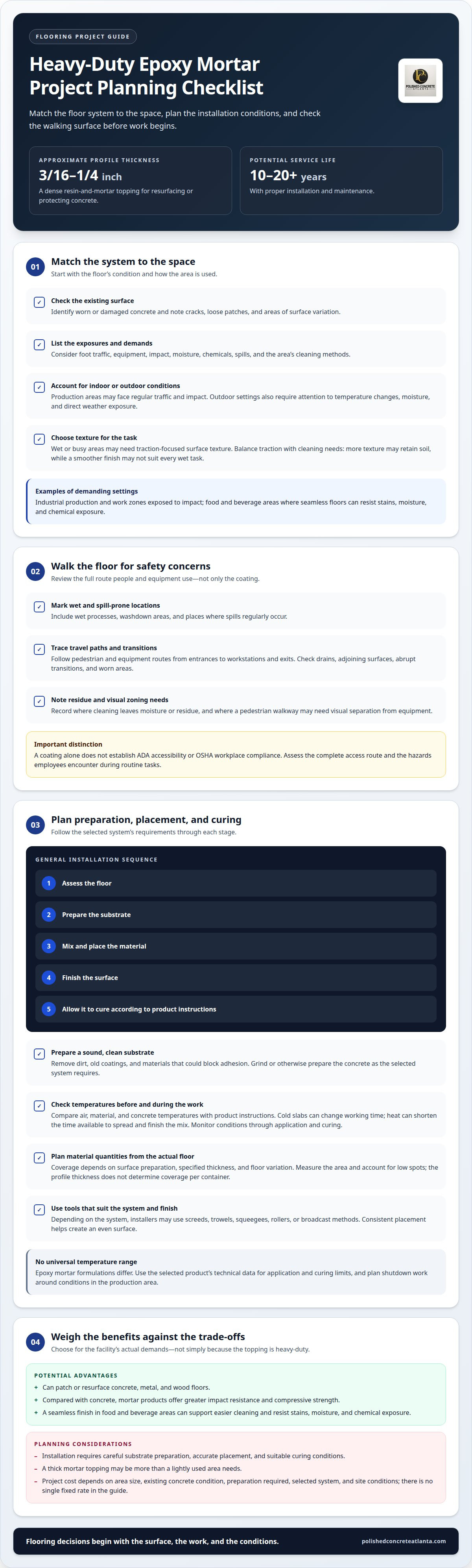
A hard-working floor shouldn’t need replacing just because daily traffic, impact, or spills have taken their toll. Heavy duty epoxy mortar flooring is a resin-based topping used to resurface worn concrete or protect concrete in demanding industrial settings, with an approximate profile thickness of 3/16 to 1/4 inch. With proper installation and maintenance, heavy-duty floors can last 10-20 years or more.
Choosing a durable system is only part of the decision. The floor must also suit how the space is used, including exposure to moisture, chemicals, impact, and foot traffic. Surface texture matters when traction is a priority in wet or busy areas.
This guide explains what heavy duty epoxy mortar flooring is, how it can support floor durability, and which installation and maintenance factors influence performance. You’ll also learn how to assess whether it suits your facility and how professional floor preparation and epoxy flooring services can support the project.
Key Takeaways
- Understand how a resin-based mortar topping can resurface worn concrete or protect floors in demanding industrial settings.
- Learn which floor conditions and work practices matter when planning installation and curing.
- See how surface texture and the demands of wet or high-traffic areas shape slip-resistance decisions.
- Discover how installation quality and ongoing maintenance influence a heavy-duty floor’s potential service life.
- Explore when professional floor preparation and epoxy flooring can help address a facility’s flooring needs.
What Is Heavy Duty Flooring?
Heavy duty epoxy mortar flooring combines epoxy resin with mortar to create a dense topping for demanding floors. Its approximate profile thickness is 3/16 to 1/4 inch, making it suitable for resurfacing damaged concrete and protecting concrete in high-traffic industrial facilities.
Application and Curing Temperatures
Temperature affects how epoxy mortar flows, bonds, and cures. Before installation, compare the air, material, and concrete temperatures with the product’s application instructions. A cold slab can change working time, while heat can shorten the period available to spread and finish the mix. Monitor conditions throughout application and curing, not just at the start.
No single temperature range applies to every epoxy mortar formulation. Use the selected product’s technical data for application and curing limits, then plan the work around those requirements. For example, a facility scheduling a shutdown should account for the actual conditions inside its production area.
Indoor and Outdoor Uses
Indoors, mortar systems are used to resurface older concrete and protect floors in industrial facilities with heavy traffic. Examples include production areas and other work zones exposed to regular impact. In food and beverage production, heavy-duty resin floors can provide a seamless surface that resists stains, moisture, and chemical exposure.
Outdoor use requires attention to the site’s exposure and installation conditions. Temperature changes, moisture, and direct weather exposure affect both the work environment and the floor’s demands. Match the system to the setting rather than assuming an interior specification will suit an exterior slab.
Coverage and Application Tools
Coverage depends on the prepared floor, the specified thickness, and the amount of material needed to address surface variation. The approximate profile thickness of 3/16 to 1/4 inch provides a useful reference, but it doesn’t establish coverage per container. Measure the area and account for low spots before material quantities are set.
Installers may use screeds, trowels, squeegees, rollers, or broadcast methods, depending on the system and finish. Each tool controls placement differently. A trowel, for example, spreads mortar across a section, while a roller distributes liquid material. Consistent placement across the work area helps create an even surface.
Flooring Advantages and Disadvantages
Epoxy mortar can patch or resurface concrete, metal, and wood floors. Compared with concrete, mortar products offer greater impact resistance and compressive strength. In food and beverage areas, a seamless finish can also support easier cleaning and resist stains, moisture, and chemical exposure.
The trade-offs matter. Installation requires careful substrate preparation, accurate placement, and suitable curing conditions. A thick mortar topping may also be more than a lightly used area needs. Consider traffic, impact, exposure, and the floor’s existing condition before choosing a system.
How much does heavy-duty epoxy mortar flooring cost per square foot in the United States? The price depends on the project and is provided after a quote request; it isn’t a single fixed rate.
What factors affect epoxy mortar flooring installation cost? The area’s size, existing concrete condition, preparation required, selected system, and site conditions influence the scope of work and its cost.
How is epoxy mortar flooring installed step by step? The general sequence is to assess the floor, prepare the substrate, mix and place the material, finish the surface, and allow it to cure according to the product’s instructions.
How should concrete be prepared before installing epoxy mortar flooring? Start with a sound, clean surface. Remove dirt, old coatings, and other materials that could block adhesion, then grind or otherwise prepare the concrete as the selected system requires.
Floor safety and compliance
A resin floor contributes to workplace safety, but it cannot establish compliance by itself. Review the complete walking surface, including entrances, transitions, drains, marked routes, and areas where liquids or debris collect. A smooth, intact finish may be easier to clean, while unsuitable texture or an uneven transition can create a separate hazard. Start by considering how people and equipment move through each space.
ADA accessibility and OSHA workplace safety involve different considerations. A coating alone doesn’t prove that a facility meets either framework. For an ADA-related review, assess the full access route, including changes between the floor and adjoining surfaces. For an OSHA-focused workplace review, examine the hazards employees encounter during routine tasks, such as wet production zones, tracked-in residue, or material-handling paths.
Use a practical walk-through to identify risks before choosing the floor system:
- Mark wet processes, washdown areas, and places where spills regularly occur.
- Look for cracks, loose patches, abrupt transitions, and worn areas that interrupt travel.
- Follow pedestrian and equipment routes from entrances to workstations and exits.
- Note where cleaning methods leave residue or moisture on the walking surface.
- Record areas that need visual zoning, such as a pedestrian walkway beside equipment.
These observations guide the design discussion. A production room with frequent liquid exposure has different priorities from a dry storage aisle. Surface texture can influence traction, but it should suit both the cleaning process and the work performed. A highly textured surface may retain soil more readily, while a smoother finish may not suit every wet task. Evaluate actual conditions rather than relying on a generic “slip-resistant” label.
Keep the flooring decision connected to facility procedures. A spill-response plan still matters after installing a resin system. Employees need clear routes, consistent housekeeping, and a way to report damaged or contaminated areas. Floor markings can distinguish pedestrian paths from work zones, but they should remain visible and align with the facility’s operating plan.
Document the site review, intended uses, cleaning routine, and problem areas before selecting a system. That record helps align the floor specification with safety priorities and provides a baseline for later inspections. If the concrete needs repair or surface correction first, professional floor preparation can address the substrate as part of the flooring plan.
Slip resistance for wet and high-traffic areas
Traction depends on the installed surface and what lands on it. Water, cleaning residue, oil, and production materials can change how shoes or wheels grip the floor. A textured finish adds profile, but the right texture depends on the work and cleaning routine. Assess conditions in each zone, such as a washdown area beside a dry storage aisle.
The approximate profile thickness is 3/16 to 1/4 inch. Epoxy mortar products offer greater impact resistance and compressive strength than concrete, and these systems resist wear and tear and can withstand a wide range of chemicals. Those properties don’t establish a specific load rating, impact limit, or resistance to every chemical. Performance depends on the selected system and exposure.
To address slip resistance, map where floors become wet or contaminated, then match the surface texture to those conditions. In a production area with frequent washdowns, for example, the texture should support traction while allowing the team to remove residue during routine cleaning. A dry aisle with cart traffic presents a different balance. Select the surface with the tasks in each space in mind.
Impact and abrasion resistance
Impact resistance matters where dropped tools, containers, or repeated cart movement can damage a floor. Compressive strength is relevant when equipment or stored materials place pressure on the surface. Mortar products offer greater impact resistance and compressive strength than concrete, but that comparison doesn’t specify a universal capacity. Identify the equipment, traffic patterns, and likely impact points before selecting a system.
Abrasion also builds gradually. Repeated foot traffic, wheels, and material handling can wear the surface, especially at turning points and doorways. Inspect these paths for visible wear and address cleaning or operational practices that contribute to damage. Match floor performance to actual use rather than assuming every industrial area faces the same demands.
Chemical exposure
Epoxy mortar systems can withstand a wide range of chemicals, but exposure varies by facility. A manufacturing area may encounter different substances from a food-processing room or vehicle service bay. List the materials that contact the floor, including cleaners and process chemicals, and note whether exposure is occasional, repeated, or prolonged.
Use that exposure profile to select a compatible system and cleaning approach. Handle spills according to the facility’s procedures, since residue can affect traction even on a durable surface. Include wet zones, equipment routes, and chemical-handling points in regular floor inspections.
Heavy-duty flooring service life
Service life depends on more than the surface material. Installation quality, daily use, cleaning, and timely repairs all affect floor performance over time.
Expected Flooring Service Life
With proper installation and maintenance, heavy-duty floors can last 10-20 years or more. Treat that as a practical service-life range, not a fixed replacement date. A production floor exposed to frequent impact faces different demands from a lightly used storage area. Traffic, chemical contact, moisture, and the condition of the concrete all influence wear.
Installation quality sets the foundation. Poorly prepared concrete or unresolved surface problems can undermine the finished system. During planning, consider how equipment moves, where loads concentrate, and which zones receive repeated exposure. A cart turning point, for example, may wear differently from an open area with occasional foot traffic.
Manage service life by keeping a record of the floor’s original condition, concentrated traffic areas, and recurring spills. Compare later observations with that baseline. Dulling, visible wear, chips, or areas that collect residue can indicate where cleaning practices or repairs need attention.
Maintenance and Repair Needs
Maintenance includes routine cleaning, prompt spill response, and inspections for wear or damage. Use cleaning methods compatible with the flooring system, and pay close attention to wet areas and equipment routes. If a chip, crack, or worn patch appears, assess its location and cause before repairing it. A repair that ignores ongoing impact or chemical exposure may not address the underlying problem.
Consistency matters. Remove soil and residue before they build up, especially near production equipment or doorways. Follow facility procedures for chemical spills and cleaning products. During inspections, note whether damage is isolated or recurring and whether nearby concrete or joints show related deterioration. This helps determine whether a local repair or broader assessment is appropriate.
Repair decisions should account for the existing coating, the condition beneath it, and the demands on that area. A damaged patch on a high-traffic route, for example, may need a different repair plan from minor wear in a low-use room. Match repair materials and preparation to the installed system, then allow the area to cure according to the product’s instructions.
For a project-specific review of floor condition and preparation needs, discuss your flooring project.
Polished Concrete Atlanta: Polished Concrete Floors
Polished Concrete Atlanta helps businesses plan flooring projects around the condition and use of their concrete surfaces. For an industrial floor that needs a durable resin finish, the company provides epoxy flooring and floor preparation. For spaces better suited to a refined concrete surface, polished concrete floors offer another approach.
Start by considering the floor’s current condition, traffic, exposure, cleaning routine, and safety priorities. These details help clarify whether epoxy flooring, polished concrete, or another finish aligns with the facility’s needs. Thorough preparation supports the selected finish and the demands of the space.
Contact Polished Concrete Atlanta to discuss your flooring project.
Make the Next Flooring Decision with Confidence
A flooring decision is also an operating decision. Before specifying heavy duty epoxy mortar flooring, define how the space must function: the work performed, cleaning routine, pedestrian and equipment movement, and condition of the existing concrete. For organizations planning broader commercial or industrial facility upgrades, turnkey specialists like A1 Precision Solutions emphasize integrating durable surface requirements into overall facility layouts, helping align flooring choices with long-term operational planning.
Bring facility and maintenance priorities into the conversation early. A clear picture of daily demands helps determine whether epoxy flooring or another concrete treatment better suits the space. Polished Concrete Atlanta provides Epoxy Flooring, Polished Concrete Floors, and Concrete Staining for commercial and industrial environments.
Ready to discuss the right direction for your facility? Contact Polished Concrete Atlanta to discuss flooring and take the next step toward a floor planned around your operation.
Frequently Asked Questions
What is heavy-duty epoxy mortar flooring?
Heavy-duty epoxy mortar flooring is a resinous floor system that combines epoxy with mortar to create a robust surface. It’s commonly used to renew worn concrete or protect floors in demanding facilities. Its thicker profile distinguishes it from a simple resin coating, and the finished surface can be tailored to site conditions. For an Atlanta facility, start with the slab’s condition and the work the floor must support.
What applications and industries use epoxy mortar flooring?
Epoxy mortar flooring suits industrial spaces where concrete faces demanding use, including production and food or beverage processing areas. A facility might consider it for a work zone exposed to equipment movement, spills, or repeated cleaning. It can also patch or resurface concrete, metal, and wood floors. The best fit depends on the existing substrate, the materials that contact it, and movement patterns across the space.
How does epoxy mortar flooring compare with urethane cement and standard epoxy coatings?
Epoxy mortar uses a mortar-based build, while standard epoxy coatings are generally coating systems rather than mortar toppings. Urethane cement is a separate flooring system. These categories aren’t interchangeable: compare their intended uses, thickness, substrate requirements, chemical-exposure performance, and installation conditions. For example, when choosing a system for a process area, evaluate the actual chemicals and cleaning routine, not just the product name.
How long does epoxy mortar flooring take to cure, and when can it handle traffic?
There’s no single cure time for every epoxy mortar installation. The product formulation and site conditions, including application and curing temperatures, affect how quickly the floor reaches its specified cure. Keep foot traffic, equipment, and cleaning activities off the surface until the relevant cure stage allows them. Plan separate return-to-use stages for people, carts, and heavy equipment rather than treating “dry to touch” as ready for every use.
What safety, VOC, and building-code requirements apply to epoxy flooring in the United States?
Requirements depend on the facility, product, and applicable local rules; flooring material alone doesn’t establish compliance. For a U.S. project, review the product’s safety information and VOC documentation, along with relevant building and accessibility considerations for the site. In Atlanta, assess the full walking route, transitions, and wet work areas during project planning. Coordinate flooring decisions with the facility’s safety and construction review processes.


